[vc_row][vc_column][vc_column_text]
Illustration by Pradnya J
[/vc_column_text][vc_column_text]These are turbulent times.
There are turbulences in life
like an airplane hung midway
between land and the ocean,
knowing not where to go.

[vc_row][vc_column][vc_column_text]
Illustration by Pradnya J
[/vc_column_text][vc_column_text]These are turbulent times.
There are turbulences in life
like an airplane hung midway
between land and the ocean,
knowing not where to go.

Illustration 1: Nabagunjara Patachitra painting by Shri Kalu Charan Barik. Photo credit: Abhimanyu Barik
The Patachitra traditions of Odisha are replete with artistic, cultural, and symbolic connotations. The stories from the eighteen Mahapuranas, Upa-puranas, Mahābhārata, and other epics are the core of the Patachitra lineage in Odisha. These tales from the oral or the verbal classical and folk traditions when translated into the visual medium through art, become richer and highly emblematic. Imaginative terrains associated with these artistic mediums have storytelling as their central motif. There have been several discursive papers, books, and reflection articles that narrate the stories that are depicted in Patachitras, and of late there is a renewed interest in the Puranic stories especially those concerning animals and their interpretations in paintings and other new mediums. This article focuses on one such aspect of the Patachitra’s storytelling tradition which is a recurrent motif in several paintings made in this style from the ancient times to its contemporary expressions – the story of the Nabagunajara (in colloquial Odia) or the Navagunjara besa (form/attire). Over the past decade, there has been a massive interest in understanding the story of the Nabagunjara. Devdutt Pattanaik created popular interest in the word Nabagunjara with a brief mention of the tale in his book Indian Mythology: Tales, Symbols, and Rituals from the Heart of the Subcontinent (2003). There has been a persistent interest in the Internet world to narrate the symbolic as well as the artistic meanings concealed within the story of the Nabagunajara. Stray articles with limited research have been circulating on the Internet with half-baked reflections on the Nabagunjara.

I have been constantly thinking of the blockbuster movie Om Shanti Om as the televised drama of Sridevi’s life, including lurid details of her family and interpersonal stories, and her death unfolded one after the other, all in public view, since 25th February (late in the night). Just as the fan-protagonist (played by Shahrukh Khan) of Om Shanti Om, who was drawn to be unwittingly a victim of the events and a helpless witness to the life and death of a dream-girl actress ‘Shantipriya’ (she too wore costumes like that of Hema Malini and Sridevi in movies like Dream-girl and Himmatwala), the entire world looked-on with gaping disbelief as frame after frame peeled open in public view. The ‘nation’, as it were, was held in a breathless ransom during those seventy two hours post Sridevi’s death (echoes the name ‘Shantipriya’). (more…)

I sometimes wonder if the “father of western philosophy”, French philosopher, René Descartes had any gender complexities in mind, when he was talking about “Cogito Ergo Sum” (“I think, therefore I am”) in 1637 in his Discourse on the Method? Some of my thoughts in this regard emerge from the idea that the history of knowledge and history of creative writing, in essence, has been the canonized history of men as intellectuals and as thinkers. Therefore, when Fundamatics requested me to write an article on what it means to be a woman academic in IITs, the floodgates of emotions were thrown open, bringing me face-to-face once again after several years with the Cartesian notion of Cogito Ergo Sum. (more…)
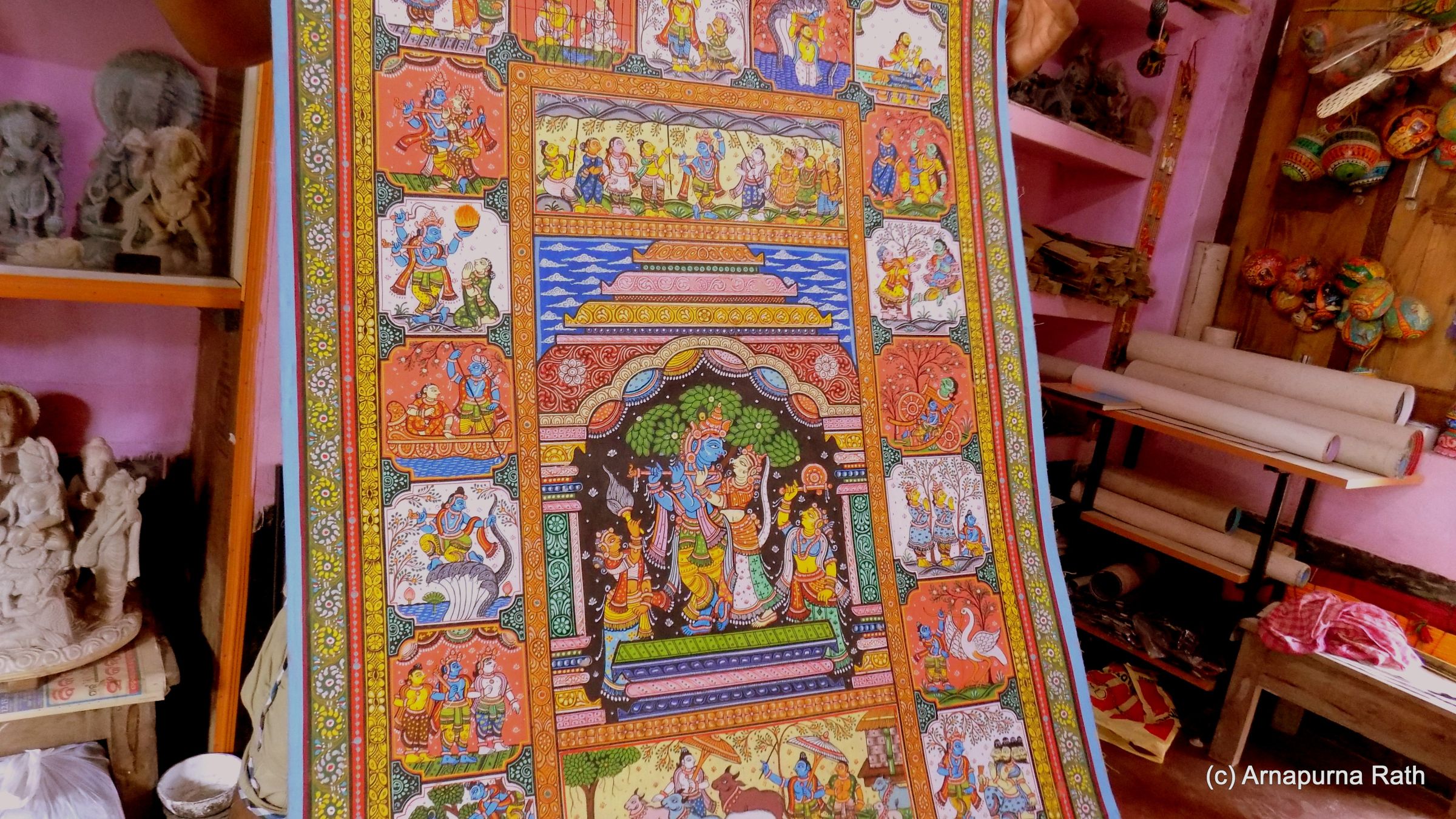
Within 50 kilometres from Odisha’s capital, Bhubaneswar, there is the picturesque village of Raghurajpur. The village is just ten kilometres prior to the temple town of Puri, and within a kilometre from NH-316. It is surrounded by tall coconut trees and richly textured paddy fields. (more…)