Blog

  • Climate Change Battle – The Youth are at the Forefront

    Climate Change Battle – The Youth are at the Forefront

    [vc_row][vc_column][vc_column_text]

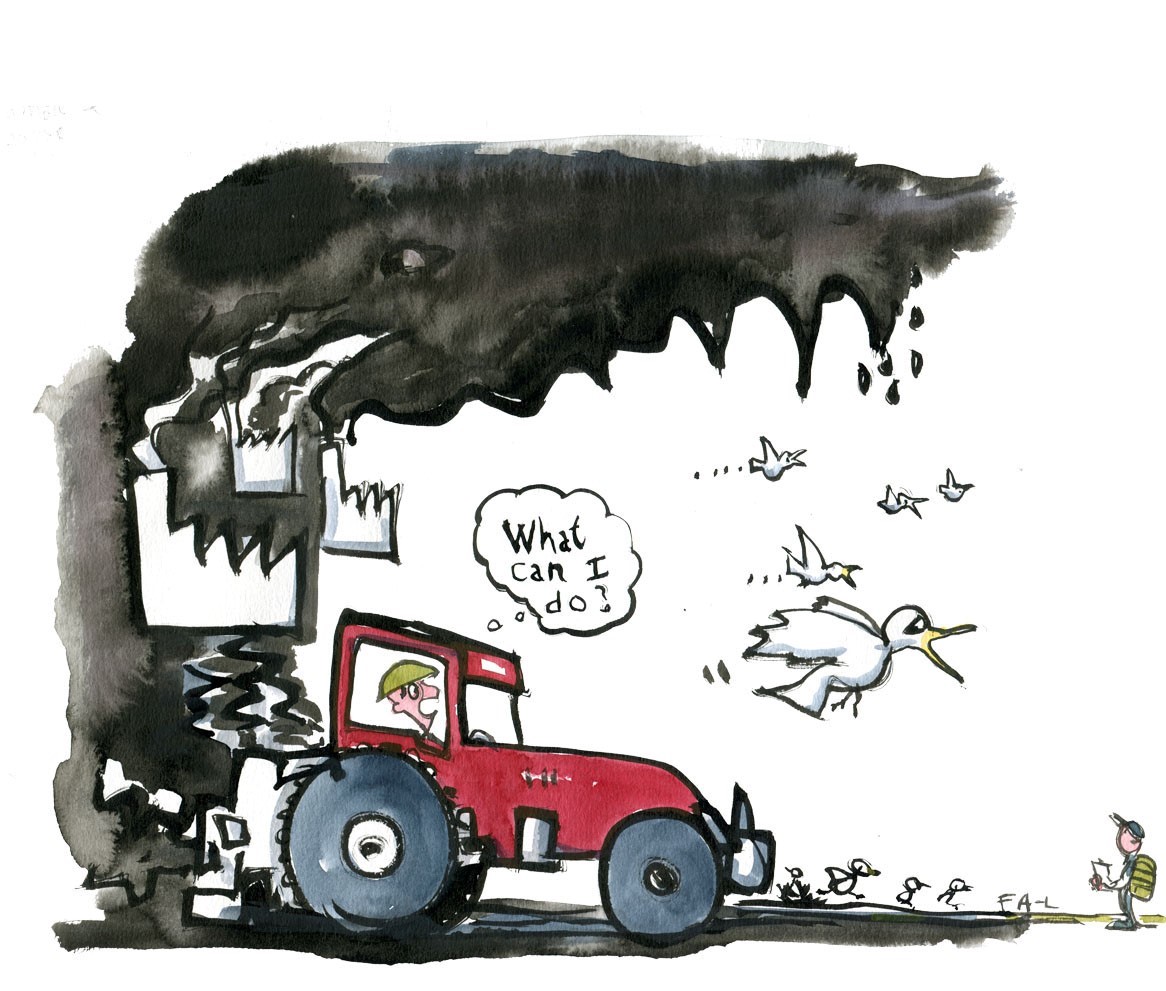
    Illustration by Derek Monteiro

    [/vc_column_text][/vc_column][/vc_row][vc_row][vc_column][vc_column_text]The fight against the pandemic has entered its eighth month and India has seen floods in West Bengal, Assam, Orissa, UP, Bihar and Kerala. It has affected over 125 million people, leaving over 500 people dead and over half a million uprooted from their homes. Right in the middle of one of the severest lockdowns the world has seen so far.  It has resulted in multi-billion-dollar devastation. And even then, the mainstream media is paying lip service to the most visible manifestation of climate change, alongside the equally visible zoonotic pandemic. It has chosen, among many inane issues, to “conduct a media trial” around the tragic suicide of an actor and narcotic drug abuse in the film industry. The Union government has been very busy too. It has tested opposition governments in different states, offered questionable economic recovery packages, inaugurated a temple site violating physical distancing norms, taken legal action on poets, writers, teachers, lawyers and activists, issued a controversial and arguably reckless EIA draft, announced a move to allot coal mines in pristine forests and biodiversity hot zones, run amok with irrational projects in Mollem National Park in the Western Ghats. The speed at which the government has chosen to approve projects in wildlife sensitive habitats has caused serious concern among the informed but has not yet entered the national consciousness. [/vc_column_text][/vc_column][/vc_row][vc_row][vc_column][vc_column_text]Yet in the midst of all the chaos, the Ministry of Environment, Forests and Climate Change received 1.7 million responses on the draft of Environment Impact Assessment 2020! After the ill-fated attempt to thwart an online campaign group with UAPA charges, an attempt which was later aborted. The uproar around the projects in Mollem, Goa from writers, poets, scientists, conservationists, ecologists, teachers led by some very imaginative student activism triggered the Supreme Court-appointed Centrally Empowered Committee (CEC) to intervene and seek an explanation from the National Board of Wildlife on the clearances. The online and offline Save Mollem Campaign was so strong that it caused the Goa Chief Minister to suspect a foreign hand! And there was – the students and the youth created such a powerful campaign that it attracted solidarity and admiration from Europe, Africa and other parts of the world. Hardly surprising, given the allure of Goa as a tourist’s paradise! [/vc_column_text][/vc_column][/vc_row][vc_row][vc_column][vc_column_text]The active participation of students in the environment and climate change causes is a refreshing change. They see this as their fight, their own fight, sometimes, their solo fight – to secure their future. A fight where older generations, complacent in their affluent cocoons, are reluctant to upset the status quo. They see through the eyewash that the legislators fling on them in the guise of “sustainability and essential development”. The Work from Home scenario gives them more time on their hands. And that has also heightened their interest. Very appealing audio-visual memes are constantly pouring out. They are doing their job in multiplying the followers. The local/global networks that have been formed at There is No Earth B and Extinction Rebellion India are creating open repositories of information that can be used by any of the activist groups. Causes as diverse as Assam Floods, Vizag Mangroves, Save Aarey projects are covered here. Save Mollem Goa and My Mollem Goa groups, with active student participation, have brought together a diverse collective of scientists, artists, poets, illustrators and other creative people. [/vc_column_text][vc_column_text]

    The active participation of students in the environment and climate change causes is a refreshing change. They see this as their fight, their own fight, sometimes, their solo fight – to secure their future. A fight where older generations, complacent in their affluent cocoons, are reluctant to upset the status quo.

    [/vc_column_text][/vc_column][/vc_row][vc_row][vc_column][vc_column_text]All this has resulted in a breathtaking outpouring of creative content to save this pristine biodiversity hotspot in the Western Ghats. Fridays For Future India and Let India Breathe are playing similar roles. Let Me Breathe, powered almost entirely by youngsters, brings everyday sustainability and climate change stories from all over India. Using digital tools, it invites the youth to influence behavioural and policy level changes. Equally inspiring are emerging youth/teen voices  – such as Aarav Seth, who as a teen is rallying support for the UN Sustainable Development Goals (SDGs); Licypriya Kangujam, a 9-year-old from Manipur, who addressed the United Nations Climate Change Conference of 2019 and takes pride in offering creative solutions to turn everyday waste into everyday usable items; Femin Johny, a Kerala teen who champions the cause of planting trees, and many others like Aditya Dubey and Ridhima Pandey who have added their voices to these causes. [/vc_column_text][/vc_column][/vc_row][vc_row][vc_column][vc_column_text]The work initiated by Magsaysay awardee, P Sainath is no less noteworthy. His news portal, People’s Archive of Rural India, covers rural lives and livelihoods. They launched an initiative called PARI Education for schools. This initiative puts a human face on textbook concepts in everyday life in rural India. Driest topics like poverty, pollution, drought, farmer suicides and unsustainable livelihoods come alive through powerful storytelling by the people who face these daily. Kids for Tigers is another educational outreach programme from the Sanctuary Nature Foundation that touches the lives of rural kids living right next to the tiger and urban kids across the country. Going way beyond conservation education, the programme is dedicated to leaving kids with a better planet and leaving the planet with better kids.

    It is a shame that the Environment and Climate Change causes have not attracted popular contemporary icons from society. Jairam Ramesh, an IIT Bombay alum himself, is perhaps the only politician who has made Environment and Climate change the cornerstone of his politics. Other than Dia Mirza, who is UN Goodwill Ambassador for Environment, there is hardly anyone from Indian Cinema or Cricket that has joined this movement. Amitav Ghosh and Arundhati Roy are perhaps the only globally known Indian celebrities from the literary world who have not only identified themselves with these causes but have also written critically acclaimed stories around these subjects. The young need new role models. They should be encouraged to explore the works of Vandana Shiva (Food sovereignty), Sunita Narain (Rural eco-regeneration), Medha Patkar (Narmada Bachao and other people’s movements), Prerna Singh Bindra (Conservation related journalism), young conservation and ecology scientists like Neha Sinha, Vidya Athreya, Jis Sebastian, Nandini Velho, Krithi Karanth, Purnima Burman, Prachi Mehta, Veena Srinivasan, cartoonist Rohan Chakravarty (Green Humour), Anushka Ravishankar (children’s books), Abhijit Prabhudesai  (Rainbow Warriors), legal luminaries in environment law and justice such as Ritwik Dutta, Claude Alvares and Norma Alwares; Shweta Wagh (Urban ecology, heritage conservation) among many others. Narsanna and Padma Koppula, Bharat Mansatta, Madhu Reddy, Malvikaa Solanki and others are paving the way in the field of agro-ecology, championing Permaculture – a way of natural, sustainable farming and a way of life. Recent films like Kiss the Ground and Planet of the Humans have captivated the attention of the youth and given them different perspectives. The former focused on Soil Regeneration and the latter on the controversies surrounding Green Energy. [/vc_column_text][/vc_column][/vc_row][vc_row][vc_column][vc_column_text]The young need all our help and support. They don’t need adults trolling them, questioning their evolving knowledge or their motives. They don’t need experts shaming their biases or their passion. They do need gentle help in understanding the issues in-depth, the Science, the options with the latitude to dream freely. They do need monetary support to follow their passion. The privileged should not hesitate to dip into their pockets to support them. They should see this as an investment in Inter-Generational Equity and in character building. Bob Dylan once said, “Passion is a young man’s game.”[/vc_column_text][/vc_column][/vc_row][vc_row][vc_column][vc_column_text]

    A healthy planet need not be a moonshot.

    [/vc_column_text][/vc_column][/vc_row]
  • Matters We Don’t See

    Matters We Don’t See

    [vc_row][vc_column][vc_column_text]

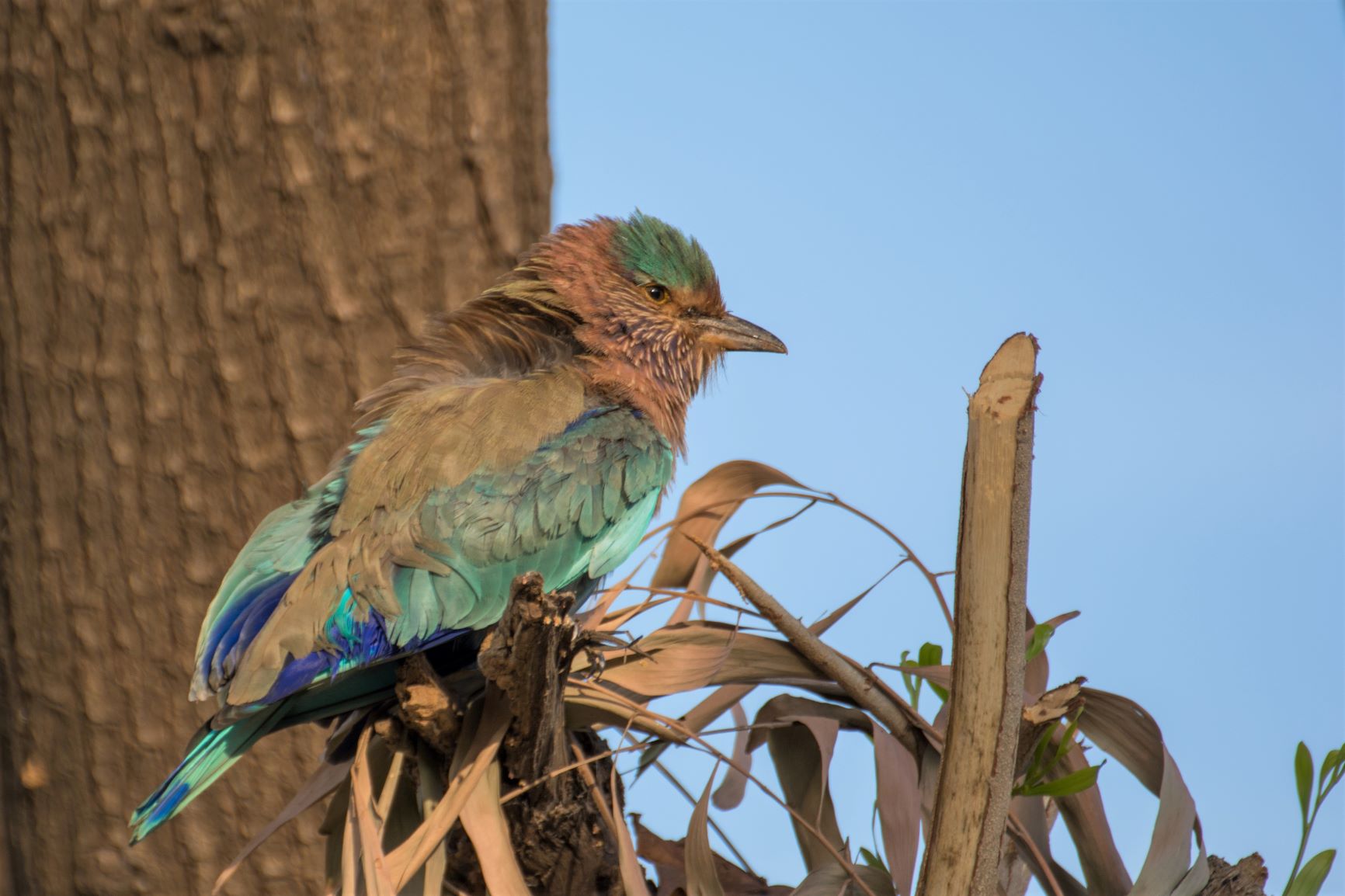
    Birding often throws up surprises. One such is this vibrant bird, the Indian Roller, which we have seen occasionally on the campus.

    [/vc_column_text][vc_column_text]Every year, before the onset of monsoon, a bunch of Baya Weavers arrived at the campus to build their colony on one of the palm trees by the Gymkhana. Their intricately woven nests, true architectural marvels, hung suspended from the palm fronds high above the human eye. I wonder how many passing by the tree registered the yellow specks busily flashing past in the sky (the breeding male Baya assumes a yellow crown).[/vc_column_text][/vc_column][/vc_row][vc_row][vc_column][vc_column_text]Baya Weavers are as small as House Sparrows. To an undiscerning eye, they even look similar. While they are not residents of the campus, they are found in good numbers at the next-door Bhandup Pumping Station. For breeding alone, they came to IITB. Typically, the males arrived first to build their elegant nests that resemble blown glass and win over the females. For those unfamiliar with the ways of the Baya, do read ornithologist Sálim Ali’s fascinating field observations of its nesting habits in the Journal of the Bombay Natural History Society, available on the internet. [/vc_column_text][/vc_column][/vc_row][vc_row][vc_column][vc_single_image image=”10656″ img_size=”large” alignment=”center”][vc_column_text]A male Baya Weaver inspects a Palm Tree adjacent to the Gymkhana in May 2016 before abandoning the idea to build its nest.  The tree hosted a Baya Weaver colony regularly until 2015. [/vc_column_text][vc_column_text]In the year 2016, as the scrub skirting the gymkhana grounds made way for the new courts, the Bayas did arrive in the month of May, like clockwork. We noticed some of them on the palm fronds, as if on an inspection, but they never built their nests that year. Ever since, the Bayas have vanished from the campus unnoticed, unregistered.[/vc_column_text][/vc_column][/vc_row][vc_row][vc_column][vc_column_text]Before I go on, I must add a disclaimer. This article is not about how birds have disappeared from the campus over time with development. I’m not an ornithologist nor a conservationist to reflect on such a serious matter. Nor is the article an assessment of the birds found in IITB or an investigation into its declining biodiversity. For the former, we have Dr. Goldin Quadros-led WWF study of IITB biodiversity though over ten years old, and for the latter, we have an in-depth article in March 2020 Insight by Ganesh Chelluboyina, who recently graduated from IITB.  In my story, I merely want to draw attention to the things we do not see and register. And how in our claim over everything nature has to offer its space, air, or the privilege of a lake or a hillwe forget life works best in symbiosis. [/vc_column_text][/vc_column][/vc_row][vc_row][vc_column][vc_column_text]Some ten years ago, the hypnotic effect of a big-eyed large grey, white and black bird that perched on the tree opposite my window at Staff Hostel every single day rendered me a birdwatcher. The bird, I discovered, was a Black-crowned Night-Heron. It was the beginning of a new bond that would soon make me realize I had lost over 30 years of my life not knowing such relationships existed. It connected me to a whole new world of books and people. Suddenly there was so much more to see and hear around me. The tree on which the heron sat turned out to be my Revelation Tree. It acquainted me with Spotted Owlet, Indian Grey Hornbill, Asian Emerald Dove, and many more. Some were loud, some bold, some super shy and secretive too. Like people, they came with varied personalities. The morning ‘exercise’ walks turned into an excuse to spot them and before I knew, I had become a student of ornithology where not just books but field experiences too mattered. [/vc_column_text][vc_custom_heading text=”Seen around the campus” font_container=”tag:h2|text_align:left|color:%23dd9933″][vc_masonry_media_grid element_width=”3″ item=”masonryMedia_ScaleWithContentBlock” grid_id=”vc_gid:1606105209240-962d141b693df7d5ea509f493bdd3a93-8″ include=”10661,10660,10697,10733,10696,10694,10702,10736″][/vc_column][/vc_row][vc_row][vc_column][vc_column_text]I have learnt (and am still learning) to recognize the different species, their calls and songs, the habitats they prefer, long-distance and local migrants, migrants that arrive during monsoon, migrants that leave just before peak summer. And like many regular birders on campus, I have witnessed a dead tree stub on the lakeside holding the Coppersmith Barbet’s painstakingly etched out nest hole make way for a ‘cleaner’ road; the visiting Red Avadavat suddenly disappear when its nest-in-progress at the grassy patch near the Boathouse was flattened in grass clearance; the Soneri Baug take a beating first when the silt from the guesthouse pond was dumped on it and then, more recently, when it was thrown off balance following the indiscriminate hacking of its woody climbers that connected trees with shrubs.[/vc_column_text][/vc_column][/vc_row][vc_row][vc_column][vc_column_text]There is enough material around us to show why birds matter, what insights they hold, how they are excellent indicators of the health of an ecosystem, how they contribute to our life’s equilibrium and warn us of dangers in store. There is even a saying ‘canary in a coal mine’, a harsh reminder to a practice prevalent in the British mining industry of taking canaries into mining pits. They knew that canaries being birds were sensitive to toxic air, so if they became ill or died, it was a warning for workers to evacuate. It finally took the invention of technology to wean humans from this predatory tradition that existed for 75 whole years! [/vc_column_text][/vc_column][/vc_row][vc_row][vc_column][vc_column_text]Recently I watched the first episode (Surveillance) of the gripping Netflix serial ‘Connected’, about the “connections between you, me and the world”. The story begins with the “elusive” songbirds of Newark in Delaware called veeries. The delightful science reporter Latif Nasser draws our gaze to the bird scientist Christopher Heckscher studying the seemingly ordinary-looking brown birds. Through ringing and GPS tracking, they find the birds migrating every winter to the southern Amazon Basin in Brazil some 4000 miles and back. They even find the “same bird singing in the same tree”. Of course, they go on to make an even more mind-boggling discovery the bird’s prowess to predict the future.  It knew many months ahead how bad the hurricanes in its path of migration would be that year and timed its departure accordingly, sometimes even cutting short its nesting period. But the account of the bird going to the very same place every year and back at once filled me with awe and terrible sadness. There are so many changes around us that we don’t even register. We fail to see that climate change is not something out there, but has its foundations right here in what we do and don’t do.[/vc_column_text][/vc_column][/vc_row][vc_row][vc_column][vc_column_text]IITB, by its proximity to Sanjay Gandhi National Park and tucked between Powai lake and hillocks, boasts of a myriad of ecosystems. The marshy grassland by the lake is home to a variety of water birds like Pheasant-tailed Jacana, Grey-headed Swamphen, Indian Spot-billed Duck, Lesser Whistling-Ducks, Little Grebe and Purple Heron.[/vc_column_text][vc_custom_heading text=”Seen around waterbodies” font_container=”tag:h2|text_align:left|color:%23dd9933″][vc_masonry_media_grid item=”masonryMedia_ScaleWithContentBlock” grid_id=”vc_gid:1606105209393-864cdb5fbfc57f6f57e92c2dd4b989db-0″ include=”10680,10803,10681,10687,10800,10804″][vc_column_text]The wooded habitats by the lake such as Soneri Baug hold gems like Rufous Woodpecker and White-browed Bulbul. On the hill, we encounter land birds like Yellow-throated Sparrow (famed to have converted the pastime hunter in Sálim Ali into a world-famous ornithologist and naturalist) and Rufous Treepie not usually seen by the lake. Then there are the less ubiquitous ones like the Sahyadri Sunbird and Tickell’s Blue Flycatcher that are found along lakeside and hillside, and the more ubiquitous ones like the House Crow, Large-billed Crow, Common Myna, White-throated Kingfisher and Oriental Magpie Robin that thrive in all habitats. As per eBird, an online database of bird sightings contributed by ordinary users, IITB holds over 190 species. There could be many more yet to be recorded. What needs highlighting here is that for some of these birds, their habitats mean everything. Like the skulker White-browed Bulbul who can never be caught outside the wooded areas. Or the Bronze-winged Jacana who can only be seen in the marshy grassland habitat.  When a wooded area like the one behind Staff Hostel or the Boathouse was laid almost bare late last year, what did it mean to the White-browed Bulbul or what would it entail for the warblers, some smaller than the size of our palm, who fly here from distant lands like Siberia during the winter? We miss asking these questions when we categorize them all under one single bracket birds.  [/vc_column_text][vc_masonry_media_grid element_width=”6″ item=”masonryMedia_ScaleWithContentBlock” grid_id=”vc_gid:1606105209415-ab9b4fdc3589cec72e04f288055b8786-4″ include=”10717,10716″][/vc_column][/vc_row][vc_row][vc_column][vc_column_text]But this is not a sanctuary, it is an educational institution, one may argue! What use would any growth be if it does not evolve symbiotically? The International Union for the Conservation of Nature (IUCN), in its best practices for Urban Protected Areas, recognizes educational institutions, privileged in their access to the natural world, as potential protectors of biodiversity. Even as we stake claim to the empty spaces to meet our increasing demands, can we set aside designated pockets like Soneri Baug, Kol Dongri, Temple area (where, in the winter, the site transforms into a heronry of sorts), the thicket opposite the library and the hill area as Protected Areas?  Which merely means leaving the pockets as they are, untouched but monitored. In this respect, what IIT Mandi has drawn up for its new campus is truly inspiring[/vc_column_text][vc_custom_heading text=”Seen in scrub and wooded areas” font_container=”tag:h2|text_align:left|color:%23dd9933″][vc_masonry_media_grid item=”masonryMedia_ScaleWithContentBlock” grid_id=”vc_gid:1606105209478-292dea6f44e7b98c1d8590ffe15c47c8-4″ include=”10706,10707,10708″][/vc_column][/vc_row][vc_row][vc_column][vc_column_text]Meanwhile, the winter migrants are here. I feel joyous when I hear the chuck chucking quick-moving hard-to-id warblers. And as I wait to hear the fleeting crisp rattle of the tiny Red-breasted Flycatcher, which probably flew miles and miles to reach here, I feel nervous that many of its haunts no longer remain.  But hope never ceases. This lockdown, when disturbances were far less, we saw a Black-winged Stilt raise her chicks, the increasingly elusive Pheasant-tailed Jacana forage in the marshes, Black-rumped Flameback make bold rounds of the campus even coming close to the residences, a Common Hawk-Cuckoo hunting at arm’s length, and a Cinnamon Bittern flash by. We ticked rare records for the campus like Western Reef-Heron and Watercock at the lakeside and Red-naped Ibis on the Gymkhana grounds. Surely, the little connections we make and the breathing spaces we restore or create are all that it takes for habitats to thrive and win over the birds. The result, believe me, can be therapeutic.[/vc_column_text][/vc_column][/vc_row][vc_row][vc_column][vc_message]

    All photographs in this article were clicked by Aniketa Kabir.

    [/vc_message][/vc_column][/vc_row]

  • Goa’s People say NO to Coal

    Goa’s People say NO to Coal

    [vc_row][vc_column][vc_column_text]

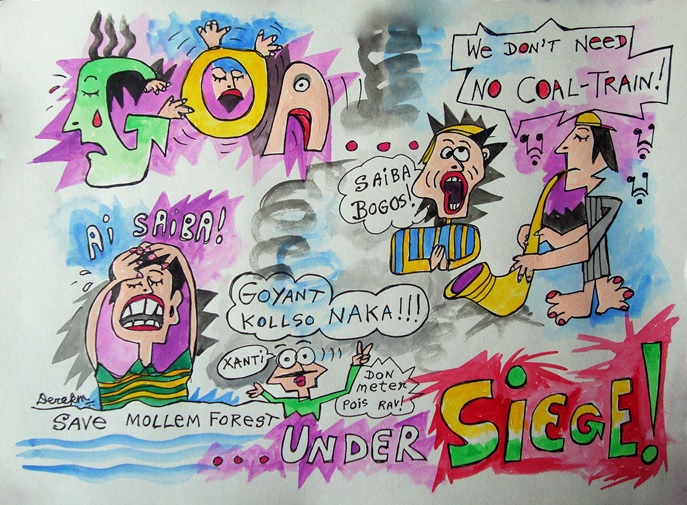
    Illustration by Derek Monteiro. This article has been republished from Sabrang.

    [/vc_column_text][/vc_column][/vc_row][vc_row][vc_column][vc_column_text]As this is being written, the Supreme Leader has inaugurated a zoo in Gujarat. The Minister of Environment, Forests and Climate Change promptly tweeted that this will make people feel as if they are in a jungle. Ironically, the same minister has hastened the destruction of real, vibrant, bio-diverse jungles in the Western Ghats and in the Eastern Himalayas, in the name of development. Right in the middle of a pandemic, that is screaming out loud to anyone who cares to listen “Don’t mess with Nature”. This has certainly fallen on deaf ears in the state government of Goa.[/vc_column_text][/vc_column][/vc_row][vc_row][vc_column][vc_column_text]The people of Goa are battling three linear intrusion projects in Ecologically Sensitive Areas and Protected Areas. These projects – doubling of a railway track, 4 laning of a major highway and installation of a 400 kV transmission line – will hack away 170 hectares of protected forest cover and 240 square kilometers of the Western Ghats, acknowledged as a global biodiversity hotspot. The Environment Impact Assessment (EIA) reports of these three projects have raised several questions by scientists and concerned citizens:

    1. Why are there three mega projects in protected areas? When did these areas lose their protection? How were those decisions taken? What was the involvement of the affected citizens of the state?
    2. Why were Cumulative Impact Studies not conducted to assess impact on both the wildlife in the Mollem area as well as the human habitat around it?
    3. Why were wildlife clearances for two of the projects provided during the pandemic through means that clearly subverted a robust audit and scrutiny?
    4. Why is there an inadequate detail on environment costs and mitigation as also on compensation, penalty and compliance?
    5. The scientific assessment also leaves a lot to be desired – why are several issues like methodology of baseline surveys, afforestation and protection methods, soil erosion and its impact, water and air assessment methods, assessment of insect and fish diversity, snowballing impact of change in microclimates, to name a few, given scant or no review?

    [/vc_column_text][/vc_column][/vc_row][vc_row][vc_column][vc_column_text]The proposed draft EIA 2020 notification had already raised a hue and cry earlier this year. It proposed, among several controversial changes, plans to set aside public consultation and introduce ex-post facto clearances for many projects. If such an EIA process is finally approved, one can reasonably assume safe passage of the three Goa projects, despite a flawed and inadequate EIA around them.[/vc_column_text][/vc_column][/vc_row][vc_row][vc_column][vc_column_text]The ruling party’s own MLA, Alina Saldanha, has been vocal about the havoc these projects will cause to the people of the state. Alleging coal transportation as a key reason, she has expressed concern around the “destruction of the environment, coal dust pollution that will further lead to pulmonary disorders, destruction of people’s houses and Goa’s heritage”.[/vc_column_text][/vc_column][/vc_row][vc_row][vc_column][vc_column_text]Has the country forgotten its obligations to the Climate Change goals as part of the Paris treaty? A quick reminder:

    1. Reduce emissions by a third by 2030, from 2005 baseline
    2. Increase share of the power generated by non-fossil fuels to 40 percent by 2030
    3. Create an additional carbon sink of 2.5-3 Gigatons of CO2e (carbon dioxide equivalent) by 2030 – from enhanced tree and forest cover (this would need 25 million acres of new forests with five billion native trees – a 15 percent increase – roughly the size of 30 Goas in new forest cover)

    [/vc_column_text][/vc_column][/vc_row][vc_row][vc_column][vc_column_text]Any reasonable citizen would question the need to destroy forest land when one must enhance forest and tree cover. One would also question the need for investing in infrastructure to support coal and fossil fuels when the focus must be shifted to renewables. Why do so anyway in a power surplus state? Given the nature of Goa’s landscape, abundant sunshine and its typical Mangalore tile roof-based housing, every house in Goa could be generating its own solar energy and even offering the surplus to the grid, resulting in many micro industries around the same. Goa’s coast-based tourism is already saturated. Keeping its lush hinterland pristine and unspoilt would be the way to develop a premium nature-based tourism and revive the sector. More reason, why these projects will hinder Goa’s future.[/vc_column_text][vc_column_text]

    Any reasonable citizen would question the need to destroy forest land when one must enhance forest and tree cover.

    [/vc_column_text][/vc_column][/vc_row][vc_row][vc_column][vc_column_text]The State’s lack of transparency around the motivation of these projects, its relations, if any, with the project beneficiaries, the inadequate and hurried process surrounding the various environmental approvals and the lack of consultation with citizen groups has led to a public outpouring of peaceful, nonviolent protest uniting various cross-sections of society. Leading the struggle are citizen-led groups such as Goyant Kollso Naka, whose vigilant participation has exposed the facts around power usage in Goa. The name, meaning “Goa Does Not Want Coal” has now become a rallying cry across Goa uniting even the opposition parties such as the Congress, AAP and Goa Forward on standing in solidarity with the citizens. A documentary, The Art of Destructionbrought together some of Goa’s prominent ecologists, environmentalists, architects, activists, artists and government representatives and explored the dilemmas faced in conservation and development and what strikes the right balance.[/vc_column_text][/vc_column][/vc_row][vc_row][vc_column][vc_column_text]Despite these protests, the railway double-tracking project has already begun. Working clandestinely at night amidst heavy security cover, the state has chosen to cock a snook at its people. The same rhetoric that has played elsewhere is playing out in Goa – confuse the people with half-truths & untruths, run roughshod over established norms and processes, decimate the autonomy of institutions, brand the dissenters as anti-state, anti-development and help a few crony companies profit at the expense of the people. The midnight protest on November 1 until 5 AM the following day in Chandor, Goa – the seat of the double-tracking rail project – may well be a turning point. This brought together several thousands of ordinary citizens in an all-night vigil on the railway track that ferries coal through the state. The message was clear – Goa’s people WILL NOT allow Goa to become a Coal Hub. Are the state ministers listening? Is the centre listening?[/vc_column_text][/vc_column][/vc_row][vc_row][vc_column][vc_column_text]Peaceful dissent cannot be de-legitimised. Nor can it be overlooked. An injustice anywhere is an injustice everywhere. What is happening in a corner of Goa may eventually engulf all of Goa. Indeed, the whole country is seeing a cruel, capricious, anti-people decision making in every aspect of governance – an unprincipled demonetisation, a poorly implemented GST, the incarceration of an entire state and its people, a hurried, unplanned lockdown, an uncoordinated pandemic response, arrogant handling of the migrant labour crisis, an insufficient economic revival package – undermining all the socio-economic gains of the previous decade and possibly slipping tens of millions back into poverty.[/vc_column_text][/vc_column][/vc_row][vc_row][vc_column][vc_column_text]Goa has a vibrant culture, natural heritage and a viable economy. Its ecology is its unique selling proposition. Attacking it relentlessly and ruthlessly with illogical projects that reflect 19th-century thinking, could endanger its very existence. The whole country must come together and stand with the people of Goa. In solidarity.[/vc_column_text][/vc_column][/vc_row]
  • Climate Change and Environment

    Climate Change and Environment

    [vc_row][vc_column][vc_column_text]

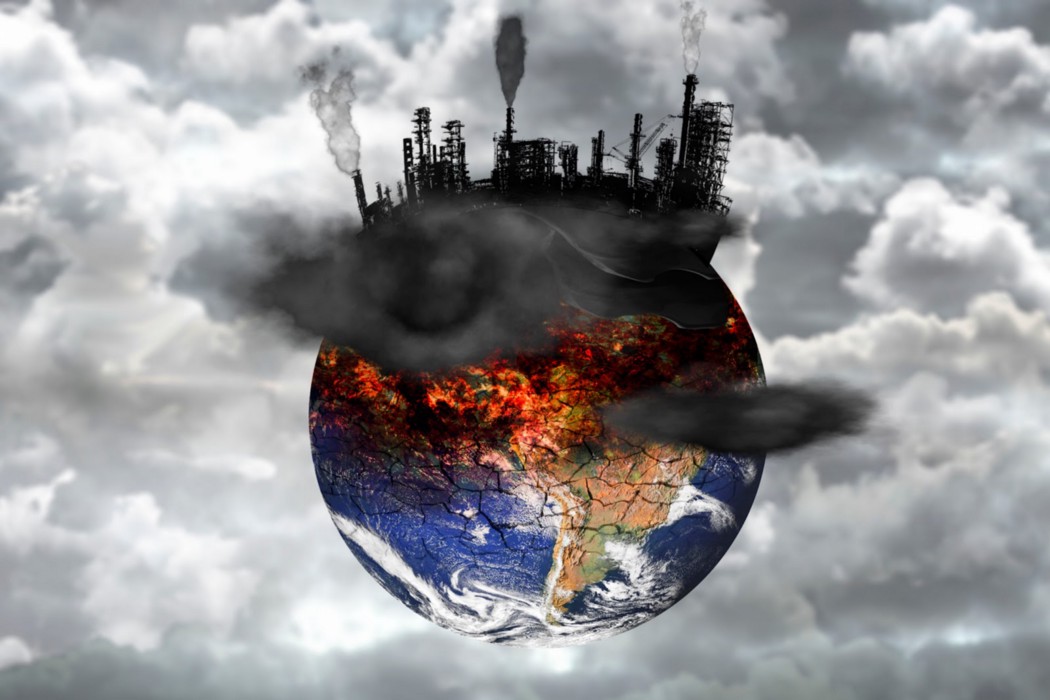
    Illustrations by Frits Ahlefeldt

    [/vc_column_text][vc_custom_heading text=”Current situation, how the impact of climate change is being evidenced world-over” font_container=”tag:h3|text_align:left|color:%23dd9933″][vc_column_text]The climate is a-changing world over, and the impact is manifesting in the environment. And equally, the other way round too.  Deterioration of the environment is causing pollution, depletion of the ozone layer, global warming and drastic climatic changes across the world. Greta Thunberg had thundered – we are not in the same boat, we are in a storm. (more…)

  • Fueling Change

    Fueling Change

    [vc_row][vc_column][vc_column_text]Cauvery and MM Hills WS, along with other adjoining Protected Areas (PAs), form a large interconnected area which is home to many species of endemic flora and fauna, while also constituting possibly the largest contiguous tiger habitats found in the country. It is evident why Karnataka is said to be home to around 10% of the world’s population of tigers and around 15-18% of India’s tigers! With around 17% of forested land, Karnataka also ranks fourth in the country in terms of green cover and is estimated to harbour nearly 50% of the Western Ghats’ biodiversity.

    (more…)

  • Seeing Climate Change: First Hand

    Seeing Climate Change: First Hand

    [vc_row][vc_column][vc_column_text]

    City living has a way of keeping us distant from nature and its workings. We don’t have much to do with the weather either. It can be a pleasure when the weather is pleasant – like it often is in Bangalore – and an inconvenience when it rains or is extremely sunny. If not from the newspapers, we know it has rained a lot when there is flooding on the roads. The blame then is mostly attributed to the city administration for its lack of planning and management. About the role of weather and climate and climate change in particular –  one is never too certain. Old-timers of the city tell you of the times when you had to wear a cardigan for most parts of the year and never needed a fan. Weather enthusiasts and professionals also tell you that the patterns of rainfall are perhaps changing – with fewer rainy days and short spells of very intense rain. However, that is not always said with a lot of certainty. For the longest time, Bangalore had only a couple of weather stations. While people had observed differences in rainfall between neighbouring localities, there weren’t as many weather stations and hence the data could not capture these local variances. It’s only now that there are multiple private and public weather stations across the city.

    [/vc_column_text][/vc_column][/vc_row][vc_row][vc_column][vc_column_text]

    Our perspective of the weather changes significantly when we are in a more rural setting. This year the pandemic gave us this opportunity. We have a home in Coorg (Kodagu) that also runs as a homestay. Over the last several years, work, school and other commitments had not given us an opportunity to visit and spend as much time in Coorg as we would have liked. Now with children studying from home, a grandmother who was visiting and my in-laws – all senior citizens, we decided to move to our place in Coorg to spend time there. Bangalore was reporting about 500 new COVID cases a day in June then. While the southwest monsoon hit Kodagu in the first week of June this year the rainfall had not been all that impressive. Local conversations were around something about the monsoon not being ok and the choosing of appropriate days to sow paddy. June is normally quite a rained out month all over the western ghats – with little or no sun.

    [/vc_column_text][/vc_column][/vc_row][vc_row][vc_column][vc_column_text]

    Unlike in Bangalore, rainfall is measured, tracked and spoken about a whole lot more in Coorg. And this is an old practice. The coffee growers’ and farmers’ calendar is very linked to the rain. Most coffee growers have detailed daily rainfall records over the past several years. When a large estate changes hands, the rainfall data is also transferred. There is also a local rainfall prediction calendar that is created every year and the locals look to it as much as they look to the skies for rain. Across the region several types of rain are also acknowledged. The blossom shower, a period of soft rains, rain that comes with lightning and thunder and heavy rain that comes with heavy wind being the ones that are often spoken about. It’s the rain that comes with the wind that is thought to bring springs in the region alive. The blossom showers in March/April are critical for the coffee buds to bloom. Over the past couple of years, the blossom showers have not been as predictable. When the blossom showers are not on time the coffee yield is not as good. Hence the growers now pump groundwater and irrigate the coffee plantation with sprinklers so as to simulate the rain. So much so that this has become the default behaviour for many farmers who have too much at stake to wait for the rain. This results in heavy groundwater extraction in the months just before the start of the monsoons and which is also incidentally the driest part of the year with the lowest groundwater levels. This sudden surge in groundwater extraction results in a sudden drop in water tables. People with shallow open wells find their wells dry out overnight and it’s only the deeper borewells that continue to yield in times like these. In fact, for this period of time, there is almost a drought-like situation in an area which otherwise for most parts of the year has groundwater at just a few feet below ground level.

    [/vc_column_text][/vc_column][/vc_row][vc_row][vc_column][vc_column_text]

    The July rainfall was also 47% less than normal.

    [/vc_column_text][/vc_column][/vc_row][vc_row][vc_column][vc_column_text]

    Over the last 2 years, around the second week of August, extreme heavy rains and continuous gusty winds have been observed over a period of a couple of days. These are intense rainfall days which bring down rain over a very short time – that rain which is normally expected to fall over the period of a month. This rain has been wreaking havoc in the region – floods and landslides leading to loss of life and property. The days are also anticipated with a certain sense of foreboding as the floods of 2018 are still in recent memory. Intense rainfall combined with extensive deforestation and other changes in land use has been leading to fatal landslides. Last year (2019) Kodagu received 935 mm of rain during the first 10 days of August – way more than the average rainfall of 600 mm for the entire month – while in  2018 Kodagu received an average rainfall of 1,033 mm in August.

    [/vc_column_text][/vc_column][/vc_row][vc_row][vc_column][vc_column_text]

    Much like the previous two years, the rainfall in the first two weeks of August was fierce. Between August 1 and August 11, the district had received 647 mm of rain, according to the Karnataka State Natural Disaster Monitoring Centre website. Bhagamandala which is about 7km from our home received over 400mm  of rain in 72 hours. This year too there was a major landslide near the Talakaveri temple (Talakaveri is in Brahmagiri hills near Bhagamandala in Coorg district, and is the source of the river Kaveri) that resulted in the loss of land and life.

    [/vc_column_text][/vc_column][/vc_row][vc_row][vc_column][vc_column_text]

    The Cauvery – the river that supplies water to a large part of south India and is fiercely contested for its waters – flows about 500 meters from our home. It’s only over the last two years that the waters from the Cauvery have flooded our fields as well as our neighbours’. We lost the paddy saplings that we were waiting to transplant. Our neighbours lost their planted field of paddy.

    [/vc_column_text][vc_single_image image=”10282″ img_size=”full” add_caption=”yes” alignment=”center”][vc_column_text]

    The cowsheds in the fields were submerged and the cattle had to be moved to higher land.

    [/vc_column_text][vc_single_image image=”10279″ img_size=”full” add_caption=”yes” alignment=”center”][vc_column_text]

    Streams that were flowing below bridges at a fair 20ft below bridge level had now submerged the very same bridges. The heavy rain and gusty winds brought down electricity poles. There was no power for 10 days. However, lack of electricity did not seem to make that much of a difference to most local people’s lives. It meant they could not watch TV and had to rise and sleep with the sun. Generators had to be sought out to charge mobile phones. Soak pits would not leach into the ground and so the toilets would not flush.

    [/vc_column_text][vc_single_image image=”10283″ img_size=”large” add_caption=”yes” alignment=”center”][vc_single_image image=”10281″ img_size=”large” add_caption=”yes” alignment=”center”][/vc_column][/vc_row][vc_row][vc_column][vc_column_text]

    Our neighbour, an 80-year-old gentleman who has lived in the vicinity for far longer and raised seven daughters in the area, told us that the first time that he remembers the water levels having risen as much (submerging our fields and his) was perhaps in 1965. Since then it’s been this bad only over the last two years. The water levels rise very rapidly and do not recede as quickly. The land is already too saturated to absorb the sudden onslaught of heavy rain. The winds make the springs come alive, thereby bringing more water to the surface. This results in small and big landslides on many of the hill slopes. According to him and a lot of people we spoke to – something is surely amiss with the weather. They can’t quite place their finger on it. It’s not called climate change – as of yet.

    [/vc_column_text][/vc_column][/vc_row][vc_row][vc_column][vc_column_text]

    While on one hand, Kodagu struggles with rains and floods, climate change has also resulted in reduced rainfall and drought-like conditions in the districts of Kolar and Chikkaballapur in the peripheries of Bangalore. This has then led to reduced farming and low crop yields in the region.

    [/vc_column_text][/vc_column][/vc_row][vc_row][vc_column][vc_column_text]

    To cope with these changes 440 MLD (million litres per day) of treated wastewater from Bangalore is planned to be pumped to fill 126 lakes in the drought-prone Kolar and Chikkaballapur districts for the purpose of groundwater recharge. It’s been more than a year since the start of this project. Many of the lakes are now full, thanks also in part to the rainfall this year. With the filling of the lakes, the groundwater tables in this region have risen. Farmers are pumping this water out through open wells and borewells to irrigate their crops. Many of them are planting paddy after 5-6 years of low/no crops. A lot more biodiversity is starting to get noticed around these lakes. While there are questions around water quality and the sustainability of this programme, the treated wastewater does seem to provide some form of succour to the otherwise drought-prone districts. The predictability of the wastewater transfer (given that Bangalore city does generate wastewater every day) also guarantees some resilience to the farmers against drought and against climate change.

    [/vc_column_text][/vc_column][/vc_row][vc_row][vc_column][vc_column_text]

    While we can argue over whether these weather patterns are due to climate change, what is quite apparent is that something is not quite as expected. If we are to survive, we have to adapt to the weather and this would mean changing the cropping calendar and perhaps even changing the crops – in rural areas. In urban areas, we have to look seriously at our water demand and see how we can make do with less – of everything. As weather patterns turn unpredictable and rivers run dry, groundwater is seen as the lifesaver. And that too is quickly depleting in most parts of the country. The answers to our water security certainly lie to a large extent in our ability to reduce our water demand, our ability to recharge and manage our groundwater and our ability to treat and reuse wastewater as a resource in sustainable ways.  It is important for the people in the city to also know more about their source of water and watch out for the health of the river and lakes. This would mean saving and managing the catchment of the river. It’s these steps that can help us build climate resilience.

    [/vc_column_text][/vc_column][/vc_row]

  • Deciphering India’s Climate Goals

    Deciphering India’s Climate Goals

    [vc_row][vc_column][vc_column_text][/vc_column_text][vc_column_text]

    Illustration by Frits Ahlefeldt

    [/vc_column_text][/vc_column][/vc_row][vc_row][vc_column][vc_column_text]Global warming due to the greenhouse effect mostly stems from increased fossil-fuel consumption, and the resultant CO2 emissions. This is a matter of global concern, making it difficult for India to follow the fossil fuel-heavy development path adopted by the developed world. Historically, industrialization and development have been driven by the power sector. Adopting a new development model will be a challenge for India. The transition to fossil-free resources for power generation will have a significant impact on our emissions — especially with the rise in electricity demand due to economic progress and quality of life. More than 50 billion tons of CO2 equivalent was emitted in 2016 globally. China was responsible for around 24% of the total emissions, while the United States and India accounted for 12% and 6% respectively.

    (more…)

  • The Paradox of Sustainable Water and Climate Change

    The Paradox of Sustainable Water and Climate Change

    [vc_row][vc_column][vc_column_text]

    Illustrations by Frits Ahlefeldt

    [/vc_column_text][vc_custom_heading text=”The Reality on Ground” font_container=”tag:h2|text_align:left|color:%23dd9933″][/vc_column][/vc_row][vc_row][vc_column][vc_column_text]A road trip to Vrindavan is a reality check on water.  An Ashram – a social network for the elderly is in need of an economical water solution.  We stop at a prosperous-looking farm on the banks of the river Yamuna.  A crop of mustard is being sowed.  The owner comes with an earthy grin and offers us hot tea.  We chat and learn that the electricity is erratic, so he leaves his pumps on for irrigation and floods the farm.  We talk about productivity, water, irrigation, and fertilizer.  He is oblivious to most of it, including drip irrigation.  After all, water is ample and electricity-free so why bother about such things?  We have practiced this for generations.  Is the government paying to use it?  A further small talk over a hot kachori reveals that the water table has been falling, pump failures are frequent, the water smells bad but seems to be working well for the crop.  What the farmer is pumping is the discharged sewage water from upstream which has contaminated the groundwater.  It reminds me of a cousin saying, “The rivers of India are at direct communication with the lower end of the gastrointestinal tract of those who live upstream and with the upper end of those who live downstream.”  For me, the trip yields no business.  I am ridiculed by the water budget and treatment scheme.  The learned managing committee of retired professionals resonates, if the water is free the treatment scheme should be free too!  The tell-tale signs of climate change and resource exploitation are evident at Vrindavan.  The water table is falling, the farm does not yield as much as it used to, the summers are hotter as evident from a few wilting trees and Yamuna has lost its vigour throughout the year.[/vc_column_text][/vc_column][/vc_row][vc_row][vc_column][vc_column_text]We drive through the winding roads of Pauri, Uttarakhand on behest of a concerned minister.  We stop at a dozen water treatment plants on banks of rivers.  Sample water, and test it.  The results are the same – excellent physical and chemical properties but all test positive for E.coli – an indicative bacterium for fecal contamination.  The villages we traverse have open gutters filled with plastic or none at all.  The sewage finds its way into clean water.  The ray of hope is the pine trees being replaced by the local bhaanj which retains water in its deep taproots and provides potable water round the year.  A lesson in sustainability.  Humans have gone back to their routes, rejecting the ‘modern’ ways of managing forests and water.[/vc_column_text][vc_single_image image=”10596″ img_size=”large” alignment=”center”][/vc_column][/vc_row][vc_row][vc_column][vc_column_text]Families in the villages have to walk fifty to a hundred meters to fetch water for daily use. The sanitation facilities are common and kept clean.  The water from the common toilets is let out without treatment.  The thriving shrubs downstream of the discharge are a testament to the presence of nutrient-rich untreated sewage.[/vc_column_text][/vc_column][/vc_row][vc_row][vc_column][vc_column_text]Towards the end of the journey, we stop at the local kirana store to buy a bottle of water.  It is closed.  A neighbor proudly offers us ‘pure’ water from his proud new possession, a RO water purifier,  a sign of new-found prosperity from selling land.  We drink, almost distilled water without bacteria, and head towards Rishikesh.[/vc_column_text][/vc_column][/vc_row][vc_row][vc_column][vc_column_text]Again, the telltale signs of climate change are evident.   Reducing tree cover, heavy erosion due to bursts and floods. The aging treatment plants run with inefficient motors installed through an L1 capital cost proposal, consuming far more power and thus contributing to carbon emissions.[/vc_column_text][/vc_column][/vc_row][vc_row][vc_column][vc_column_text]We shift gears to the affluence of Mumbai.  Alibaug – the Hamptons of Bombay, is a quiet hamlet 14 km south of Mumbai as the crow flies.  The million-plus dollar weekend homes have a perennial problem of seeking the elixir of life, either from the wells on their property or from tankers which roam the pot-holed roads as the messiahs for the lush green lawns and swimming pools.  There is no piped water in Alibaug!  Sewage and waste management do not even get an honorable mention and rainwater harvesting is a great topic for WhatsApp University!  After all, there is no payback for rainwater harvesting and storage compared to the cost of a tanker!  The locals have their hand pumps and the gram panchayats provide a ¾” line for 1 hour of water.  The irony is that the area receives one of the highest rainfalls, almost 2400 mm per year.  I visit a friend’s house for a pro bono consultation about his water woes.  The three borewells he has, play musical chair every monsoon – who will be the saline one that season?  The salinity level changes every year thanks to the intruding seawater.  Again, a telltale sign of impounding effects of rising sea levels due to climate change rushing into the voids created by over-extraction of groundwater.[/vc_column_text][/vc_column][/vc_row][vc_row][vc_column][vc_custom_heading text=”Water in India” font_container=”tag:h2|text_align:left|color:%23dd9933″][vc_single_image image=”10608″ img_size=”medium” alignment=”center”][vc_column_text]India receives 4000 km3 of precipitation every year through a fairly predictable monsoon.  The majority of it occurs in four months from June through September.  The intensity and the patterns vary because of the geography and regional climates.  Half of the precipitation runs off to the sea, balance is used to charge the surface and groundwater.  The agriculture sector is the largest consumer of water at 83%, followed by the power and industrial sector at 6% each and potable use at about 5%.  The quantum of water we receive will remain more or less persistent but the demand will grow on all fronts.[/vc_column_text][/vc_column][/vc_row][vc_row][vc_column][vc_column_text]Access to water is a quagmire.  The agriculture water is virtually free, potable water is charged but does not cover the cost of operations.  The industries are charged for water.  It partially subsidies other uses.  As a consequence, the crop patterns are skewed, productivity with respect to water is dismal, and depletion of groundwater is alarming.[/vc_column_text][/vc_column][/vc_row][vc_row][vc_column][vc_column_text]Access to potable water is even more disturbing.  In rural areas, 12% of households have access to piped water.  In urban areas, this number is 40%.[/vc_column_text][/vc_column][/vc_row][vc_row][vc_column][vc_column_text]The sewage situation in India is dismal.  We generate 78 billion liters of sewage a day out of which 23 billion liters are treated.  The balance goes to our water bodies with partial or no treatment.[/vc_column_text][/vc_column][/vc_row][vc_row][vc_column][vc_column_text]Storylines of water running across India are similar only the plots twist and turn: Water is available, access is not.  Sources are drying up.  Floods are galore. Droughts are rampant.  Quality is dubious.  Salinity is increasing.  Water treatment does not work.  Water is not priced but de facto privatized through tanker lobbies.  Agriculture receives virtually free water.  We buy some of the most expensive water in bottles.  The majority of the polity is oblivious to the nuances and complexity of water.[/vc_column_text][/vc_column][/vc_row][vc_row][vc_column][vc_column_text]The heavy burden of the past water woes, tattered and inadequate water infrastructure, the present reality of climate change and global warming have accentuated the water situation.  It needs to be tended now with a heightened urgency to prevent an apocalypse.  We have very little room to maneuver the situation in time before we are squeezed against a rock and a hard place.[/vc_column_text][/vc_column][/vc_row][vc_row][vc_column][vc_single_image image=”10625″ img_size=”full” alignment=”center”][vc_custom_heading text=”Climate Change and Water” font_container=”tag:h2|text_align:left|color:%23dd9933″][vc_column_text]Climate change is a reality, not a point of debate.  In a short span of the last 300 years, the earth has seen a million new chemical entities, greenhouse gas emissions, more fossil fuel burnt than any time in its life, concrete jungles, and forest land cleared for agriculture and urbanization.  It is an equivalent of a Dirac Delta function of the earth’s environment.  The decay of this function over time has manifested as global warming as the major outcome.  The implications are dire: Increased transpiration and water needs for vegetation and humans, expansion of sea levels leading to salinity intrusion, dwindling freshwater resources, local hot spots, extinction of habitats and biodiversity, and increased freshwater demand.  Extreme weather events leading to storms, floods, droughts, erosion, seawater ingress, and destruction of property and life are a daily affair.  All these affect the availability of fresh water for human use.  Economically, more than 39% of Indian Banks’ portfolio is exposed to sectors that face high levels of operational risk related to water and climate change.  Worldwide, flood risk due to rising sea levels and cloud bursts are the major risk factors for real estate.[/vc_column_text][/vc_column][/vc_row][vc_row][vc_column][vc_custom_heading text=”A Relook at Water” font_container=”tag:h2|text_align:left|color:%23dd9933″][vc_column_text]A nation of 1.3 billion people has to be fed and its thirst quenched.  Economic growth which improves health and the standard of living needs to be addressed urgently.  The water resources, some of which are shared with other countries have to be addressed for long-term water security.[/vc_column_text][/vc_column][/vc_row][vc_row][vc_column][vc_custom_heading text=”Ownership and Governance” font_container=”tag:h2|text_align:left|color:%23dd9933″][vc_column_text]A 100-year water vision is a necessity, not an also-ran agenda.  Civilizations have died and thrived because of water.  The vision needs to recognize that water is a basic necessity, not a political tool to manipulate the republic for winning elections.[/vc_column_text][vc_single_image image=”10615″ img_size=”large” alignment=”center”][/vc_column][/vc_row][vc_row][vc_column][vc_column_text]Whom does the water belong to?  This debate is indispensable for water sustainability.  A clear answer is a must for governance.  A central regulatory agency with geographical sub-divisions may be a good idea with appropriate structures and human resources.  Lucid and executable policy and laws are a necessity for sustainable water.  Data, water mapping, and on-line water analytics should be used to govern water resources and usage.  Water needs to be regulated not politicized.  How we bring about these changes is a Herculean task.[/vc_column_text][/vc_column][/vc_row][vc_row][vc_column][vc_custom_heading text=”Investing in Sustainable Infrastructure” font_container=”tag:h2|text_align:left|color:%23dd9933″][vc_column_text]The current realization of using natural systems for the storage of water and mitigating effects of climate change are well recognized. Investments should be made in natural systems for water sustainability and mitigating the effects of climate change. A number of cases are quite promising. An oak forest over 10 km2 serves as a nice example of a watershed to provide potable water to the town Shimla. Rather than damning the rivers through dams, an ecological flow should be ensured in the river systems of India for groundwater recharge, development of wetlands to mitigate floods and provide habitats for biodiversity.  Rivers are like a rubber band. They flex themselves to find their way when fertile silt is deposited. Constricting them is a definite way to increase floods and destroy biodiversity. Could we have reimagined Narmada and Tehri projects to be far more sustainable? Can’t the immense solar potential of Kutch be unleashed to develop revolutionary solar desalination technology and create a pioneering industry? It could have alleviated the need to submerge vast forest cover and displace more than a million people from their lands.[/vc_column_text][vc_single_image image=”10610″ img_size=”full” alignment=”center”][/vc_column][/vc_row][vc_row][vc_column][vc_column_text]Groundwater should be considered as a water bank rather than a water source.  The extremities of climate change will then allow us to draw the water reserves in drought and replenish it in good years.  For a successful ground resource strategy, mapping of aquifers and development of recharge methods and structures are essential along with withdrawing and groundwater management strategies.  It has to be a key part of the 100-year vision and a major element for sustainable water.[/vc_column_text][vc_single_image image=”10592″ img_size=”full” alignment=”center”][/vc_column][/vc_row][vc_row][vc_column][vc_custom_heading text=”Human Behavior and Resources” font_container=”tag:h2|text_align:left|color:%23dd9933″][vc_column_text]Besides economics, education is the second lever for behavior change.  Sustainability as a part of the high school curriculum will bring this change and create young minds who would be interested in working with water.  They can be the change agents.  This approach can lay a strong foundation for developing the water champions who address all aspects of water.[/vc_column_text][/vc_column][/vc_row][vc_row][vc_column][vc_column_text]Behavior change has to go through a continuous path for it to be imbibed.  Making small but continuous changes that do not drastically disrupt the lives of people is essential for a successful behavior change.[/vc_column_text][/vc_column][/vc_row][vc_row][vc_column][vc_custom_heading text=”Pricing Water” font_container=”tag:h2|text_align:left|color:%23dd9933″][vc_column_text]Today, water is virtually free.  It discourages any discretion in use.  It needs to be priced for behavior change and economic growth.  A number of issues need to be addressed before a well thought out pricing strategy can be introduced.  An equitable and affordable basic need has to be met.  Water needs to be metered.  An infrastructure to deliver has to be created. A block tariff model may be used to address equitable distribution as it has been done successfully in Durban.  Priced water assures a number of advantages:  The consumer can demand quality, quantity and uninterrupted supply, it allows for upkeep and modernization of water supply and importantly forces a behavior to use it responsibly.  It allows for improved public health.  The reliable and confirmed water supply reduces a large risk factor for farmers.  It will help them earn a better living through multiple and high margin crops.  Water pricing can make agricultural produce more market-driven.[/vc_column_text][/vc_column][/vc_row][vc_row][vc_column][vc_column_text]Pricing of water allows for revenue generation and thus a market to raise funds for water infrastructure projects.[/vc_column_text][/vc_column][/vc_row][vc_row][vc_column][vc_custom_heading text=”Sewage a Priced Resource” font_container=”tag:h2|text_align:left|color:%23dd9933″][vc_column_text]Sewage treatment warrants an incredibly urgent attention because a dismal 30% of it is treated across the country.  The two major implications of untreated sewage entering the environment are contamination of clean water sources and public health hazard.  Sewage is rich in nutrients for agriculture.  It can be treated well with Phytoremediation Technologies for agriculture use or with hybrid technology for non-potable reuse such as cooling tower make up.  Enablers for realizing value out of sewage are metering, robust and well managed infrastructure and compliance with the standards.  These will allow for multiple use of water before discharge, protection of clean water sources and improved public health.[/vc_column_text][/vc_column][/vc_row][vc_row][vc_column][vc_custom_heading text=”Role of Technology” font_container=”tag:h2|text_align:left|color:%23dd9933″][vc_column_text]Technology will play an increasing role in water sustainability.  Agriculture consumes the largest quantum of water today.  Today, the penetration of micro-irrigation techniques is less than 3% for all irrigatable land.  A yearly target of bringing 2-3 % of land under micro-irrigation will preserve water resources and improve agricultural productivity on all counts.  The key to adaptation is creating conducive market conditions through metering, pricing and enabling free markets for agricultural free produce.[/vc_column_text][/vc_column][/vc_row][vc_row][vc_column][vc_column_text]The price of decentralized solutions for water treatment is reducing.  A cost-benefit analysis of large pipe networks versus decentralized water solutions needs to be addressed.  The decentralized solutions reduce large capital outlays, allow for technology customization for water quality and upgradation.[/vc_column_text][/vc_column][/vc_row][vc_row][vc_column][vc_column_text]India requires special technologies to address natural contaminants like arsenic, fluoride and iron.  We have to deal with them as they are a part of our geology.   The increasing affluence will lead to the ingress of pesticides, drugs and excessive fertilizer in water sources. Advanced techniques for water treatment like ozonation will be needed in the future.   We need to develop multiple approaches to address contaminant issues.[/vc_column_text][/vc_column][/vc_row][vc_row][vc_column][vc_column_text]Reverse Osmosis (RO) is an enigma for India.  RO is an expensive technology. To successfully run it, trained manpower, energy, and significant maintenance are required.  The environmental footprint of RO is poor.  It is power-hungry, generates substantial saline waste and the de-scalants are discharged into the environment as waste.[/vc_column_text][/vc_column][/vc_row][vc_row][vc_column][vc_column_text]Using reverse osmosis (RO) or desalination for salinity control, especially for industrial wastewater is necessary.  Re-engineering waste-water generation is the need of the hour. As far as possible RO is to be avoided for potable water treatment.  Can’t we think of rainwater recharge to reduce salinity for land locked regions? Or use solar energy for desalination using electrodialysis? Adaption of RO needs critical, integrated and holistic thinking before investment.  It is an easy way out but a steep price to pay in the long run.[/vc_column_text][/vc_column][/vc_row][vc_row][vc_column][vc_column_text]The paradox of sustainable water is a colossal epic.  Securing water today will reflect the empathy, courage, imagination and innovations which have gone in providing a sustainable future for the coming generations.  It is towards the future of sustainable and abundant water that we should endeavor.[/vc_column_text][/vc_column][/vc_row]

  • Growth in Sustainable Investing

    Growth in Sustainable Investing

    [vc_row][vc_column][vc_column_text]

    Illustrations by Frits Ahlefeldt

    [/vc_column_text][vc_column_text]Investing in socially responsible ways has been a theme that has garnered significant momentum in recent years.   The broadest theme is that of ESG – environmental, social and governance – with a range of investment ideals being brought to bear.   Within that is the idea of impact investing, where the investment goal is specifically tied to the intended outcome of making an impact in a community or to a cause.   The urgency of climate change and the need for capital investment in climate-related initiatives has also spurred a lot of activity and interest.  (more…)

  • Climate Technology Breakthroughs

    Climate Technology Breakthroughs

    [vc_row][vc_column][vc_column_text]

    Republished from here.

    [/vc_column_text][/vc_column][/vc_row][vc_row][vc_column][vc_column_text]Around 12–15 entrepreneurs, driven by entrepreneurial energy and passion for a vision, and a little bit of luck, could change the climate crisis into societal transformation.[/vc_column_text][/vc_column][/vc_row][vc_row][vc_column][vc_column_text]A dozen or so key technologies/entrepreneurs will make a substantial difference, far more than the next hundred efforts. Entrepreneurs will solve these key markets and technologies leading the industries in these areas to a new transition state. They will be the “instigators” that cause others in each industry to follow their lead. Whether these early entrepreneurs, driven by the power of ideas driven by entrepreneurial energy, are successful or they fail, they will affect change by changing conventional wisdom and making the seemingly impossible possible in each of these segments critical to climate and sustainability. Traditional players may come in to scale these approaches. If we are to affect change by 2040 through the mass adoption of these technologies, they will need to be somewhat “proven” by 2025. That is the set of technologies I am immediately concerned with.[/vc_column_text][/vc_column][/vc_row][vc_row][vc_column][vc_column_text]Let me demonstrate with a few stories:[/vc_column_text][/vc_column][/vc_row][vc_row][vc_column][vc_column_text]

    1. In 2010 few in the automotive sector took EVs seriously in their planning for the next decade or two. The US Department of Energy forecast almost no fully electric cars by 2035, based on consultation with automotive experts! But this startup with little automotive experience or credibility, Tesla, packaged enough existing technology into a consumer experience that caught the consumer’s imagination and made the whole industry pay attention. A few years later, as their market capitalization climbed and Tesla violated expectations of “not doing it properly per automotive standards” and “going bankrupt”, every major automaker has changed their goals. The change to electric automobiles feels inevitable now as Tesla becomes the most valuable automaker in the world, just a few years past expectations of bankruptcy. The “instigation” worked and is now independent of the fate of the instigator. One person like Elon Musk can change the technology direction, even if it requires no major technology breakthrough. It was a lot of very good engineering, out of the “experts” box thinking and vision for the future.
    2. In 2011, a lone academic, Pat Brown, another instigator, decided to try and eliminate all animal husbandry given its use of 30–50% of the planet’s land area and its horrendous greenhouse gas (GHG) and water footprint. Many laughed at the idea that a plant protein, even with a roughly 90% lower GHG and water footprint, could be as tasty to non-vegetarians as beef. Today, less than a decade later this is widely accepted and proven in taste tests, and beef may be slowly on its way out starting with the environmentally-conscious millennial generation because they don’t have to give up any “taste” to be so conscientious. Beef, and animal products in general, are large GHG emitters and will slowly be replaced by products like Impossible Foods. Niche technologies exist to reduce its emission (like grass-fed beef or regenerative agriculture) but they are unlikely to scale globally, cost-effectively, to meet rapidly growing demand as the developing world develops. But the world’s view of plant proteins to replace animal proteins is changing rapidly. It helps because most of the IPCC scenarios for carbon reduction require us to free up land area with new carbon-absorbing planting and plant proteins take substantially less land per pound of product.
    3. Lithium-ion batteries for EV’s have been improving at very slow rates. Jagdeep Singh, an EIR at Khosla Ventures, teamed up with a research team at Stanford University to start Quantumscape, a ten-year effort to develop a solid-state battery with a 100% jump in performance at a dramatically lower cost, instead of the myriad of component technologies and incremental performance improvements being attempted by others. This bold attempt at doubling the end-product performance, extending battery lifetime, enhanced safety, and making fast charging at “gas stations” routine, is more of what is needed. It could dramatically accelerate and make cost-effective the trend towards EVs that Tesla started. The field is rich with efforts but it takes a concentrated push by entrepreneurs like Jagdeep Singh to change the world’s trajectory in EVs. I’d guess it is the only 2x better performance battery likely to be in real cars in volume in the next five years. And it is likely sufficient to make EV’s economic enough to accelerate their adoption and the one-two punch for the gas engine. I suspect, beyond Quantumscape, all major battery makers will have to adopt such a bold direction if they are to survive, creating a herd effect towards 2x universal performance.
    4. Electric cars and electric trucks powered by renewable electricity are likely solutions, but air transportation by passenger jets needs a liquid fuel compatible with today’s jet fleet if the change is to happen in the next 15–30 years. LanzaJet (a subsidiary of Lanzatech), started in New Zealand a decade ago and partnered by Sean Simpson and Jennifer Holmgren, is building its first pilot plant to produce 100% renewable jet biofuel using gas fermentation technology. The technology is likely to be cost-competitive at scale with today’s jet fuel prices, especially with a little bit of starting help (given the variability of oil prices) as they scale just as solar and wind did before becoming competitive unsubsidized. Though these subsidies for solar and wind still exist, they should not as they are not needed today. There are other jet fuel efforts but it is hard to tell if they will scale and be cost-competitive with LanzaJet. To the best of my knowledge, few are fully operational beyond pilot plants by 2025 or have the scalability of feedstock (old cooking oils don’t scale for example) to achieve global replacement of fossil jet fuel. But we need only one technology to transform air travel, though more competition will help accelerate it.

    [/vc_column_text][vc_single_image image=”10332″ img_size=”large” alignment=”center”][/vc_column][/vc_row][vc_row][vc_column][vc_column_text]So what does it take to make a material difference in carbon emissions? A hundred or thousand of these technology/entrepreneur combinations? Surprisingly, even though the GHG problem is hard, a dozen such efforts could accelerate society’s transformation, especially if we think critically about the “right dozen”. Here is my list of these dozen innovation/innovator combinations that we will need to make a large dent in a substantial portion of the emissions in each segment (plenty of niche solutions exist which though good, won’t when scaled and if scaled, will make a material difference): (1) Electric vehicles & Automotive batteries (2) Food & Agriculture, especially meat (3) Low carbon Transportation: Air transportation (jet fuel), shipping (electrofuels, biofuels?) (4) Cement or substitute construction material (5) Low carbon dispatchable electricity generation (fusion, geothermal, nuclear) (6) Public transit (7) Grid storage (long duration battery storage) (8) HVAC (9) Industrial processes (hydrogen?) (10) Fertilizer (Hydrogen) (11) Water (12) Steel. The path to the first third is clearly visible though still subject to risk, as described above. The second third of this dozen seems like we will find plausible solutions though the winning technology is not clearly visible and the last third is not yet clearly visible, at least to me. So here is a quick review of some of the efforts by entrepreneurs trying to make societal transformation happen in the areas beyond EV’s, plant proteins, EV batteries, and jet fuel:[/vc_column_text][/vc_column][/vc_row][vc_row][vc_column][vc_column_text]

    1. Cement — Fortera’s (formerly Calera) cement can reduce cement’s carbon footprint by 60% with a path to 100% (with a switch to electric kilns, something they do because of their lower calcining temperature). But more importantly, this lower carbon cement is actually cheaper to produce in today’s cement factories because it captures the pollutant CO2 and turns it into a valuable product as carbonates, hence lowering the cost of production for a ton of cement. And it can be used as both cementitious materials or as cement as it can match the properties and costs of today’s cement. On the same front of building materials, there are entrepreneurs experimenting with photopolymers as substitutes for cement because they have 7x the strength of cement and hence use far less material and when combined with 3D printed construction technologies can dramatically reduce materials tonnage in construction. And others making residential space 2x more efficient making 300square foot apartments feasible.
    2. Low carbon DISPATCHABLE electricity: There are very good attempts at fusion energy, a limitless source that will potentially (if cost-effective) also solve the water, hydrogen, and fertilizer problems. Geothermal is hugely underinvested and it depends upon deep drilling with linear cost per foot as the depth of drilling increases. At ten miles depth, we can get geothermal energy for renewable electricity and renewable heat in most parts of the planet. Unfortunately, there are very few efforts in this critical field to drill very deep. We have a small effort at Quaise Energy. I am particularly excited about a new fusion energy effort we helped start out of the Plasma Fusion Lab at MIT. And Commonwealth Fusion is trying to make it real in the current decade! Though there are other good efforts in fusion energy, I do assign this very risky project a material probability of being a world changer.
    3. Public transit could dramatically reduce the need for cars. I am excited about how this could be hugely beneficial for carbon reduction, making public transit substantially more attractive than automobiles, and increasing the quality of life in cities through an effort we are backing. But it is too early to tell if this effort can fundamentally change most assumptions we have about automobiles and public transit and making public transit much more attractive and cost-effective than automobiles. It could cause a dramatic reduction in the number of automobiles produced.
    4. Long term grid storage is needed to make solar and wind broadly scalable. Through Breakthrough Energy Ventures I see some high-risk efforts that have the potential to bear fruit.

    [/vc_column_text][/vc_column][/vc_row][vc_row][vc_column][vc_column_text]And that leaves a few technologies I have not seen great efforts at though they may exist in some entrepreneur’s laboratory or their head:[/vc_column_text][/vc_column][/vc_row][vc_row][vc_column][vc_column_text]

    1. Hydrogen for industrial processes: cost is paramount and it may be “mined” potentially but it could help many industrial processes.
    2. Beyond animal husbandry, agriculture, and fertilizer in specific need addressing: cheap clean energy may solve this problem; soil microbes to produce nitrogen are also being attempted but I don’t see scale technologies to solve this problem yet. Clean hydrogen may also help. Dairy products, a significant source of GHG at approximately 6.5% of global emissions, are being addressed similarly to plant proteins’ approach to replacing animal husbandry.
    3. HVAC: This is #1 on the Drawdown list of opportunities and a hard area. For at least one approach that may hold promise, we likely need dramatically better thermoelectrics. Maybe AI approaches combined with quantum computing for radical materials design will help design better thermoelectrics, thermionics, or something completely new. But we need a very large improvement in efficiency.
    4. Water: There is a thermodynamics limit to energy efficiency for desalinating saltwater but cheap renewable energy could solve this problem.
    5. Steel: Clever technologies to remove oxygen bound to the iron is needed. What seems more promising to me is using 90% less steel by having each pound of steel go 10x further in cars (120k miles per year instead of today’s 12k miles) or to need 90% less steel through cars that don’t crash or new materials like stronger polymers for construction or cheaper composites.
    6. Carbon capture including direct air capture is being worked on and it is too early to exercise judgment on feasibility at less than $30–50/ton capture price.
    7. Other material contributors: Plastics, fibers, recycling are all candidates and have domain-specific solutions but likely not global, rapid solutions from one entrepreneur-driven company. In these areas, there may be multiple solutions with multiple entrepreneurs. I don’t consider wind and solar as they are already cost-effective and have scaled beyond most expectations. But they need long term grid storage to be broadly scalable, in my view.

    [/vc_column_text][/vc_column][/vc_row][vc_row][vc_column][vc_column_text]There are many other very good business efforts on environmental technologies like View Glass or LED lighting for building efficiency or microbes or regenerative agriculture to reduce nitrogen need, perennial crops, microgrids/grid technology, or net-zero buildings, etc. There are too many to recount. They make business sense and environmental sense but won’t make a big enough dent in global emissions in the next twenty-five years, at least at a few % or more of global emissions level. The book Drawdown covers many of the most important areas to affect climate risk but only a few can make a big enough (in my view) difference and change our societal trajectory. I may even be wrong on some of these judgment calls as they are hard to predict and orthogonal solutions that may emerge to replace current needs as we envision them with surprising substitutes. For example, the kind of need for EV’s may go down dramatically with the on-demand, point to point public transit I envision. Shipping’s explosion may decline because of localized manufacturing enabled by new robotic AI technology and other technologies like 3D printing. There are others that are possible candidates but hard to forecast today. I am sure I have missed a few others but my main point is it takes only a few entrepreneurs to change the world.[/vc_column_text][/vc_column][/vc_row][vc_row][vc_column][vc_column_text]I invite you to join this group. It only needs a handful of instigators and technologists to make the changes society needs, not a little bit of effort by everybody. In my paper Reinventing Societal Infrastructure, I talk about the technology soup that allows for greater levels of innovation by mixing different axes of innovation, potentially allowing for more progress on sustainability. Everybody can help by being part of the cultural change of values that will enhance our path and accelerate solutions by creating demand. Willingness to pay the green premium as these technologies get to scale (as solar and wind have done already; but they need long term grid storage to make them scale sufficiently) also helps tremendously. I am hopeful for the millennial generation that has a much stronger commitment to climate risk and sustainability and a propensity for “movements” to affect change.[/vc_column_text][/vc_column][/vc_row][vc_row][vc_column][vc_column_text]If technology gets these solutions to unsubsidized market competitiveness we will have a solution. Even if these technologies start with a need for a “green premium” to enter the market because of a lack of unsubsidized market competitiveness, at least four other factors could help progress in very significant ways: (1) accelerate the progress of technologies through increased incentives. (2) Technology is likely necessary but not sufficient. Policy creates huge incentives for the right or wrong path to reduce GHG emissions. Everybody can affect policy through the right actions or activism. (3) And more Greta Thunberg’s of the world is “every person” multiplied. And the cultural change in values helps tremendously. Movements matter. (4) Creating perceived financial or climate risk through future potential legislation and selective takeaways of the economics of the asset also help. Coal plants stopped receiving investment because of the risk of any new investments in coal with 40–50 years life and “time of day pricing” letting solar steal some of the most profitable intraday prices away from coal and hurt coal plant economics. It is possible, even likely over the next 15–30 years the same might happen to natural gas-based power and any investor in those asset owners ends up with stranded assets. Lesson: business models are also subject to innovation. But most of all it takes a few entrepreneurs with passion for a vision and a government willing to help get new options across the valley of death through policy.[/vc_column_text][/vc_column][/vc_row][vc_row][vc_column][vc_column_text]A word on research: A few technology-based entrepreneurs are instigators, but they are not likely to become instigators without much of the research that goes on in our research laboratories. We need a lot more of both fundamental and applied research for this and other reasons. And coupling breakthrough research with “instigator” entrepreneurs (researcher and instigators can be the same person) can make this research truly effective.[/vc_column_text][/vc_column][/vc_row][vc_row][vc_column][vc_column_text]Conventional wisdom believes that most such change is done by entities with power and knowledge in their industries. Unfortunately, I have not seen one large technology-driven societal change in my forty-year career driven by “experts who know” or “larger, non-founder driven” entities because of their reliance on studies, consulting reports, projections to “extrapolate the past instead of inventing the future they want”. GE, Siemens, the oil companies, the automotive companies or cement companies or food companies will not instigate the future we want but they can follow and help scale it and adopt it. Hence I am calling all entrepreneurs and instigators to come join the effort to solve this urgent problem! Global Shipping is currently 2–3% global emissions, but projections have it getting to 10–17% by 2050. Air conditioning is 10% global electricity use but is projected to triple by 2050 so we need more than 3x GHG reduction per unit to stay even and a 100% reduction to save the planet from potentially severe consequences. Good is not good enough. Great is barely acceptable in this arena. It takes those who have the fire to impact these issues, to think differently about problem-solving, and those who take improbable risks.[/vc_column_text][/vc_column][/vc_row]