Tag: Indian Constitution

  • Revisiting the Constitution of India

    Revisiting the Constitution of India

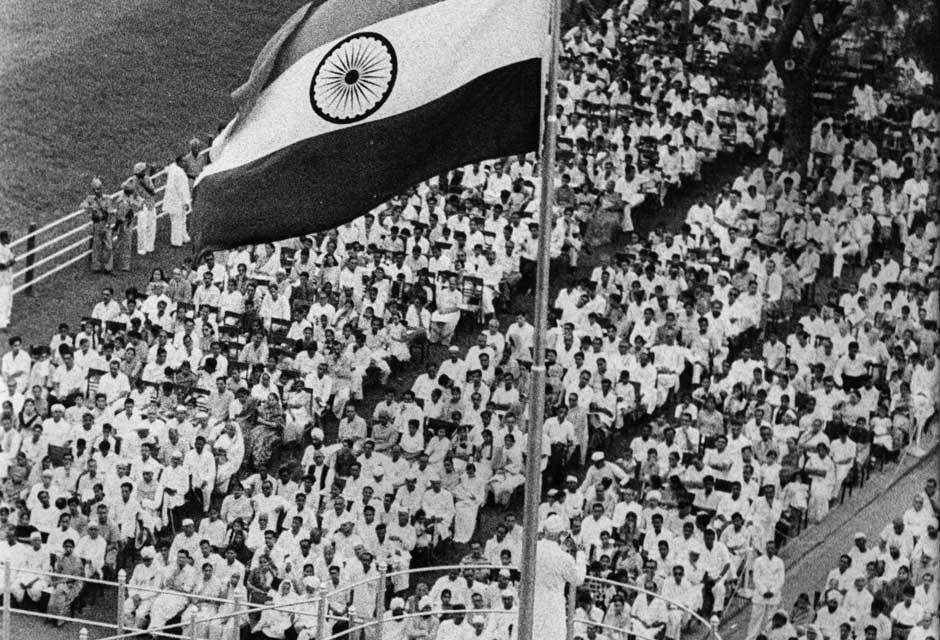
    Pandit Jawaharlal Nehru addresses the crowd in Delhi on the occasion of India’s 14th Independence Day on 17 August 1960. Above him flies the national flag of India. Image source: Link

    October, 2019 – November, 2019

    A constitution is a political document, framing the aspirations of a people. Far from being a record of the already-achieved, it is effectively a charter of aims and desires, of what a nation strives to be. From 2016 to 2018, IIT Bombay had hosted a series of talks on the Indian Constitution by some of India’s most eminent jurists. Five talks have been chosen for this issue that reflects both general constitutional questions as well as specific concerns – an overview of constitutional issues, gender justice, constitutionality and the death penalty, critical judgments on fundamental and human rights and challenges posed to constitutional freedoms by new technologies. The original audio recordings of all the five talks can be accessed from this page.

    (more…)

  • An Overview of our Constitution

    An Overview of our Constitution

    Nehru signing the Constitution of India. Image Source: link

    The Constitution of any country is really a political document. It brings into existence a body politic, a state, and defines what the various organs of the state are to be, what their assigned functions are, and so to say draws the Lakshman Rekha around each organ of the body politic. The interesting thing is what the Preamble of the Constitution of India says. This is what the Preamble says, “We the people of India having solemnly resolved to constitute India into a sovereign, socialist, secular democratic republic”. I may add here that the words ‘socialist’ and ‘secular’ were not there originally, they were added during the emergency, “and to secure to all its citizens justice, social, economic and political, liberty of thought, expression, belief, faith and worship, fraternity assuring the dignity of the individual and the unity and integrity of the nation, in our Constituent Assembly this 26th day of November 1949 do hereby adopt, enact and give unto ourselves this Constitution.”  In 1949, this was brought into force and the Republic was constituted on the 26th of January, 1950 which we celebrate as Republic Day.

    (more…)
  • Gender Justice and Constitutional Law

    Gender Justice and Constitutional Law

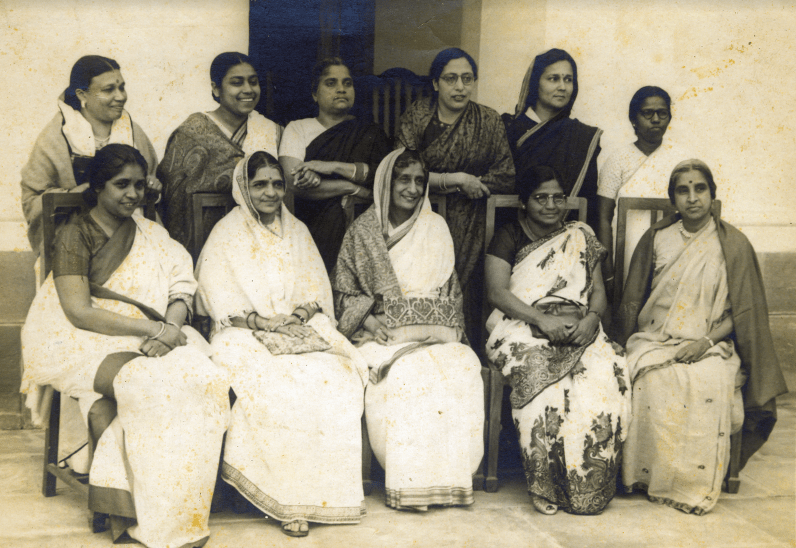
    Eleven out of the fifteen women who helped draft the Indian Constitution. The names of the fifteen women in an alphabetical order: Ammu Swaminathan, Annie Mascarene, Begum Aizaz Rasul, Dakshayani Velayudhan, Durgabai Deshmukh, Hansa Jivraj Mehta, Kamla Chaudhary, Leela Roy, Malati Choudhury, Purnima Banerjee, Rajkumari Amrit Kaur, Renuka Ray, Sarojini Naidu, Sucheta Kriplani and Vijalakshami Pandit. Image source: link

    Briefly, the Constitution is divided into 25 Parts. Today I will refer only to Part III which lists fundamental rights. Most fundamental rights are expressed with reference to the individual and a few to groups but all ultimately afford protection to every individual. Part III contains several Articles (Art. 12-35) but for today, I will refer to only the most basic which underlies all other rights and that is the positive right to one’s identity. Of all the characteristics that make up the identity of an individual, some are of the no choice kind which we are born with and have no hand in determining like gender, race and physical/mental attributes. The other non-physical parts of our identities are accidental and in that sense external such as religion, social or economic ⁠— a status which we may have been born into which are changeable but which nevertheless form part of our identities. The right to one’s identity takes within its ambit the rights to equality, not to be discriminated against, the right to live with dignity and to have the freedom to speak, associate with others, move and settle anywhere within India, think freely and profess or not profess any religion. Each of these aspects of one’s identity is expressly protected by the Constitution. Logically and constitutionally, therefore, every person’s identity is necessarily equally important. Nothing offends more than being treated differently on the basis of any aspect of one’s identity for no discernible reason. And yet there can be no doubt that we were and are unjustifiably treated differently by society. Differences were imposed by social and religious traditions which may have had their roots in some historical or other circumstances which are no longer relevant. Yet after 1950 while legally doing away with such inherited differences, the Constitution itself apparently permits differences. Thus while Article 14, mandates that the State shall not deny anyone equality before and protection of the law, the very next two Articles allow the State to make special provisions for women, children, Scheduled Castes, Scheduled Tribes and Backward classes. Special educational rights are also conferred constitutionally on linguistic and religious minorities. These special provisions are acceptable because they are based on reason, not belief, the reason being that in order to bring about true or substantive as opposed to formal equality, the socially or numerically disadvantaged will have to be given special rights to create what has been called ‘a level playing field’.

    (more…)
  • Recent Human Rights Controversies in the Supreme Court

    Recent Human Rights Controversies in the Supreme Court


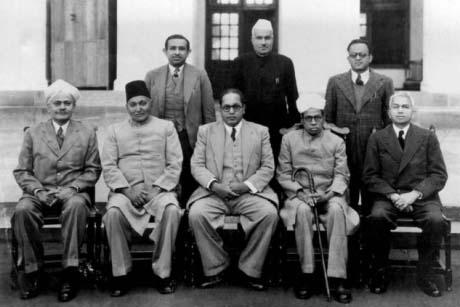
    Dr. Ambedkar with members of the Drafting Committee of the Indian Constitution. <Image source: Link>

    When I applied for IIT, I had no notion what IIT was all about.   And I sat for the exams and I got through; not so good, but got through. By the second year of IIT, it was very clear to me that I didn’t want to do engineering. And so I took refuge in the Humanities Department. I would spend long hours reading books on philosophy, economics, history and so on. So I was very, let’s say, unsettled. It was also a period of great change in this country, and I think that’s what saved me. There was the Jayaprakash movement with great movements in Bihar, a kind of total revolution. And I was very young and impressionable, and it was a good period to have politics swirling around you, unlike today where you’re bereft of real social movements, social change.  In the early ’70s we were still in the social democratic phase of society, namely nation-building, taking the whole of society along, bridging the gap between the rich and the poor, all these kinds of ideas were paramount. It was a framework where a young person didn’t look to his left or his right or behind him to see who is following. We didn’t need any followers, we were Che Guevara’s. We could do it by ourselves and we’d go ahead and try and change the world, go for strikes, sleep outside the factory gate, join the workers in their strikes, go to the rural areas. So it was a very, very good period. We were not given to much contemplation about where we were going and we went wherever our hearts took us, wherever the wind in our sails took us.

    (more…)
  • Death Penalty: From the perspective of the Constitution, Police, Courts and Executive

    Death Penalty: From the perspective of the Constitution, Police, Courts and Executive

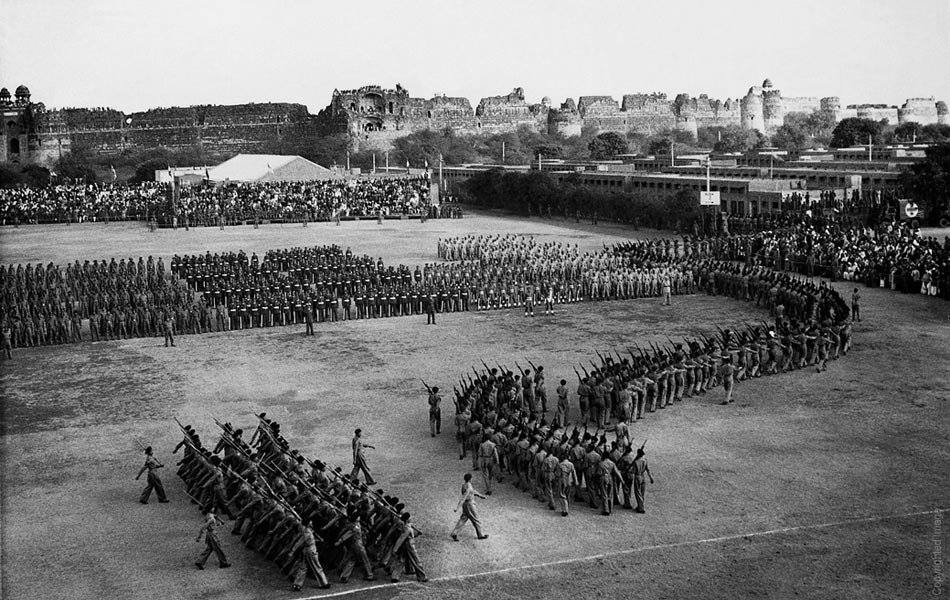
    First Republic Day parade on 1st October 1950. Image source: Link

    Why should we abolish the Death Penalty? What is wrong with the Death Penalty? When the United States first struck down the death penalty in Furman v. Georgia, Justice Marshall said that if people only knew how the Death penalty was actually inflicted they would find it shocking, unjust and unpardonable.  There are many reasons why you may oppose the Death Penalty. You may believe that it’s wrong to take life.  You may feel that life is something that is God-given, it can only be taken by God. Or if you are more secular-minded, you may believe that there are limits to the state’s power.  Can the state take a life? In the social contract, is that something we allow the state to do? You may believe that the Death Penalty is error-prone, it is far from fallible. You may believe it is irreversible, unlike other punishments. You may believe it is arbitrarily imposed. The Supreme Court has now restricted the Death Penalty to the rarest of rare cases. And even after the Supreme Court inflicts the Death Penalty, many of those cases are subsequently commuted by the government. 

    (more…)
  • Technology and Constitution: Emerging Challenges

    Technology and Constitution: Emerging Challenges

    Babasaheb Ambedkar, Chairman of the Drafting Committee, presenting the final draft of the Indian constitution to Constituent Assembly President Dr. Rajendra Prasad on 25 November 1949. Image Source: link

    Central to the process of learning is of course questioning, and this is what I propose to do today. There is one central theme to my presentation. It is encapsulated in a single word – liberty. When we speak of liberty, we usually mean a direct reference to Article 19 of the Constitution of India. This is in Part III of the Constitution. The whole of this is captioned Fundamental Rights. There are therefore a variety of rights, all said to be fundamental. And we now understand this to mean essential to the framework of the Constitution, or what is called its basic structure. Now the signal value of liberty is actually not just tucked away in Article 19. My argument is that the whole of the Constitution is predicated on this concept and we find this and its other sister concepts in the Preamble, that single page that gives us the framework. It states the intention of this document we call the Constitution. It tells us who, what, how, why. “We the people of India” speaks of our redemption of a pledge, of our tryst with destiny – you all know those words – and it speaks of our resolve to secure to all citizens justice of every stripe and then – now mind this – in the Preamble, liberty of thought, expression, belief, faith and worship. Notice the sequencing. Many of you here write code. You put code in a particular sequence for a particular reason. Think of the Constitution as code. That sequencing has a purpose, it has a reason. It is our task to discover what that purpose and what that reason is. First, justice of every kind, and then liberty, and within liberty, thought and expression come right at the very top. Having made all these resolutions and with this intent, we adopt, enact – and again this is key – give to ourselves our constitution. No government gave it to us, no ruling party made a gift of it to us, we secured it for ourselves. This is central to an understanding of fundamental rights. They are not gifts, they are ours, and we have secured them to ourselves.

    (more…)
  • Foreword

    Foreword

    A cartoon from HT published on 24 January showing Chairman of the Drafting Committee (and later Law Minister) BR Ambedkar holding an infant Republic of India while Mother India lays in bed exhausted from labour. Around him stand Dr. Rajendra Prasad and Nehru, looking anxiously. Image source: Link

    A constitution is a political document, framing the aspirations of a people. Far from being a record of the already-achieved, it is effectively a charter of aims and desires, of what a nation strives to be. Jawaharlal Nehru famously said at the dawn of Independence: ‘We have to build the noble mansion of free India where all her children may dwell.’ The constitution of India was meant as the blueprint for that house of freedom, as reflected in its Preamble. The men and women who shouldered the responsibility to shape the destiny of this new-born nation strove to shun narrowness of thought and ideas, to vacate extreme positions and to chart a course through discussion, debate, cooperation, compromise and tolerance. At every point, interlocutors were treated in good faith and the effort was to exercise good judgment and to bring everyone on board. These are valuable lessons in themselves for us to learn and to teach our students – future leaders and decision-makers. When they are part of the core cluster of forms of political association that are the inheritance of India’s project of constitution-making, it is even more important for us to understand and engage with them. And to engage with, moreover, the document that these vital political conventions gave rise to ⁠— the Indian constitution.

    (more…)