Category: Diversity and Inclusion

  • Diversity and Inclusion

    Diversity and Inclusion

    [vc_row][vc_column][vc_column_text]

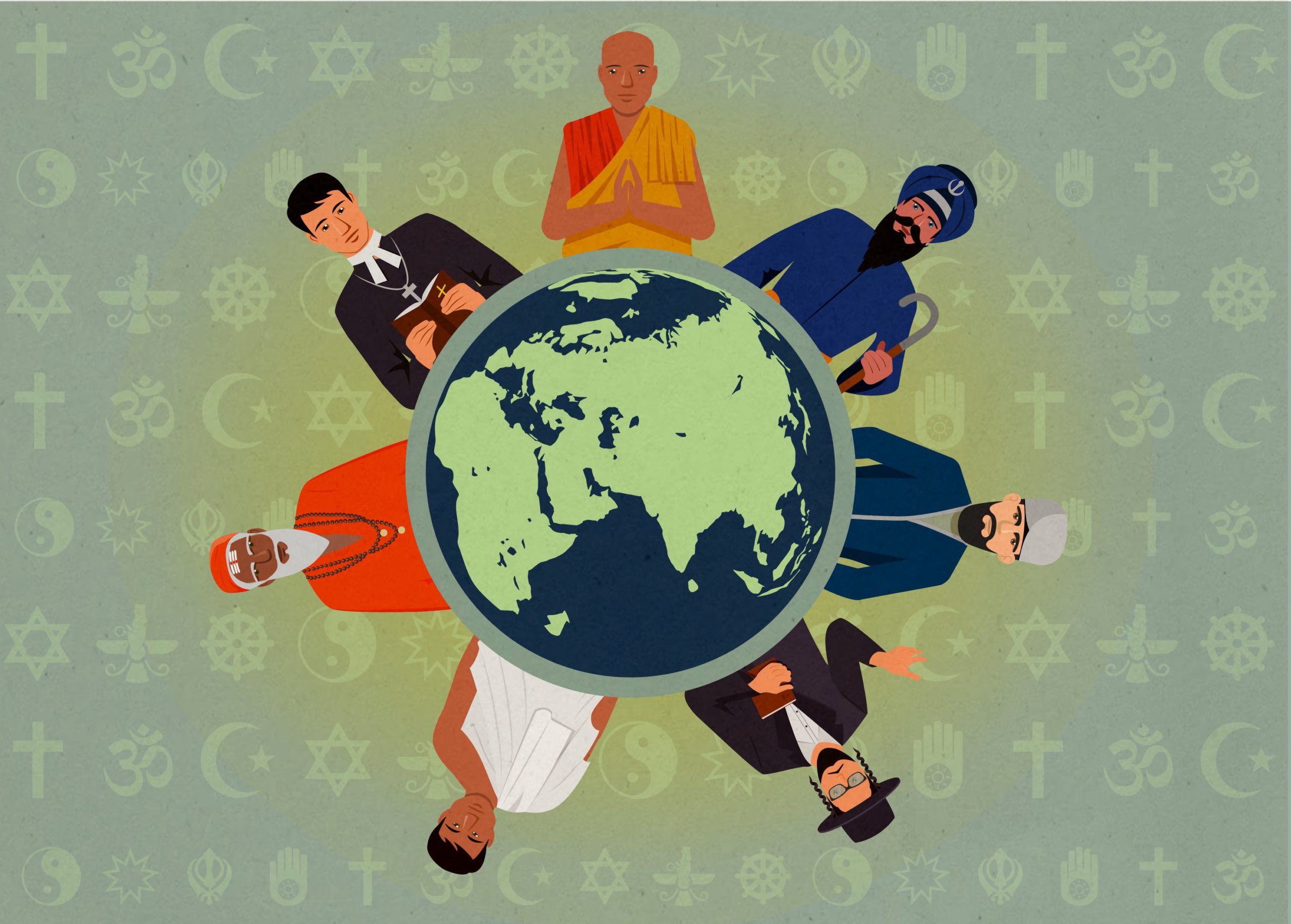
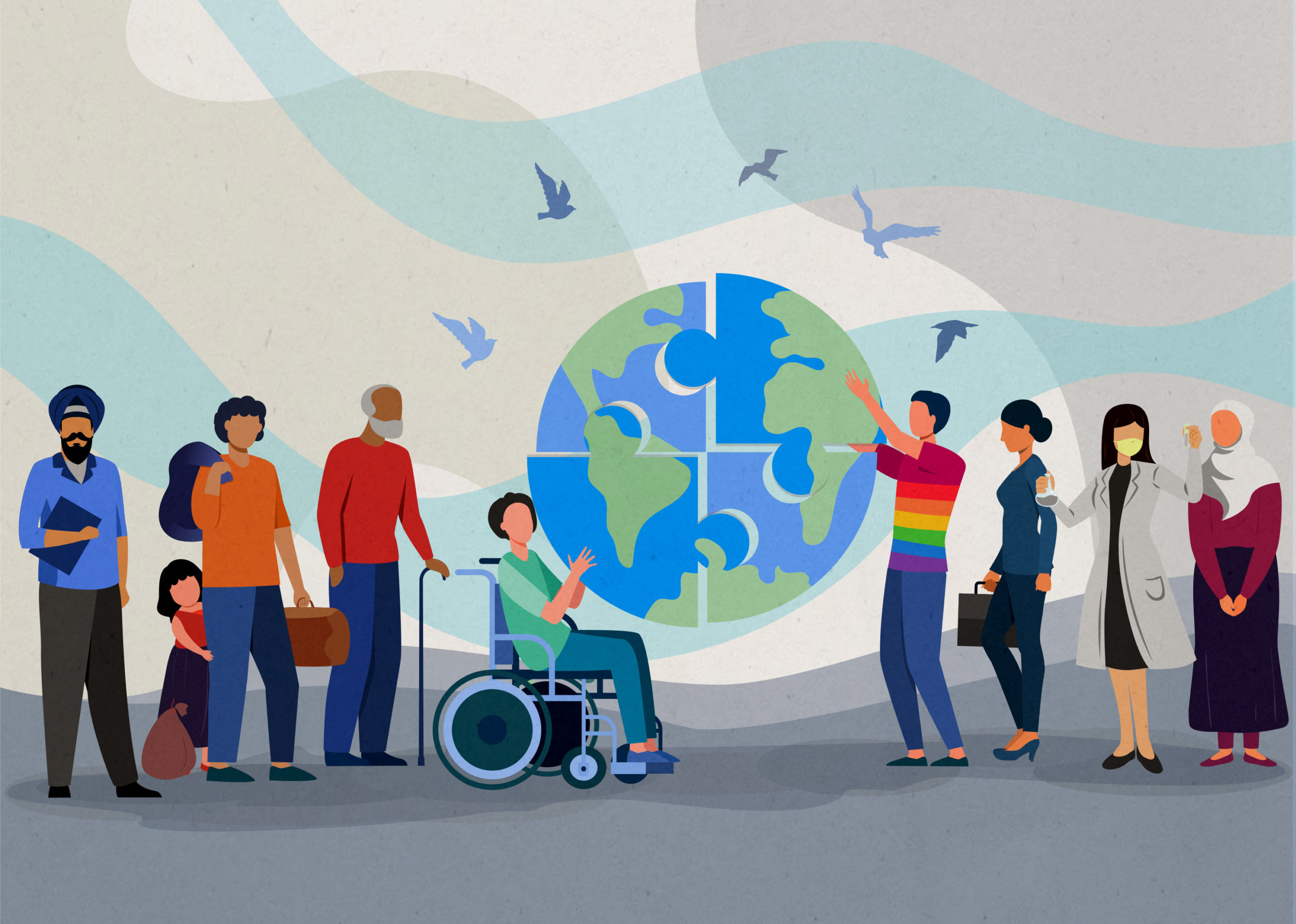
    Cover Illustration by Amlan Barai

    Diversity and Inclusion are among the most used buzzwords right now, and so we here on the Fundamatics team thought that it would be worthwhile putting together an issue on various aspects of the topic.

    Just like in any other sphere in life, IITians come in all stripes. Whether it is religion, caste, socio-economic status, gender, sexual orientation, disability, we all bring different backgrounds and perspectives to the table. Diversity implies recognizing these differences so that we all learn from the richness of experiences that these individually bring. Inclusion involves valuing each person so that they feel like they belong and are equal to everyone else so that they can contribute to the fullest of their abilities without having to worry about being discriminated against for being who they are. With everything going on in the world right now, it is especially important to recognize diversity and inclusion so that minority voices are not silenced, and their rights not trampled upon.

    As someone who belongs to a marginalized community myself, being gay, I am personally well aware of issues faced by people when you are in the minority. People talk about you behind your back, and you constantly have to keep proving yourself that you are no worse than others. I was teased for my lack of athleticism/manliness growing up. Eventually, I decided to start running marathons to prove that I was no different, and earned respect from my peers for my accomplishments in that field…but you shouldn’t need to go to these lengths to be felt included.

    We are fortunate to have a diverse set of articles for this issue. All the contributors are alumni, except for one who is an alumnus’ son. In Afsana, Zenobia Driver discusses what it means to be a Parsi growing up in India. Sundar and Sonati tackle the issues of race, migrants and dissent in a collection of four poems. Sridhar Rangayan talks about his days at IDC and his friendship with a fellow IDC alumnus and coming to terms with his sexual orientation. Shruti Gupta discusses hearing disabilities in her article. Neil Ghaskadvi talks about another taboo issue, ADHD, from a kid’s perspective. Chandru Chawla discusses the lack of women in governance roles at IITs, and Anuradha Narasimhan talks about women and the glass ceiling in corporate India. Prof. D. Parthasarthy writes about the dehumanization of the less fortunate among us. We are carrying a link to the recording on an excellent panel on racism organized by IITBHF, with an introduction by Vinay Karle. In “The People,” Ali Baba aka Prof. Ali Contractor reflects on current affairs in his inimitable layered style.  Ruyintan (Ron) Mehta along with Sashi Menon, Pramod Kulkarni and Pradip Nadkarni compares how the demographics of the IIT Bombay classes from 1970 to 2019 have changed.

    We hope you enjoy the articles for this Diversity & Inclusion issue of Fundamatics. Please don’t forget to leave your comments after reading each article, and we always appreciate any support you can offer the magazine through voluntary contributions through our secure Fundamatics donation portal.[/vc_column_text][vc_custom_heading text=”Table of Contents” font_container=”tag:h2|text_align:left|color:%23dd9933″][/vc_column][/vc_row][vc_row][vc_column][vc_basic_grid post_type=”post” max_items=”12″ initial_loading_animation=”none” grid_id=”vc_gid:1627019607593-33007bc6-749b-3″ taxonomies=”493″][/vc_column][/vc_row]

  • Trends in the Profiles of IIT Bombay Undergraduates

    Trends in the Profiles of IIT Bombay Undergraduates

    [vc_row][vc_column][vc_custom_heading text=”Study Purpose” font_container=”tag:h2|text_align:left|color:%23dd9933″][/vc_column][/vc_row][vc_row][vc_column][vc_column_text]The Indian society has come a long way in terms of educational opportunities, especially with respect to admissions to elite institutions like IIT Bombay. Our project examines the demographic differences between undergraduate class of IITB in 1970 and the batch that graduated in 2019. In both cases, entrance to IITB was based strictly on student ranking in the All India Joint Entrance Exam (JEE). Our analysis highlights categories that reflect the diversity of students.

    IITB itself has seen significant expansion with respect to class size. In our batch of 1970, we had a total of 297 who graduated with a BTech degree. In 2019, the undergraduate batch increased to 898, a whopping 200% increase in 49 years. At the same time, India’s population went from 555 million in 1970 to 1.35 Billion in 2019, a 143% increase in population.[/vc_column_text][vc_custom_heading text=”Background Information” font_container=”tag:h2|text_align:left|color:%23dd9933″][/vc_column][/vc_row][vc_row][vc_column][vc_column_text]It is important to note that there are several major differences between 1965 and 2015 in how the JEE was conducted and how students were ranked. In 1965, when the 1970 batch graduates joined IITB, all 4 subjects — English, Physics, Chemistry and Mathematics had equal weightage, with a minimum number of marks required in English to get ranked. In 2015, when the batch that graduated in 2019 joined IITB, the JEE was divided into two parts. JEE Mains prequalified approximately 10% of the students to take the JEE Advanced exam. Only a minimum number of marks were required in English in JEE Mains, but, the English marks did not count towards prequalification. Also, students had the choice to write their exams in one of many different Indian languages or in English. The JEE Advanced exam taken by the 150,000 prequalified students (from the JEE Mains) only had three subjects — Physics, Chemistry and Mathematics.  

    In 1965, there was no caste-based quota system. In 2015, the Government of India had established a well-defined quota system among the prequalified students who cleared JEE Mains.[/vc_column_text][/vc_column][/vc_row][vc_row][vc_column][vc_single_image image=”10114″ img_size=”large” alignment=”center” css=”.vc_custom_1599722232881{padding-top: 0px !important;padding-bottom: 0px !important;}”][/vc_column][/vc_row][vc_row][vc_column][vc_column_text]The number of UG students who entered IITB and other IITs across the country in 2015, based on the quota system, reflected the ratios given above. It is interesting to note that at least in IITB, the dropout rate of students is extremely low – less than 1%. This is an indication that the implication that SC/ST students are unable to cope with the rigorous education at IITB is simply not true. 

    The authors appreciate the extent to which the Indian government has gone to make our elite institutions accessible to all the social classes in our society. The admission process has been made fair by a) removing English (a subject that favored the students who came from a wealthier class and did their high school education in English medium) as a requirement for pre-qualification , and b) establishing quotas for OBC, SC and ST and in all categories establishing a 3% quota for Persons with Disability (PwD). 

    Finally, our analysis also indicates an increase in the number and percentage of female students who graduated in 1970 vs 2019. In 1970, we had only 1 female student graduate out of a total of 297 total undergraduates – resulting in the female percentage rate of a dismal 0.34%. In 2019, 122 females graduated out of a total of 898 total undergraduates. This is a 13.59% female graduation rate – a phenomenal 3,935% increase. It is still far below a 50:50 ratio, but significant progress has been made with respect to gender diversity.  In the last few years, female students have also been given a special category quota.[/vc_column_text][/vc_column][/vc_row][vc_row][vc_column][vc_custom_heading text=”Methodology” font_container=”tag:h2|text_align:left|color:%23dd9933″][/vc_column][/vc_row][vc_row][vc_column][vc_single_image image=”10099″ img_size=”large”][vc_column_text]All students were assigned one of the following categories based on their First and Last Names. There may be a small percentage of error in assignments, but it is statistically insignificant.

    CC: Christian Catholic     

    CS: Christian Syrian or Orthodox

    H: Hindu Unclassified (we could not neatly place them in one of the many Hindu categories)        

    HB: Hindu Bengali

    HK: Hindu Kashmiri

    HM: Hindu Maharashtrian

    HN: Hindu Nepali

    HP: Hindu Punjabi or Jat

    HS: Hindu Sindhi

    HSo: Hindu South Indian (those from Andhra Pradesh, Karnataka, Kerala, Tamil Nadu & Telangana)

    HNo: Hindus from Rajasthan, UP, MP, Bihar, Uttar Pradesh, Jharkhand, Uttarakhand

    J: Jain

    M: Muslim

    S: Sikh

    ZI: Zoroastrian Irani

    ZP: Zoroastrian Parsi

    F: Females separately listed for gender calculation, but included in categories above

    Note: We were unable to separate out General, SC, ST and OBC classes, but by mandate, they are in one of the Hindu categories in their respective percentage requirements. [/vc_column_text][/vc_column][/vc_row][vc_row][vc_column][vc_single_image image=”10118″ img_size=”large” css=”.vc_custom_1599722257155{padding-top: 0px !important;padding-bottom: 0px !important;}”][/vc_column][/vc_row][vc_row][vc_column][vc_single_image image=”10120″ img_size=”large” alignment=”center”][/vc_column][/vc_row][vc_row][vc_column][vc_single_image image=”10122″ img_size=”large”][/vc_column][/vc_row][vc_row][vc_column][vc_custom_heading text=”Conclusions” font_container=”tag:h2|text_align:left|color:%23dd9933″][/vc_column][/vc_row][vc_row][vc_column][vc_single_image image=”10152″ img_size=”large”][vc_column_text]

    1. Dramatic changes in Indian government regulations for admissions to IITs resulted in a major change in the student demographics. Some of the main changes in admissions and reservations from 1965 to 2015 were (A) Removal of English as a subject for JEE ranking (B) Reservation of seats for SC, ST and OBC with a sub-category for PwD in each category (C) More women are joining engineering institutions. This is still a work in progress. (D) The above results reflect a far fairer distribution of students, with the underprivileged SC, ST and OBC groups dramatically boosting the Hindu percentage far in excess of their proportion in India’s population. Our assumption is, that all SC, ST and OBC groups are Hindus.
    2. Table 2 indicates the biggest drop in population occurred in the Zoroastrian Parsi/Irani category – from 4.05% in the 1970 class to 0.11% in the 2019 class. There are two reasons for that – the Zoroastrian community is a rapidly shrinking religious group in India with its population dropping from about 120,000 in 1970 to less than 65,000 in 2019. Also, the removal of English in the JEE ranking eliminated the advantage that this group had earlier in the mid-sixties to the early seventies.
    3. Although the Christian population in India remains the same at 2.3% in 1970 and in 2019, the percentage of Christians at IITB dropped from 6.73% in 1970 to 0.67% in 2019. 
    4. On the surface, the Muslim student percentage looks like it has remained the same in 1970 @ 1.68% and at 1.67% in 2019. But, given India’s Muslim population – 13.4% in 1970 and 14.2% in 2019 – these figures reveal a drop in the Muslim student population as well. 
    5. The Sikh population showed an increase in 2019 over 1970 to 1.67% vs 0.34% in 1970.
    6. The Jain student population has dropped from 2.69% in 1970 to 2.23% in 2019. This drop is statistically insignificant.
    7. The biggest increase in percent population occurred for Hindu students from 84.51% in 1970 to 93.65% in 2019. The main reason is the reservation of seats for SC, ST and OBC classes starting in the mid to late eighties. The percentage of all Hindus is far in excess of their proportion vis a vis other groups in the population in 2019.
    8. Of the increase in the Hindu student population, the largest has occurred in the HNo category. This can largely be attributed to IITB being perceived as the leading engineering school in the country.
    9. The popularity of engineering education and access to elite engineering institutions among women has been on the rise in India. This is clearly reflected in the 3,935% increase in the female population at IITB in 2019 over 1970.

    [/vc_column_text][vc_custom_heading text=”Meet the Authors” font_container=”tag:h2|text_align:left|color:%23dd9933″][/vc_column][/vc_row][vc_row][vc_column][vc_media_grid element_width=”3″ item=”masonryMedia_ScaleWithContentBlock” initial_loading_animation=”none” grid_id=”vc_gid:1599839305050-6520bf39-ea9c-3″ include=”10131,10129,10144,10145″][/vc_column][/vc_row]

  • Change Must Begin at the Top

    Change Must Begin at the Top

    [vc_row][vc_column][vc_column_text]

    Illustration by Derek Monteiro

    The present IIT Council has one chairperson and 46 members. Only seven of these are women. No woman has ever helmed any IIT thus far. This is after nearly 70 years since the first IIT was established. The number of women who have won the IITB Distinguished Alumni award is even more dismal. The track record of countries, whose COVID-19 response was led by women, is impressive and eons ahead of those that are run by men. This may not be a coincidence. Is it time for a premier IIT to be run by a competent woman? (more…)

  • Rainbow Stories

    Rainbow Stories

    Illustration by Nilapratim Sengupta

    Industrial Design Centre (IDC) has been instrumental in making me who I am — even more than the design education I received there, it provided me with a soul mate who helped me discover myself.

    I met Suhail Abbasi the day I came for the interview for admission to IDC in 1984. I never knew we would be close friends for 35 years and counting. He is more than a friend, a soul mate to be precise. We were in the same batch of 8 students of the first Visual Communications batch of IDC and bonded closely — because I, being from an Engineering background (NITK Suratkal), sought his help to execute artworks as he was from Applied Art background (J. J. School of Arts). In fact, all eight of us were very close as it was such a small batch then. 

    While Suhail and myself bonded closely we never spoke about our sexual orientation. At that point in time, I was not even out to myself that I was gay. I was deeply closeted and too scared to admit my sexual orientation even to myself. 

    I was deeply closeted and too scared to admit my sexual orientation even to myself. 

    Remember, it was the pre-internet, pre-cellphone era! Nothing was ever spoken aloud about sexuality, everything was hush-hush. If you are slightly effeminate you would be teased by your hostel-mates. I had to project at being ‘normal’.  It was a tough time hiding one’s innermost secret and pretending that everything was happy and joyful. It was a really painful time.

    After we passed out of IDC, Suhail and I remained good friends as we tried to go on our course of job hunting — he joined the film industry and I joined an institute for the hearing impaired as their Mass Media Officer.  It was only after three years of passing out, in 1990, when Suhail co-founded Bombay Dost, India’s first gay magazine, that I came to know of his sexual orientation, though I always suspected it. Very soon I came out to him that I was gay too. He coolly said, “Big secret!!”

    From then on Suhail and I bonded even more closely, we worked on the magazine together, and then went on to co-found The Humsafar Trust, India’s first gay organization, in 1994. He has been a consistent support to me all these years.

    From then on Suhail and I bonded even more closely, we worked on the magazine together, and then went on to co-found The Humsafar Trust, India’s first gay organization, in 1994.

    While at IDC, Ravi Poovaiah and Ajanta Sen were constant supporters. They kind of knew about Suhail and my sexual orientation, but they never asked any questions. Their silent support meant a lot. Of course, after we came out to each other, we came out to Ravi and Ajanta too and they continue to be amazing people who have even attended some of our gay parties!

    While Suhail continues to be on the board of The Humsfar Trust and also work as a creative director for many shows, I have managed to pursue my dream of making LGBTQ films and also found KASHISH Mumbai International Queer Film Festival, which over the past 10 years has become South Asia’s biggest LGBTQ film festival. 

    We both were in some way instrumental in Sec 377 being finally read down in September 2018, as petitioners challenging the law in the Supreme Court — Suhail being a petitioner along with The Humsafar Trust, and myself being one of the petitioners from Pravritti, the pan-IIT LGBT group.

    Now, IIT Bombay has Saathi – IIT Bombay, the campus LGBT group which is doing amazing work by bringing together the LGBTQ community and allies on campus. They also have a counselling helpline and organize several activities on campus. 

    Earlier this year Suhail and I were on a panel organized by Yaariyan, the youth LGBTQ group, along with Saathi — IIT Bombay. We reminisced about our early days on campus and laughed out loud about how closeted we were. But there were tears mingled with laughter.

    Tears of joy, that we have come so far in LGBTQ rights movement where it is not illegal anymore to be gay in India. Campuses are far more inclusive of diversity, and there are so many companies who have their D&I policies in place, to offer placements to LGBTQ persons. 

    I’m so happy that I met Suhail 35 years ago, and so thankful to IDC for having put me on my path to self-discovery and contribute in my very small way to the betterment of the rights of the community.

  • Ek Afsana, A Story

    Ek Afsana, A Story

    [vc_row][vc_column][vc_column_text]

    Cover Illustration by Amlan Barai

    Imagine setting out on a train journey across India, not across its land-mass but across Time, what would you notice as you looked out the window at the changing landscape during your life-span? If you’re feeling really adventurous, put yourself in someone else’s skin for a bit and picture what they’d see. There are over a billion versions of reality dotting this land, a never-ending raucous multitude of stories eagerly waiting to be noticed. This is one such perspective. (more…)

  • Racism’s Challenges: Participating in the Global Civil Rights Dialogue

    Racism’s Challenges: Participating in the Global Civil Rights Dialogue

    [vc_row][vc_column][vc_column_text]

    Photo by Joshua J. Cotten on Unsplash

    In 1965 US immigration laws changed and eliminated the earlier “race-based” quotas, which restricted immigrants from India and other countries. This change was a consequence of the 1964 Civil Rights Act.  We all owe big gratitude to the Civil Rights movement in the US and leaders like Dr. Martin Luther King who fought for the enactment of those laws. Dr. King’s approach to the Civil Rights movement in the 60s is intricately linked to Mahatma Gandhi’s non-violence approach during India’s independence struggle. In a recently discovered message by All India Radio during Dr. King’s visit to India in 1959, he said “Since being in India, I am more convinced than ever before that the method of nonviolent resistance is the most potent weapon available to oppressed people in their struggle for justice and human dignity. In a world since Mahatma Gandhi embodied in his life certain universal principles that are inherent in the moral structure of the universe, and these principles are as inescapable as the law of gravitation.”

    Many of us may not be aware of the historical context of the recent events of racial inequality we witnessed and are witnessing in the middle of a global pandemic and our ties to this history. 

    It will serve us well to understand the issues underlying racism in order to address these challenges in our professional and personal lives.  It touches all of us irrespective of where we live. IITians like other Indian immigrants to the US have benefited tremendously from the new legal framework. While we owe some of it to our education and hard work – we were privileged to receive opportunities that were not available earlier and to others. Many of us today lead small and large organizations. Racism is one such subject where we need to educate ourselves and be more actively engaged in understanding racism’s unjust impact. As Mahatma Gandhi used to say “Make injustice visible.”[/vc_column_text][/vc_column][/vc_row][vc_row][vc_column][vc_tta_tabs][vc_tta_section title=”Panel Discussion” tab_id=”1599633303226-daf3c5f9-8019″][vc_column_text]IIT Bombay Heritage Foundation (IITBHF) hosted a webinar on July 18th that focused on why the topic of racism should be discussed now and why is it relevant for IIT alumni; how it affects one’s professional and personal lives; and how one can help going forward. 

    This very engaging and enlightening panel discussion attracted a global audience. Many family members as well as friends of IITB alumni attended this webinar.[/vc_column_text][vc_video link=”https://www.youtube.com/watch?v=6fb-YoaJfeo&t=159s”][/vc_tta_section][vc_tta_section title=”Panelists” tab_id=”1599633303242-83821290-3d03″][vc_column_text]A very distinguished panel with diverse backgrounds to address this complex and sensitive topic. [/vc_column_text][vc_masonry_media_grid item=”mediaGrid_Default” initial_loading_animation=”none” grid_id=”vc_gid:1599745729920-f635ce6cdc12e8dcc8ebf3b43cd7d22d-5″ include=”10011,10009,10010″][vc_column_text]Chris Williams, a noted Corporate and Community Leader, who leads the largest minority-owned investment bank in the US. He overcame many challenges in his life to get to where he is today. 

    Raj Gupta moderated the panel discussions. He is the recipient of the Distinguished Alumnus Award from IIT Bombay. He came to the US in 1967.  Over the last 50 years, he has accomplished much as a corporate leader, serving as Chairman and CEO of Rohm and Haas. Today he serves on Boards of several Fortune 500 companies. He is also the author of a delightful book “Eight Dollars and a Dream”.

    Vanita Gupta is a noted Civil Rights Attorney, who previously served as the head of the Civil Rights Division at the U.S. Department of Justice and as a lawyer with ACLU and NAACP Legal Defense and Educational Fund. She is a second-generation Indian American.[/vc_column_text][/vc_tta_section][/vc_tta_tabs][/vc_column][/vc_row]

  • Women in Business Careers

    Women in Business Careers

    Photo by Ilya Pavlov on Unsplash

    Let me start by explaining both my motivation as well as my qualification for writing this piece. While I have worked only in India and primarily in consumer marketing companies, women in workplaces is actually a blog I could write if I trusted my writing skills more. My objective for doing this piece is quite selfish — I really want to see more women in senior management and all you dads and moms can influence that!! (more…)

  • The Diary of a Third Grader with Undiagnosed ADHD

    The Diary of a Third Grader with Undiagnosed ADHD

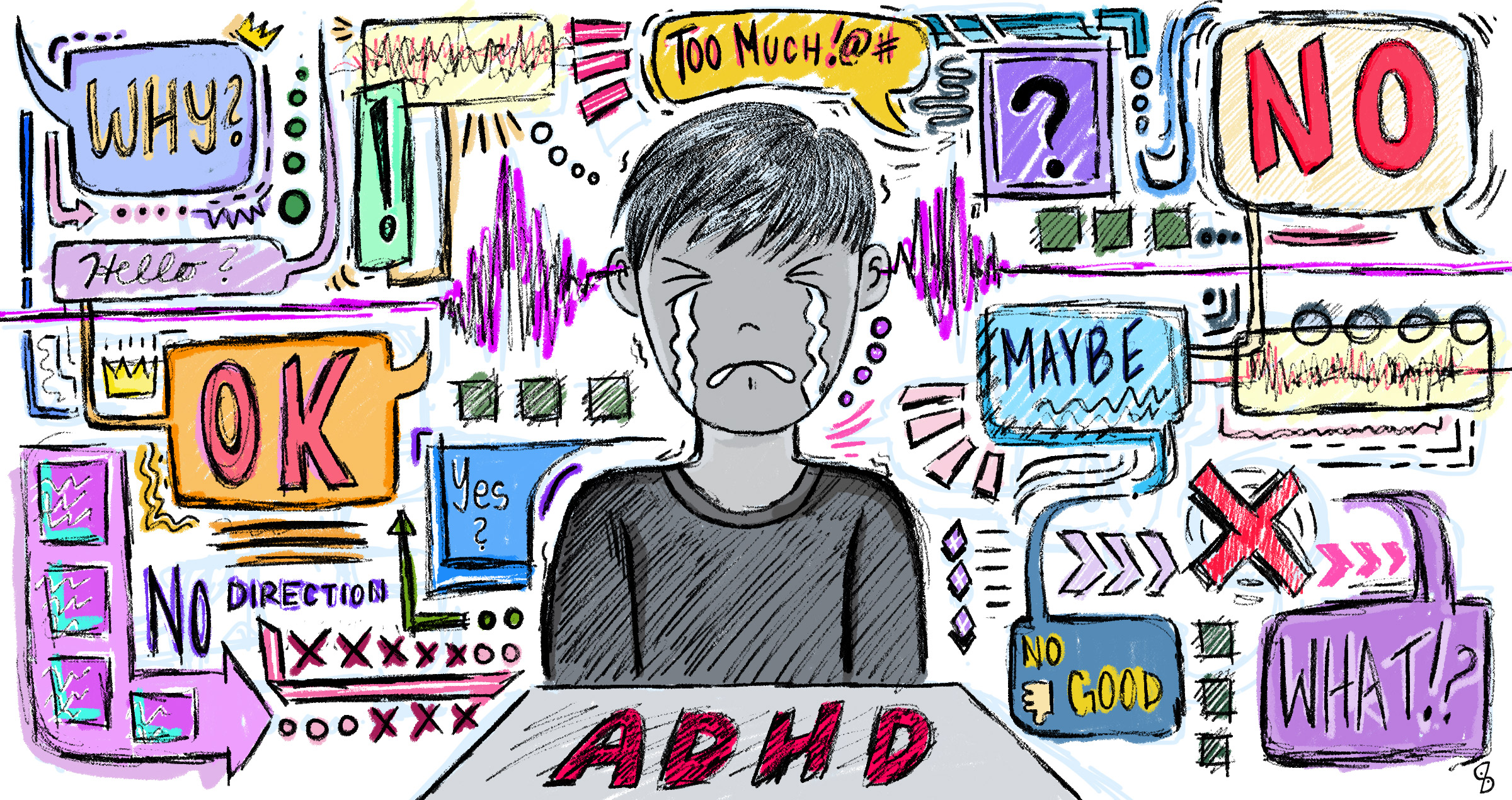
    Illustration by Teesta Chakraborty

    It is a normal day in school and I am excited to leave. The teacher announced that they will pass out report cards I was overwhelmed by my stress I decided to take a look because it was re-sealable and there was no tamper-evident design. The grades were very bad. No, this couldn’t be! I checked the back of the card and the name read “Mathew J. Mackey.”My parents are going to kill me! I spent the bus ride in anxiety. 

    (more…)

  • Musings from Thekambattu

    Musings from Thekambattu

    [vc_row][vc_column][vc_column_text]

    Illustration by Nilapratim Sengupta

    We (Sunder and Sonati) have spent much of the last twenty years in growing trees and our children, here in Thekambattu. No time for anything much else than housework, land work, the kids and visitors. Now, with the boys grown up, and the trees to some extent, there was time for poetry.

    The poetry started as a response to the events in Kashmir. (How does one respond? has been a recurring theme in our lives). The Kashmir poems more or less wrote themselves, and this continued with the corona poems and generally all the poems all of which have been written in the last year since August 5th. I (Sunder) write the poems and Sonati edits them to tone down the rants or to suggest a more elegant point of view.

    Hope that these poems make you pause, think, enjoy the poetry and get you to write some poems of your own. The world needs more poets.[/vc_column_text][vc_tta_tabs active_section=”1″ title=”Poems”][vc_tta_section title=”George Floyd” tab_id=”1599643548598-64c752f0-38b7″][vc_single_image image=”10048″ img_size=”large” alignment=”center”][vc_column_text]

    Photo by Simon Daoudi on Unsplash

    With knee on neck
    And I can’t brea..
    He breathed his last
    And he can’t see
    What happened next
    What happened next
    Was that here and there
    And everywhere
    People realised that
    They could not brea..
    Until now they
    Could not see
    That it was because of
    Neck and Knee
    All over the world
    They came in hordes
    Black Lives matter
    They all roared
    Or Brown
    Or Pink
    Or whatever else
    It hardly mattered
    What they said
    Because the knees were shaking
    The shackles were breaking
    The necks were straining
    The necks were gaining
    The knees were deigning
    To listen for once
    To those whom
    They never heard
    To those to whom
    They had always said
    It’s your damn neck
    Pressing too hard
    Pressing too damn hard on my knee
    To those whom they never saw
    Even when knee
    Was pressed down hard
    On neck

    I can’t brea..
    Was a visceral cry
    It let so many others
    Breathe at last
    And amidst all the
    Bangs and clatter
    Amidst all the
    Twitter chatter
    One thing stood out
    Each life matters
    Each life matters
    To he who lives it
    Each death matters
    To he who dies it
    Each life should matter
    To you and to me
    Each death should matter
    To humanity

    [/vc_column_text][/vc_tta_section][vc_tta_section title=”Questions” tab_id=”1599643548597-8fb76575-eacc”][vc_single_image image=”10047″ img_size=”large” alignment=”center”][vc_column_text]

    Photo by Emily Morter on Unsplash

    On our first day at
    A new school
    I met
    Berzee, Munaf, Nandan
    Venkatesh, Chitcharan, Jude
    During recess

    After
    What’s your name?
    We circled warily around
    Each other
    Finding out
    Where someone lived
    Did he come by the school bus?
    Did he have a car?
    Who would take the
    BEST bus home with me?
    Who had an older brother in school?
    Who should I partner with
    To play carrom?
    What tiffin had they each brought?

    Today I look back
    And wonder
    At those questions
    And wonder of wonders
    At those innocent times
    When after
    What’s your name?
    There was not
    The merest thought of
    The menacing follow-up question

    [/vc_column_text][/vc_tta_section][vc_tta_section title=”Bombay Blues” tab_id=”1599643609574-1937c50c-92c7″][vc_single_image image=”10049″ img_size=”large”][vc_column_text]

    Photo by Surbhi B on Unsplash

    There used to be
    A newspaper vendor
    Sitting on the pavement
    On Colaba Causeway
    From whom I used to buy
    The Evening News of India
    For my father
    Making sure to finish
    Busybee’s Round and About
    While walking home

    He disappeared for weeks, once
    And on his return I quizzed him
    Kahaan gaye the aap?
    He said, muluk me gaya tha, baba
    Where was that?
    Uttar Pradesh ki Meerut ke paas
    Ek chota sa gaon

    Aur gaon ka naam?
    Rampur

    That was possibly
    My first encounter with migrants
    But when I started asking
    I found that
    The Kolhapuri chappal-maker
    Near Regal cinema
    Was actually from Kolhapur
    The shoe-shine boys at Churchgate station
    Where Fr Netto used to send us
    If our faces weren’t reflected in our shoes
    Were from Dhule, Amalner, Erandol. Pachore

    The taxi drivers with names like Talwandi and Gill
    Were from villages of those names in Punjab

    The Irani pao-seller was
    Of course from Iran
    But more recently
    Had come from Valsad
    Where was that?
    Gujarat ma, dikra

    Vegetable and Fruit sellers were from
    Unheard-of villages in Bihar and Uttar Pradesh
    A veritable geography lesson on the streets

    The smuggled TDK and Sony cassette sellers
    On the pavements of Flora Fountain
    Were all from Kerala
    They were the hardest bargainers of them all
    But peppering their Tamil-Malayalam with
    Mone this and Mone that
    Would make me feel
    That what I had bought
    Was a steal

    The Matunga-wala
    Who cycled from Matunga
    With particularly Tamil goodies
    Arisi appalam and kaara boondi
    Was of course Tamil

    It seemed to me then that
    Everyone in Bombay
    (With the possible exception
    Of Bal Thackeray)
    Was a migrant

    Including me

    [/vc_column_text][/vc_tta_section][vc_tta_section title=”Dissent” tab_id=”1599643606368-2b0f6123-3f14″][vc_single_image image=”10050″ img_size=”large”][vc_column_text]

    Photo by Art Lasovsky on Unsplash

    A poet’s vocation
    Is dangerous
    You stand to lose
    Your liberty
    Perhaps your life
    Worst of all
    Your friends

    It seems to me that
    Nowadays
    I just need to
    Shake my head
    To lose a friend

    Should I then
    Keep nodding to
    Keep them?

    [/vc_column_text][/vc_tta_section][/vc_tta_tabs][/vc_column][/vc_row]

  • “Why Live Silently? When You have the Right to Hear!”

    “Why Live Silently? When You have the Right to Hear!”

    Photo by Malte Wingen on Unsplash

    Stranger: “Hi, may I know what are those things hanging behind your ears?”

    Me: “Oh sure! Thanks for asking though. They’re assistive hearing devices and they help me hear since I’m hearing-impaired.”

    Stranger: “Oh I see! I’m so sorry for you!”

    Me: “Hehe not a problem at all, really!”

    That was a short conversation I had with a passer-by while I was in Dubai for holidaying last winter. But wait here, what do you think was wrong about that? (more…)