Tag: 2020

  • Climate Change

    Climate Change

    [vc_row][vc_column][vc_column_text]

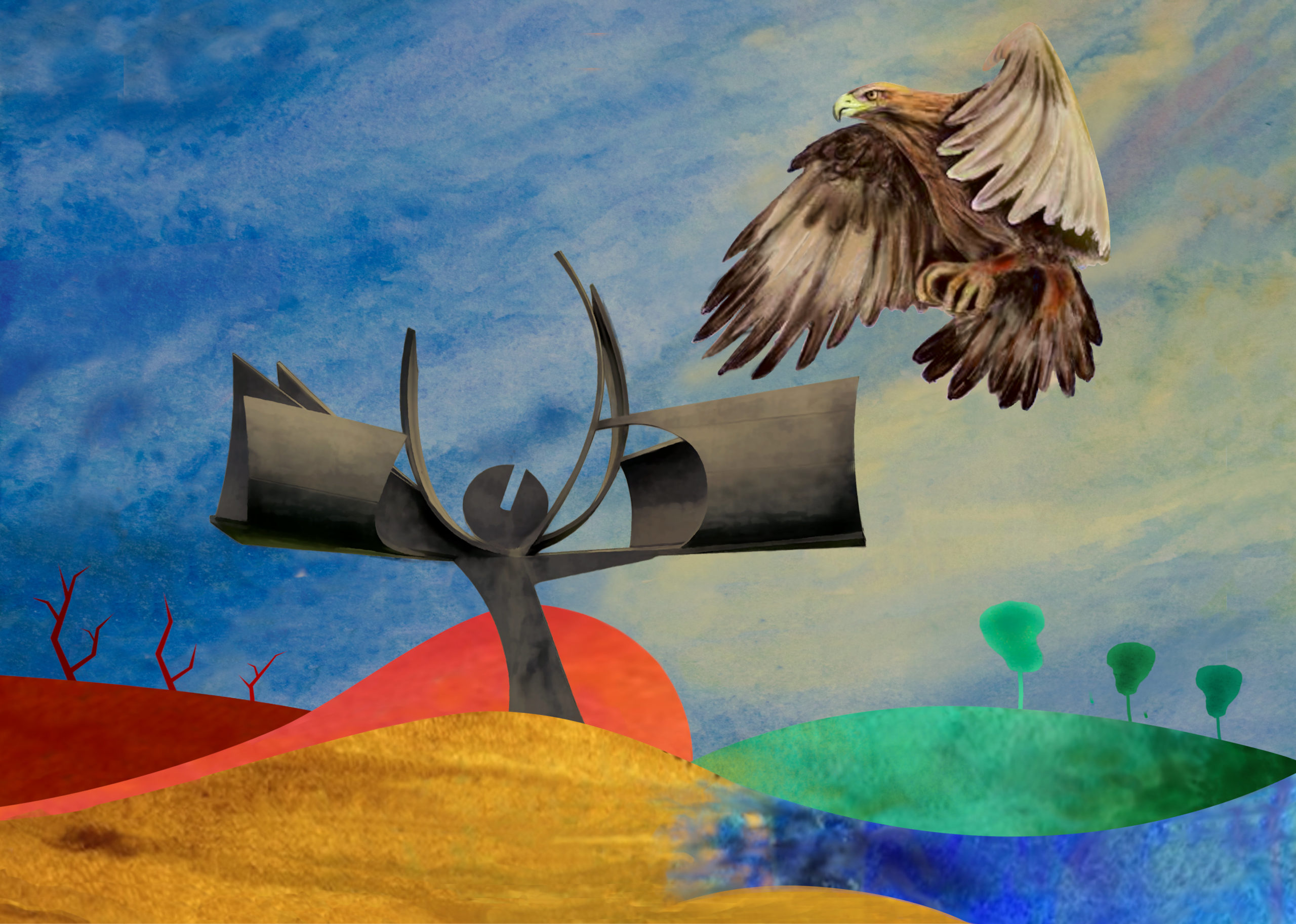
    Illustration by Nilapratim Sengupta

    [/vc_column_text][vc_column_text]”A healthy planet should not be a moonshot,” writes one of the authors of this Climate Change issue of Fundamatics. As a global pandemic continues to rock the world causing untold hardships to the human race, there is a greater challenge lurking behind the scenes. The Guest Editor of this issue Raghuram Murtugudde, succinctly points out in his Editorial piece, good health comes from consuming mindfully not just food, but also energy and water. Read a kaleidoscopic range of views on climate change – anecdotal, some scientific, and others discursive – that will drive home the realization that the threat of global warming no longer a far-off phenomenon. The set of articles in this issue not only discuss the various implications of climate change but focus on efforts to mitigate its impact on ecosystems and communities, and share guidelines to achieve a sustainable future.[/vc_column_text][vc_custom_heading text=”Table of Contents” font_container=”tag:h2|text_align:left|color:%23dd9933″][vc_basic_grid post_type=”post” max_items=”14″ gap=”0″ initial_loading_animation=”none” grid_id=”vc_gid:1612941877237-9fb77091-6600-1″ taxonomies=”495″ exclude=”10248″][/vc_column][/vc_row][vc_row][vc_column][/vc_column][/vc_row]

  • Diversity and Inclusion

    Diversity and Inclusion

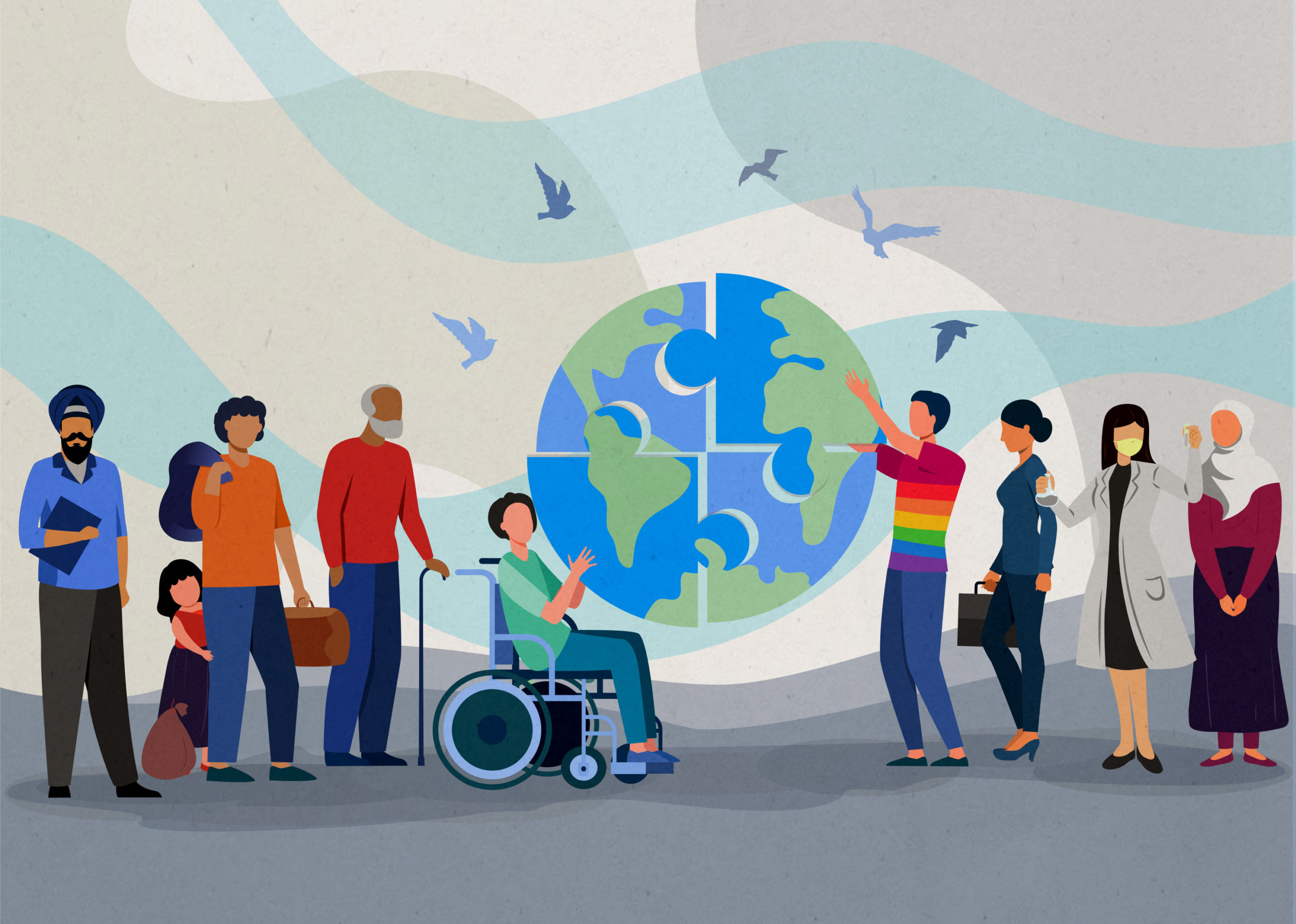
    [vc_row][vc_column][vc_column_text]

    Cover Illustration by Amlan Barai

    Diversity and Inclusion are among the most used buzzwords right now, and so we here on the Fundamatics team thought that it would be worthwhile putting together an issue on various aspects of the topic.

    Just like in any other sphere in life, IITians come in all stripes. Whether it is religion, caste, socio-economic status, gender, sexual orientation, disability, we all bring different backgrounds and perspectives to the table. Diversity implies recognizing these differences so that we all learn from the richness of experiences that these individually bring. Inclusion involves valuing each person so that they feel like they belong and are equal to everyone else so that they can contribute to the fullest of their abilities without having to worry about being discriminated against for being who they are. With everything going on in the world right now, it is especially important to recognize diversity and inclusion so that minority voices are not silenced, and their rights not trampled upon.

    As someone who belongs to a marginalized community myself, being gay, I am personally well aware of issues faced by people when you are in the minority. People talk about you behind your back, and you constantly have to keep proving yourself that you are no worse than others. I was teased for my lack of athleticism/manliness growing up. Eventually, I decided to start running marathons to prove that I was no different, and earned respect from my peers for my accomplishments in that field…but you shouldn’t need to go to these lengths to be felt included.

    We are fortunate to have a diverse set of articles for this issue. All the contributors are alumni, except for one who is an alumnus’ son. In Afsana, Zenobia Driver discusses what it means to be a Parsi growing up in India. Sundar and Sonati tackle the issues of race, migrants and dissent in a collection of four poems. Sridhar Rangayan talks about his days at IDC and his friendship with a fellow IDC alumnus and coming to terms with his sexual orientation. Shruti Gupta discusses hearing disabilities in her article. Neil Ghaskadvi talks about another taboo issue, ADHD, from a kid’s perspective. Chandru Chawla discusses the lack of women in governance roles at IITs, and Anuradha Narasimhan talks about women and the glass ceiling in corporate India. Prof. D. Parthasarthy writes about the dehumanization of the less fortunate among us. We are carrying a link to the recording on an excellent panel on racism organized by IITBHF, with an introduction by Vinay Karle. In “The People,” Ali Baba aka Prof. Ali Contractor reflects on current affairs in his inimitable layered style.  Ruyintan (Ron) Mehta along with Sashi Menon, Pramod Kulkarni and Pradip Nadkarni compares how the demographics of the IIT Bombay classes from 1970 to 2019 have changed.

    We hope you enjoy the articles for this Diversity & Inclusion issue of Fundamatics. Please don’t forget to leave your comments after reading each article, and we always appreciate any support you can offer the magazine through voluntary contributions through our secure Fundamatics donation portal.[/vc_column_text][vc_custom_heading text=”Table of Contents” font_container=”tag:h2|text_align:left|color:%23dd9933″][/vc_column][/vc_row][vc_row][vc_column][vc_basic_grid post_type=”post” max_items=”12″ initial_loading_animation=”none” grid_id=”vc_gid:1627019607593-33007bc6-749b-3″ taxonomies=”493″][/vc_column][/vc_row]

  • For Children, By Children

    For Children, By Children

    [vc_row][vc_column][vc_column_text]This month we bring to you a “children-themed” issue of  Fundamatics. And, by children, we mean for children and mostly by children who are connected to IIT Bombay through their parents — alumni and faculty.

    We have a request for you, our readers. Do spare a few minutes from your busy schedules to read and acknowledge the work of these children who have poured their souls into this issue. Please encourage them by leaving your comments at the end of posts that you like and appreciate. It would mean the world to the young ones.

    This issue is our tribute to a demographic affected by the COVID pandemic, which has robbed them of green fields and the company of their peers. A few of us on the Editorial team were curious to find how these tiny tots, tweens and teens are coping with the new world order. We did not specify any theme and merely asked them to share a submission reflecting whatever is closest to their hearts.

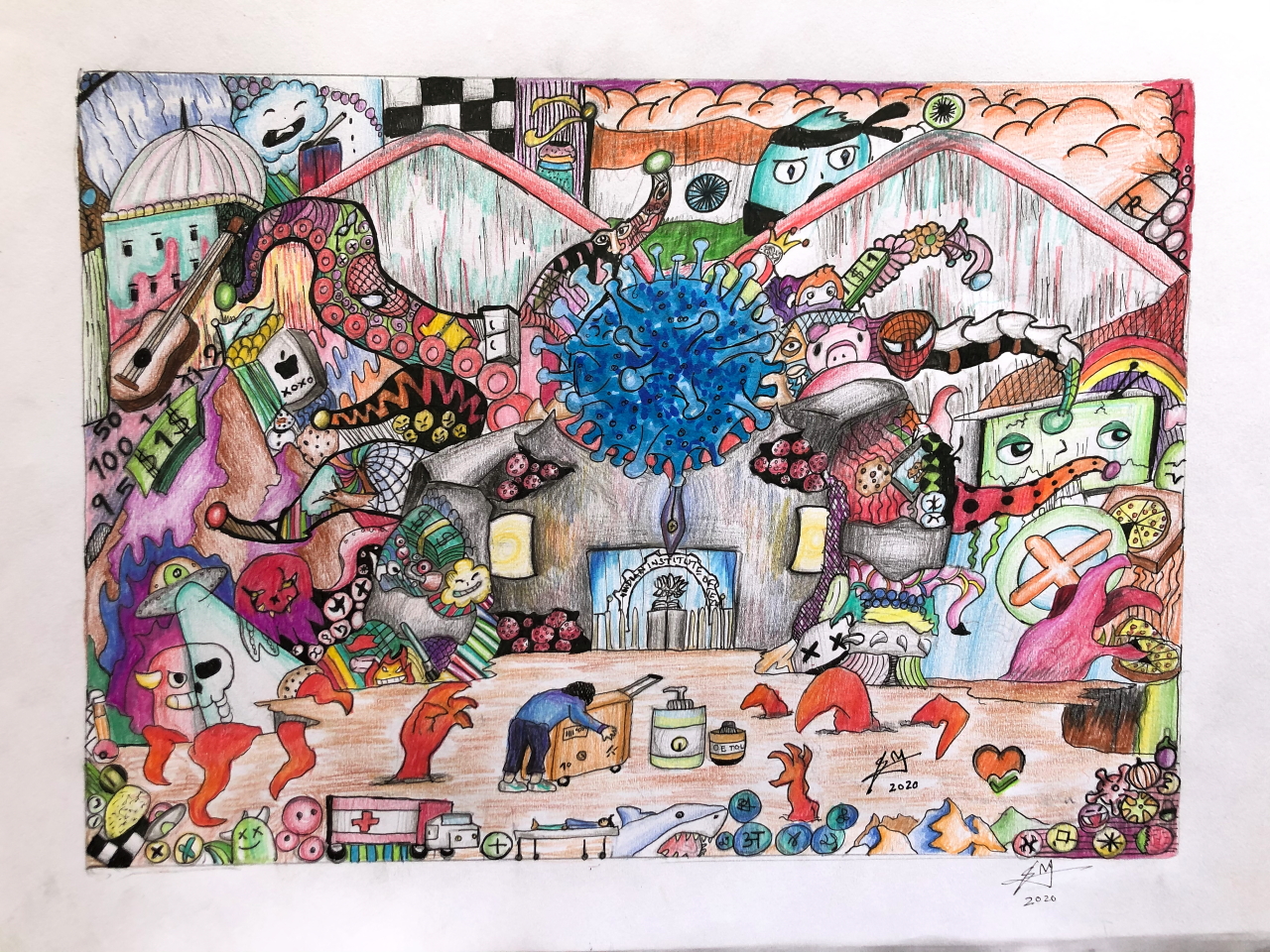
    The cover illustration of the issue (displayed above) is by a 12-year old. A tiny tot illustrated her mother Sherline Pimenta’s (also the author of this issue’s Foreword) story. A group of children presented us with comic strips that hold up a mirror to society – Asterix & Obelix fighting COVID, two brothers saving the farmers’ crop from a swarm of locusts, and a protest against the ruthless treatment of animals – all available in the section titled “Mirror, Mirror on the Wall”. Another group came to us with amazing stories all captured in the section Thereby Hangs a Tale. Others shared mindboggling artwork (grouped together in the section “Brush Strokes”), each a masterpiece in itself. The star piece of the artwork section is The ABCs of Art by the incredibly talented Prof. Arun Inamdar — a perceptive cartoonist and caricaturist — who shares some words of wisdom for aspiring artists. The lead piece of the issue “Story of a Story” is, however, by Prof. Shilpa Ranade, an IDC faculty, who gives us a glimpse into her childhood, adroitly interweaving it with the story behind the making of the award-winning animation “Goopi Gawaiya Bagha Bajaiya.”

    Is there anything for the “adult” alumni in this issue? Of course, there is. This is your chance to peek into the mind of the generation that will be taking over our planet in the next couple of decades. And, we can tell you this much — they will not disappoint you. Indeed, we have lots of hope for our future.

    We’re sure you will enjoy reading this issue as much as we enjoyed putting it together. Happy reading and once again. Please don’t forget to comment and share through your social media.[/vc_column_text][vc_custom_heading text=”Foreword by Sherline Pimenta” font_container=”tag:h3|text_align:left” link=”url:http%3A%2F%2Fwww.fundamatics.net%2Fforeword-final%2F||target:%20_blank|”][vc_custom_heading text=”Sections in this Issue” font_container=”tag:h2|text_align:left|color:%23dd0f0f”][vc_column_text]This time, we have had a wealth of submissions, and so have grouped the content thematically into the following four sections for your easy perusal.[/vc_column_text][/vc_column][/vc_row][vc_row][vc_column][vc_basic_grid post_type=”post” max_items=”4″ element_width=”3″ grid_id=”vc_gid:1627017666225-c752d543-e23b-7″ taxonomies=”490″][/vc_column][/vc_row][vc_row][vc_column][vc_column_text css=”.vc_custom_1595824881756{background-color: #eaeaea !important;}”]

    We hope you have enjoyed reading Fundamatics, the award-winning ezine published by the IIT Bombay Alumni Association, envisioned as one that is by IIT Bombay alumni, faculty and students, and for the same vast community. And, the best part of Fundamatics is that it is completely free and can be accessed by thousands of our alumni who are spread all over the world. But this does not mean that we do not incur any operational costs in bringing the ezine to you. Your financial support can mean that we can continue to remain in circulation and “free” to you, our readers.

    [/vc_column_text][/vc_column][/vc_row]

  • Our Green Campus

    Our Green Campus

    April, 2020

    No one knew that it would be like this. The reality of a pandemic is also the stillness of silence. 

    The nature of this silence is different; it is more an absence of manmade noise. Now there are no errant voices drifting across from the hostels, no sound of autos and sundry other vehicles laboring up the Sameer hill, the distant sound of traffic and horns that drift across the lake, not even the occasional construction equipment.  

    This is not the first time Fundamatics has dedicated an issue to the campus. This, after all, is not a typical university green space with formal, manicured gardens and lawns but a more naturalistic biodiverse landscape – a beautiful anachronism placed smack dab in the middle of an urban megapolis of Mumbai. 

    (more…)

  • The World of Folklore and Mythology

    The World of Folklore and Mythology

    January, 2020

    In the age of Alternate Facts and Fake News, Fundamatics thought it would be interesting to devote an issue to Folklore and Mythology. This is not an attempt at being flippant but to an honest effort to bring together a collection of diverse stories from various parts of the country. Folklore is how a People imagine their past and themselves. Folk tales become icons of cultures, and in turn, cultures get manufactured around these tales. The tales are told in various art forms – storytelling, singing, theatre, paintings, sculpture and handicraft – and in turn these art forms shape the tales. We are constrained here to limit ourselves to the written word but the written word is no mean instrument – as we shall see* (hum dekhenge ).

    (more…)