[vc_row][vc_column][vc_column_text]
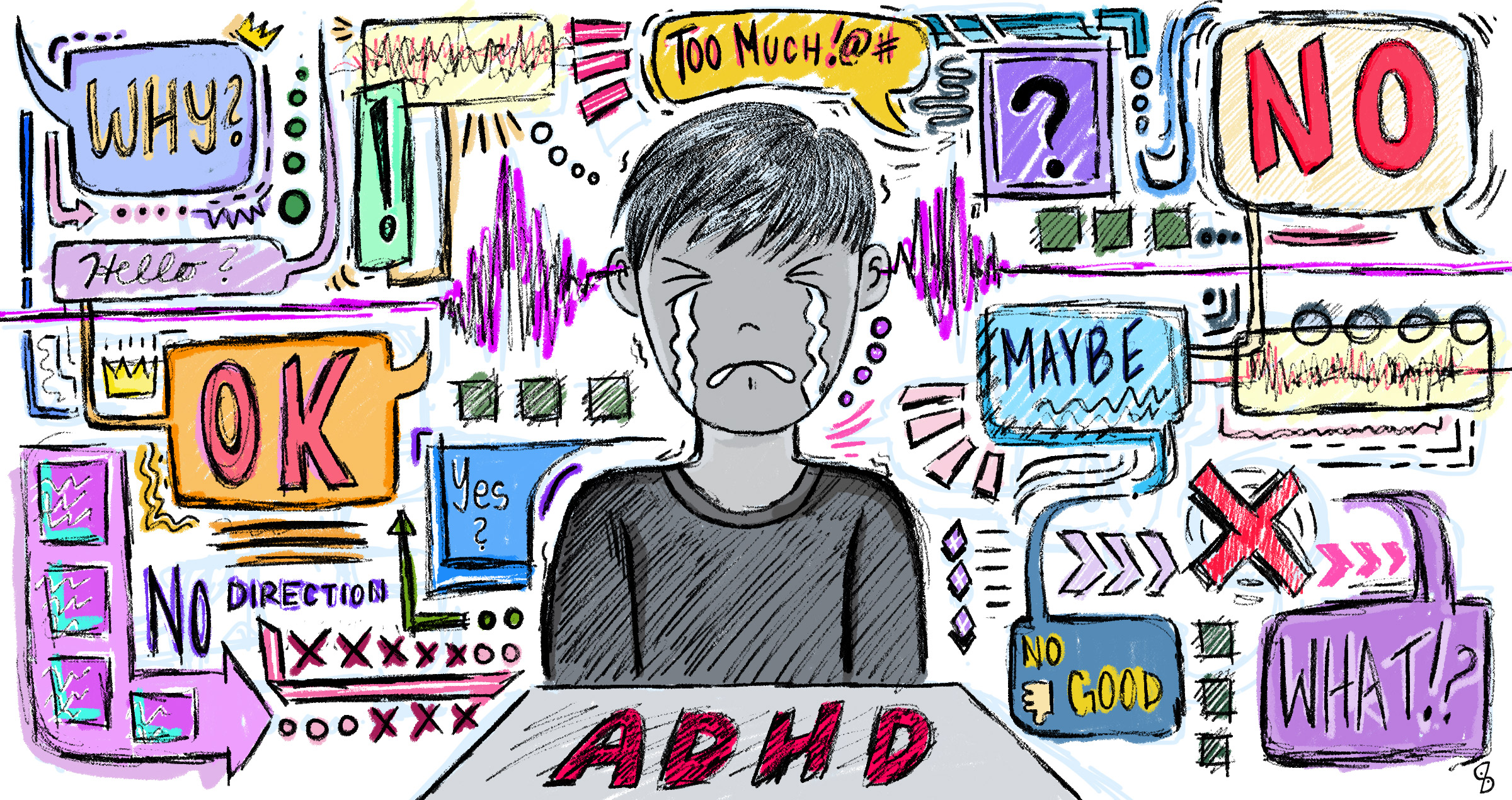
Illustration by Harshita Bandodkar
This article was originally published in the India Forum.
[/vc_column_text][/vc_column][/vc_row][vc_row][vc_column][vc_column_text]
Policymakers seem to have a deep love for the word ‘innovation’. The Department of Science & Technology (DST) released a draft Science, Technology and Innovation Policy (STIP 2020) with its apparent focus on innovation and the avowed objective of “positioning India among the top three scientific superpowers in the decade to come.” The foot soldiers of innovation are people, especially young, creative, competent ones with passions and dreams. But is our education system producing such individuals?
On the face of it, it looks like we are producing prodigies in plenty and of “perfect” quality, as indicated by the results of class 10 and 12 board examinations. In 2020, some students scored a full 500/500, and the number of students who secured an aggregate of 95% and more doubled in comparison with the previous year.[/vc_column_text][/vc_column][/vc_row][vc_row][vc_column][vc_column_text]But what is the ground reality?
The three big C’s that are necessary for innovation are competence, curiosity, and creativity. Competence provides the basis of creativity and it requires that conceptual knowledge is properly understood and internalised. Radical ideas come only to people who have mastered prior knowledge and are aware of the laws that nature constrains us with. It was only because Albert Einstein understood the concepts of Newtonian physics so well that he could grasp its limitations. ‘Innovations’ without competence belong to the realm of fantasy and pseudoscience. A domestic ‘innovation’ of this variety can be seen here.[/vc_column_text][/vc_column][/vc_row][vc_row][vc_column][vc_column_text]There is much eulogisation of ‘out of the box’ thinking in popular writing. This discourse constructs a cliché that brilliant ideas arrive from ‘nowhere’ and simply appear inside minds that are intrinsically creative. In real life, there is no ‘nowhere’. The apple falling on Isaac Newton’s head — which triggered his ‘discovery’ of gravity — is simply a metaphor for how small events can drive curious minds to think of deeper things.
Another piece of folklore celebrates that some of the uber-rich pioneers who founded technology companies, such as Steve Jobs (Apple) or Bill Gates (Microsoft), were college dropouts. Hence, it follows that in order to be a technology innovator, one does not need to go to college. At the very least, it suggests that ‘education’ is not necessary for ‘innovation’; it might even be a hindrance. But the truth is that Gates was well versed in coding and understood how a microcomputer worked. Jobs worked as a video game designer and that ultimately led him to focus on the design of Apple’s hardware.[/vc_column_text][/vc_column][/vc_row][vc_row][vc_column][vc_custom_heading text=”Rote Learning is the Enemy of the Three C’s” font_container=”tag:h2|text_align:left|color:%23dd9933″][/vc_column][/vc_row][vc_row][vc_column][vc_column_text]There are four features of our educational system, as practised in schools and colleges, which combine to produce a rather shallow form of learning.[/vc_column_text][/vc_column][/vc_row][vc_row][vc_column][vc_column_text]First, the teaching-learning style is predominantly based on memorising facts and reproducing these in examinations. There is minimal emphasis on analysis and imbibing the logical structure of a problem and its solution.
A more sophisticated form of rote learning is pattern recognition. It reduces complexity to an identification problem and attempts to find the solution from ‘having seen it before.’ Even when concepts are taught, there is hardly time to reflect upon these because of the emphasis on ‘solving problems from question banks’. This focus encourages the memorisation of patterns rather than an evolution of causative insights. Comprehension of concepts is even seen as a waste of time because it stands in the way of the speed that is required to ‘crack’ (especially competitive) examinations. The process, ironically, is a bit like Artificial Intelligence (AI) because it trains the brain to recognise ‘similar’ problems and thus recall ‘known’ solutions.[/vc_column_text][vc_column_text]Second, there is an emphasis on quantity, so much so that the government wanted the syllabi to be reduced by half. The usual objective is to cover as much material as possible. There is lots of material stuffed into every subject and this is considered to be a sign of being ‘advanced’. Over decades, the evolution of syllabi seems to have happened simply by the addition of more and more ‘higher’ topics.[/vc_column_text][vc_column_text]
On the face of it, it looks like we are producing prodigies in plenty and of “perfect” quality, as indicated by the results of class 10 and 12 board examinations.’
[/vc_column_text][/vc_column][/vc_row][vc_row][vc_column][vc_column_text]Third, the marks (and rank) obtained in board examinations play a hugely significant role in facilitating access to college education. In many cases, there are further admission tests or competitive examinations to be ‘cracked’. Given the scarcity of jobs and higher education opportunities, the net result is that of a hyper-competitive ethos. Here, getting ahead of others is of paramount importance. This makes the entire system examination-focused, with all its attendant paraphernalia of coaching institutes, question banks, guidebook-based studying (also known as ‘kunji’; or the ‘key’ to success), and a single-minded obsession with scoring high marks at all costs. For a student, the emphasis shifts almost completely from ‘knowing’ to ‘scoring’.[/vc_column_text][/vc_column][/vc_row][vc_row][vc_column][vc_column_text]Lastly, it is natural for an educational system of this sort to engender a great motivation for using unfair means in academic activities — copying from others, solution manuals, material available on the internet, and sometimes, from chits supplied by relatives. Even activities meant to be creative, such as projects, are often ‘completed’ by buying pre-built, off-the-shelf artefacts, or pre-written, available-for-sale essays. Schools are aware of these practices. It is no wonder that they continue even in college.[/vc_column_text][/vc_column][/vc_row][vc_row][vc_column][vc_custom_heading text=”Superficial Learning and Evaluation” font_container=”tag:h2|text_align:left|color:%23dd9933″][/vc_column][/vc_row][vc_row][vc_column][vc_column_text]Learning at the school level can be broadly tied to three objectives. First, the teaching process provides information to the students in many forms: plain facts with context, building concepts, and generalising observations into “laws” of the natural and social sciences. Second, the application of this information to problems that involve analysis and finding a solution: typically, say, the application of a ‘law’ to an actual problem (for instance, the law of gravity to explain planetary motion; the laws of economics to find the price of a commodity-based on supply and demand). Last, and perhaps the most profound, is the engendering of creativity and the ability to engage with the unexpected and the novel.[/vc_column_text][/vc_column][/vc_row][vc_row][vc_column][vc_column_text]Our current ‘system’ seems to be limited to just the first objective. Thus, students study history simply as a list of dates on which particular events occurred — the reasons for the happenings are given in a sentence or two. They learn about the personality of a character in a classic novel as a set of points taken from an answer key. Many do not even actually read the novel. Examiners simply check how many of the expected dates or points have been given and then award marks. In subjects such as physics and chemistry, the solution to a problem is evaluated by looking at the final answer and whether the name of the appropriate law is stated or not. Such examination perspectives have also given rise to the proliferation of short-answer questions or multiple choice questions (MCQs), which have now extended their hold even in the social sciences and humanities. Most MCQ-based tests are badly made and hinder critical learning. A lot of students who are ill-prepared tick these off blindly, as in a lottery, and invariably get some right.[/vc_column_text][vc_column_text]
The three big C’s that are necessary for innovation are competence, curiosity, and creativity.
[/vc_column_text][/vc_column][/vc_row][vc_row][vc_column][vc_column_text]The model answers released by the Central Board for Secondary Education (CBSE) show how the marking of examination questions—including long-answer ones—is based on superficial, elementary answers that do not require critical or analytical abilities.
A typical question from the class 12 CBSE English paper of 2020 has a long passage about “donated organs and their transport.” It states many straightforward facts such as where it was done for the first time in India, which organization is framing rules for it, and so on, and then asks these as questions, literally. The biology paper (CBSE, class 12, 2020) exclusively tests regurgitation with questions such as “give three points” or “two examples.” The physics paper (CBSE, class 12, 2020) is a little better, mostly because the nature of the subject requires some calculations, but even here the paper manages to ask questions such as “explain working principle” or “define half-life”. Even questions with more detail are completely structured. In social science, a question like “give three features of Indian democracy” makes it convenient to regurgitate a “precise” answer, but it provides no scope to elicit responses that may pertain to the actual working of these three features. There is hardly anything in these question papers that will make a student draw inferences or express something creatively.[/vc_column_text][/vc_column][/vc_row][vc_row][vc_column][vc_column_text]Further, there is this rigid belief that questions ‘should only be from the textbook’ and that they must have the same ‘pattern as has been covered’ in class (or coaching). Questions that need the background to be understood are also considered undesirable because they require reasonable reading and comprehension abilities. Most students try to ‘estimate’ what a passage is saying and what is being asked. Unsurprisingly, students tend to skip unfamiliar questions. This lays the foundation for always avoiding the novel and the unexpected.[/vc_column_text][/vc_column][/vc_row][vc_row][vc_column][vc_custom_heading text=”Illusions of Perfection are an Impediment” font_container=”tag:h2|text_align:left|color:%23dd9933″][/vc_column][/vc_row][vc_row][vc_column][vc_column_text]In the education arena, delusions of grandeur are sustained by the very high marks — in the high 90s — many students get, even in subjects like English. Toppers are made to feel they have reached unimaginable levels of perfection by the social admiration they are showered with and by the adulatory media coverage they receive. An examination system that has functioned like this for decades has created an ethos that simply ignores all criticism, especially that scoring does not imply learning.[/vc_column_text][/vc_column][/vc_row][vc_row][vc_column][vc_column_text]An important outcome from the school system today is the likely ‘downgrading’ of students who are actually creative. Because such students do not stick to the ‘expected’ answers — based on keywords and limited to what the textbook says — they lose out on marks (and ranks). This is a great loss in terms of creativity. We are effectively ensuring that those who can think for themselves are not recognised for their potential. From this cohort, even those who are able to do well in terms of ranks and career options feel handicapped in terms of creativity. An Indian Institute of Technology (IIT) graduate who went on to undertake graduate studies at Massachusetts Institute of Technology (MIT) had this to say: “Three semesters into my research programme at MIT, my self-confidence dropped like an anvil. The reason was not performance indices — I had done rather well in my graduate coursework […] The root of my insecurities was the realisation of a simple, but bitter truth: my ability to ace exams back in IIT was in no way correlated with being creative in scientific research.”[/vc_column_text][vc_column_text]
An important outcome from the school system today is the likely ‘downgrading’ of students who are actually creative
[/vc_column_text][/vc_column][/vc_row][vc_row][vc_column][vc_column_text]The school examination boards have contributed handsomely to this illusory sense of achievement by inflating marks under the guise of ‘moderation’. The methods used to do this are obscured from public view and nothing is known about the logic and the formulae they use for changing raw marks to their moderated values. A natural consequence of this is the unleashing of a competitive grade inflation by different boards. At the student level, such unscientific tampering with raw scores produces arbitrary ranks because different students benefit differently, often quite randomly. It is amazing that such outrageous arbitrariness has been allowed to persist for so long, and that it exists even now.[/vc_column_text][/vc_column][/vc_row][vc_row][vc_column][vc_column_text]A major part of the discourse on boards and examinations is hijacked by toppers and scarcely any attention is paid to what is happening at the mass level. Every year, various reports, especially the Annual Status of Education Report (ASER), underline how bad the ground reality is. “Only half (50.3%) of all students in Class V can read texts meant for Class II students.” More than this is the larger problem of how many can read with a reasonable degree of comprehension. Shobha Sinha describes this very accurately in her paper ‘Reading without Meaning: The Dilemma of Indian Classrooms’ (2012), in the context of early classes: “The only point that is being made is that when stories or other texts are used only to focus on language components excluding meaning, children never learn to engage with the meaning of the text […] For them, reading in the early years is an exercise in meaninglessness. Children seek to make sense of the world, not to engage with nonsense.”[/vc_column_text][/vc_column][/vc_row][vc_row][vc_column][vc_custom_heading text=”Authoritarian Attitudes Kill Curiosity” font_container=”tag:h2|text_align:left|color:%23dd9933″][/vc_column][/vc_row][vc_row][vc_column][vc_column_text]Our educational institutions have a culture built around power hierarchies such as that between students and teachers. The section of teachers with a feudal mindset is significant. Such teachers expect students to meekly submit to their authority and show an obsequious form of respect. The dominant operational norm is that the student should ‘humbly’ receive the knowledge that is being so ‘generously’ imparted by the teacher. Asking too many questions is usually looked upon as a sign of arrogance or stupidity, and often teachers label such behaviour as mala fide.[/vc_column_text][/vc_column][/vc_row][vc_row][vc_column][vc_column_text]This specific nature of the student-teacher interaction also serves another social function. It nudges academic discourse into the pre-fixed structure of ‘this is the topic, these are the questions and these are the answers’, and limits the scope of broader ‘free thought’. Inconvenient questions about caste discrimination, socio-economic inequality, or political issues are kept at bay, thereby ‘normalising’ caste and class divisions. This narrative looking back at the school years explains how an authoritarian ethos is nurtured in schools, that obstructs curiosity and facilitates sycophancy in praise of leaders and the government.[/vc_column_text][/vc_column][/vc_row][vc_row][vc_column][vc_column_text]Also, school children are taught formally about the Constitution, parliamentary democracy, and the rights and duties of citizens in a manner that focuses solely on their being able to recite facts, such as the articles of the Constitution by their number, or how the tenure of Rajya Sabha members is computed. There is little discussion about how democratic institutions actually work, and how caste and class factors strongly influence this working.
Students are therefore not equipped to ‘apply’ these ideas to the struggles for accessing basic rights, to notions of protest and dissent, to comprehend the seductive lure of supreme leaders, or to understand how elections are influenced by money and muscle power.[/vc_column_text][/vc_column][/vc_row][vc_row][vc_column][vc_custom_heading text=”Fundamental Deficits” font_container=”tag:h2|text_align:left|color:%23dd9933″][/vc_column][/vc_row][vc_row][vc_column][vc_column_text]All alternative forms of pedagogy that engender curiosity and creativity require more resources — infrastructure, laboratories, equipment, consumables, and, of course, teachers — when compared with the kind of mass pedagogy that is currently in practice.
A Continuous Comprehensive Evaluation (CCE) strategy needs a lot more teachers so that each of them can actually cater to a small cohort of students, teaching and testing them. Answers to long-form questions need to be read by teachers painstakingly and this takes more time than keyword-based answer checking.
Project Based Learning (PBL) methods can only become a reality if there are enough exploration spaces (for example, tinkering labs) equipped with the appropriate devices (for example, lathe machines, computers, 3D-printers), consumables (for example, wood, metal sheets, computer peripherals, resin-based ink for 3D printing), and lab supervisors.[/vc_column_text][/vc_column][/vc_row][vc_row][vc_column][vc_column_text]Teaching methods that use debate and discussion as vehicles for learning need smaller student batches managed by teachers who lead and moderate the discussions.
There is a basic deficit in all the resources mentioned above. The pathetic state of the infrastructure in public institutions needs no introduction. Walk into a public institution, whether a school, college, or university, including elite institutions, and the decay can be seen everywhere: crumbling walls; buildings in various states of dilapidation; barely functional, disorganised labs. Teachers’ wish lists include things as basic as blackboards, benches, and electricity. The only exceptions are perhaps new institutions or new constructions in old institutions. Most private schools fare similarly with private investors putting in just enough to get along, barring elite schools that serve the rich and the wealthy. None of this is going to change given the vast gap between the “routine” funding allocated to the education sector (see here for the February 2021 budget) and that needed for the kind of promises made in the new education policy (NEP 2020).[/vc_column_text][/vc_column][/vc_row][vc_row][vc_column][vc_column_text]Then, of course, most of our pedagogic deficits are caused, in significant part, by an extremely poor student-teacher ratio. This is precisely what has necessitated the currently deployed, rote-based, mass pedagogy. More than 90,000 schools in the country still have only one teacher. According to a study sponsored by the Niti Aayog, nearly 400,000 schools have less than 50 students each and a maximum of two teachers, and there is a shortage of more than one million teachers in schools. There is poor interest among young people in taking up teaching jobs, given poor salaries in most private schools (except elite, ‘international’ schools), and better pay but contract (ad hoc) appointments in public schools. If we cannot find more teachers for usual subjects such as English or mathematics, finding teachers for multidisciplinary, creativity-nurturing topics such as digital technologies or climate change looks like a distant dream. So does the ideal of running vibrant project-based labs or classrooms designed for customised attention to individual students.[/vc_column_text][/vc_column][/vc_row][vc_row][vc_column][vc_custom_heading text=”Digital Delusions” font_container=”tag:h2|text_align:left|color:%23dd9933″][/vc_column][/vc_row][vc_row][vc_column][vc_column_text]‘EdTech’ is supposed to be the future of education and it will also bring education to ‘all’. The Covid-19 pandemic has allowed us to assess how realistic the hype that surrounds digital education is. Regular education activities moved online as campuses were locked down and that has been the case for more than a year. Two things have become clear from this.[/vc_column_text][/vc_column][/vc_row][vc_row][vc_column][vc_column_text]First, the stark digital divide between the rich and the poor, and the urban and the rural, essentially reflecting the location of students on the socio-economic spectrum as well as differences in the quality of infrastructure. Second, online classes lack the engagement, energy, and discussions of physical classrooms, suggesting unequivocally that ‘digital’ is not a replacement for the real at any level— school or college. The online delivery mode is thus the very antithesis of a creativity-nurturing, interactive teaching-learning mode. Already ‘digital’ has been seen to be fatiguing, addictive, and distracting. It has already replaced normal reading by a non-thoughtful mode of skim reading. None of this, of course, seems very conducive to thoughtful or creative mental abilities.[/vc_column_text][/vc_column][/vc_row][vc_row][vc_column][vc_custom_heading text=”What Can be Done” font_container=”tag:h2|text_align:left|color:%23dd9933″][/vc_column][/vc_row][vc_row][vc_column][vc_column_text]It is obvious that we need to:
- Repair and augment the existing school infrastructure
- Build new schools, especially in areas that are underserved
- Hire teachers to achieve decent student-teacher ratios that facilitate newer pedagogies (though this will pose the problem of whether we have an adequate pool to recruit from)
- Train teachers to handle critical thinking and analytic modes of teaching;
Revise curricula, get rid of the obsession with the quantity of material to be taught - Revamp the examination-evaluation system to move it away from regurgitation of information.
[/vc_column_text][/vc_column][/vc_row][vc_row][vc_column][vc_column_text]This requires huge amounts of money, effort, and ultimately political will.
What is likely to happen, in the great thrust towards the implementation of the NEP, is that a few token things that have the right optics will be done. An ‘implementation plan’ for the NEP will be touted. Superficial changes in ‘assessment of application and creativity’ will be publicised, without any substantive change in the magnitude of extra resources needed. Finally, private coaching and tuition classes and now EdTech companies as well will step in to cover school ‘deficits’, and coach students for the new examination patterns, including providing ‘assistance’ for projects and ‘how to do creative things’. Last but not the least, great narratives of EdTech — tablets, smart boards, smart apps — will be unleashed to provide the right ingredients of ‘modernity’ and ‘technological leadership’. And we shall muddle along as usual, comforted by even newer illusions of ‘achievement’ and ‘greatness’.[/vc_column_text][/vc_column][/vc_row]