 The first day’s dinner at the GBF reminded me of Valfi dinners (Hostel Valedictory functions, in case you’ve forgotten) on campus. A few dishes seemed eerily similar, as did the hordes of hungry IITians; the only things that made the difference clear were the variety and quantity of non-veg items on the menu (Go Goa!), and the absence of torn chappals, faded T-shirts and gheesoos. Methinks the IITBAA folk purposely engineered the Valfi-like elements to heighten the sense of campus nostalgia, and it worked. At least on some people.
One group that I was a part of for some time was a study in contrasts and hence great fun to listen to. There was someone from the 1890s – oops, slight slip of the keyboard there, I meant 1980s – describing IIT and IITians of yore, and then there were two sprightly young bucks currently in their third year at IIT describing life in IIT as it is lived currently. Listening to the trio interact was like watching Gandalf attempting to communicate with Ford Prefect and Arthur Dent!
Listening to the trio interact was like watching Gandalf attempting to communicate with Ford Prefect and Arthur Dent!
The second evening, dinner was in a scenic location called Bay 15. There was a stage and music courtesy of the YPO (Y Point Orchestra), a bar, the ocean waves gently lapping against the shore – the perfect setting, right? Then the gentleman on stage decided that the crowd needed to be woken up. So he announced that the bar was open and asked everyone to go up to the bar and get their drinks, quickly, adding as explanation, “I don’t want people walking up and down during the song and disturbing me!” I cracked up in laughter, while those who were yet to get their drinks looked totally irritated. I’m sure most probably decided to wait until the song began and then head for the bar, the only respectable reaction to such an announcement. In spite of repeated ‘disturbances’ though, the music began and all was jolly for some time, until the heavens opened up and everyone had to scramble for shelter. Everyone but the Boss, that is. Deepak sat where he was, covered his drink with one hand to maintain the right concentration of alcohol, and pronounced, “COME RAIN OR STORM, GBF WILL GO ON.”
That’s the spirit, Boss!
[P.S Warning: Cigarette smoking is injurious to health and may cause cancer. Just in case there are any young impressionable children reading this.]
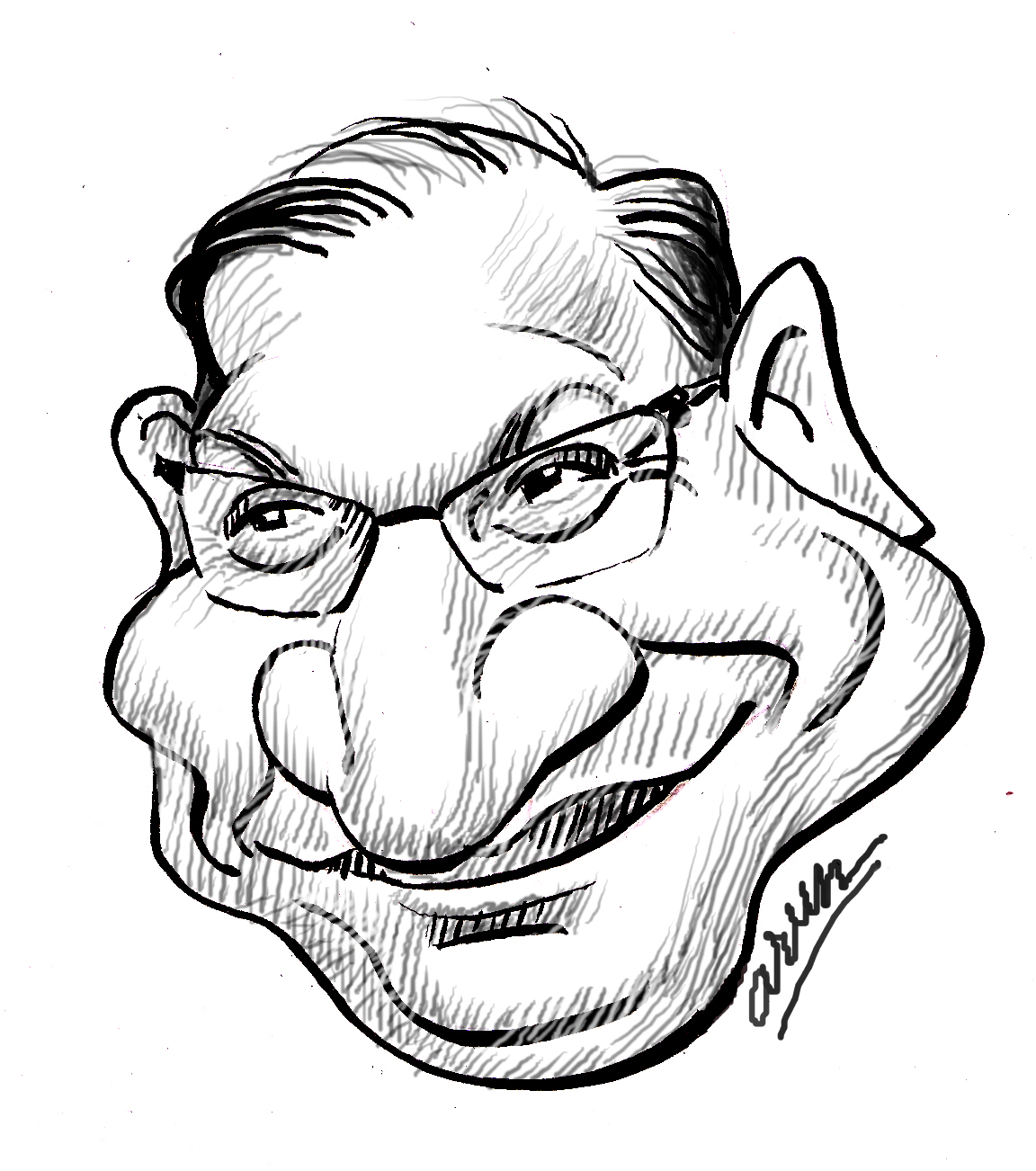 BF – to deliver keynote addresses, meet entrepreneurs and policy experts, answer questions, watch showcases and demonstrations, and offer support to GBF on a continual basis. The idea started off as a plan to invite 3-4 ministers. The target changed to 6 when the initial going looked easy. It then became an ambitious 9 when the initial confirmations started flowing in thick and fast. And then, the Election Commission of India dropped a bombshell. It announced the Bihar elections in the middle of GBF. Smriti Irani, Rajiv Pratap Rudy, Ravishankar Prasad and JP Nadda had to drop out. The plotters and planners of GBF went into re-design mode. Let’s add Nitin Gadkari. Let’s drop Venkaiah Naidu. Let’s re-invite Jayant Sinha. And so on. It was not clear if they were talking about high profile ministers or shuffling cards in a deck. Reshuffling actually. Or maybe re-reshuffling. Everyday was an exercise in firming up schedules of new ministers and then junking the plans next day and firming up something else. They changed names, they changed times, they changed topics, they changed everything – maybe to prove the point that they at GBF are agents of change. This was the mother of all reshuffles and the final trump cards that they rolled out (in chronological appearance at GBF) were Manohar Parrikar, Jayant Sinha, Prakash Javadekar, Suresh Prabhu, Piyush Goyal and Nitin Gadkari. Many have penned some memorable GBF anecdotes for this issue and we’re sure we’ll have more for you in future issues, but for anecdotes related to ministers, we asked Bakul Desai to do the honours. As one who often bites more than he can chew, hear in his own words how he got bitten (and beaten) in the process of attempting something of “cabinet” proportions.

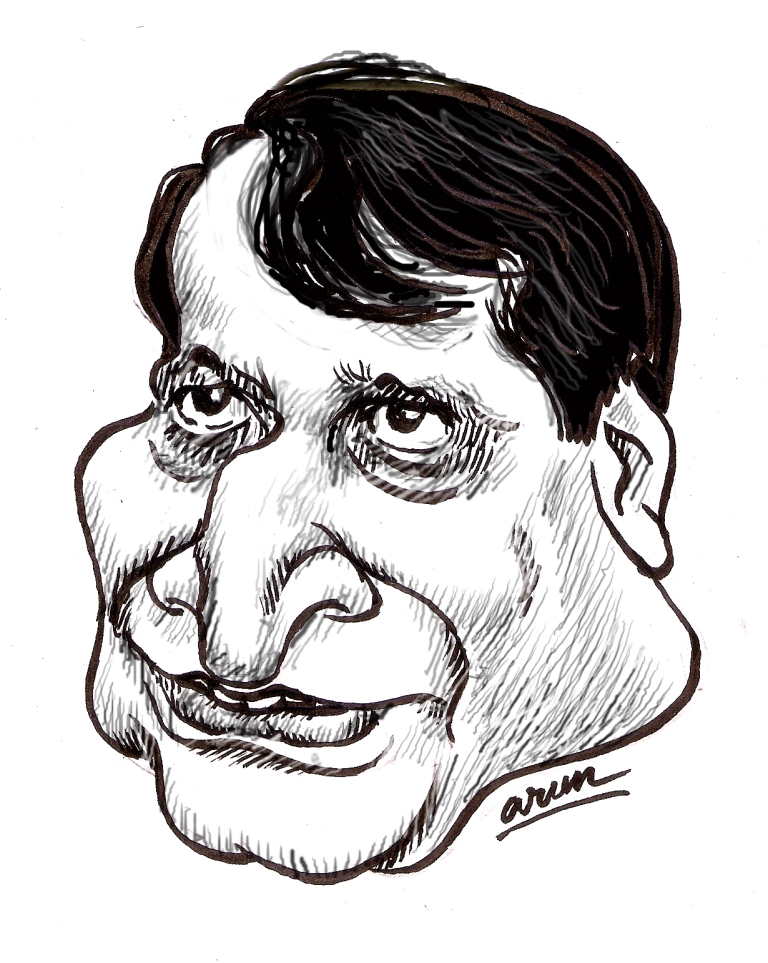


 across the use of expletives in many other social and individual contexts in different campuses. They have defined the freedom and autonomy of students. While I deeply admire and respect the sentiments of freedom of speech, of anonymity, and of creative dissent, I could not resist getting into an animated conversation with my class for a while regarding the appropriateness of cuss words and if it is alright to be using these words as a part of public display of our emotions. Why not? They are also a part of language and a way of expressing our anger and frustration. Why not? These words make us sound bold and cool. Why not? After all, our movies Delhi Belly, No One Killed Jessica, Mardaani… all use words that are fucking awesome! While using the word fucking in this article (believe me I am doing this for the first time in any article I have written so far), I felt my adrenaline rush, it gave me a high as it perhaps does for other users. In fact, I have been wondering, does that make me sound cool and sexy? This point reminds me of a similar conversation I had with a scholar years ago. The scholar insisted that in order to be called an intellectual you should be a social drinker. My rebuttal was “if I have to take to drinking as a personal choice, I might go for it but if I have to get a licence to be called an intellectual only through drinking, I rather not be branded as an intellectual”. Perhaps, expletives usage is one such intoxication. The more we use them, the more we want to use these words in both written and spoken diktats. We never know at what point of time, the words that sounded cool during college days, might brand us as abusers in the long run, when we use the same words against our wife/husband, children, friends, or colleagues. At that point of time, we might regret the same words that once made us feel proud about ourselves and gave us a high. Such is the ambiguous role of language.
 Shelly who was expelled from Oxford because of a 13 page pamphlet Necessity of Atheism. Legends say, Shelly scared the s*** out of Oxford (or may we say “Shelly antagonised Oxford in an unprecedented example of satire”?), without using even one cuss word, so far that he had to be expelled from college. My point through these instances is that if cuss words do not serve any purpose in written or spoken form in official premises, do we really need to use them? There is a thin line of demarcation between trivialising and critiquing, and sadly, I am getting the vibe of an abject trivialising through the use of expletives in many Indian academic campuses, than actually helping us to develop an original critique. We are learning to acquire a few terms, a few theories, a few linguistic and cultural insights in bits and pieces, and instead of getting intrigued by the need for more, we land up being satiated by these crumbs and use them to our own sweet purposes. Seems as if our society needs par-blind intellectuals who can see only one side of the moon, so that generation after generation we live with similar intellectual and spiritual parasitic tendencies, depending on other parts of the world to provide us nourishment instead of developing our own path.
 kinds of unreasonable requests (so what’s new?), please be firm with them. During the first few weeks I had a string of visitors in spotless white dishdasha (ankle-length robe) and kamma (cloth cap with embroidery) greeting me from the door, ‘Salam alaikum – kayfhalik’, and walk up to me and shake my hand. Like I had been warned, I greeted them with cautious warmth, asking them to take a seat and waiting for them to state their ‘problem’. But I soon realised that they were merely coming to greet the new Dean from India and make him feel welcome. Or perhaps to size him up. Many of them have full-time jobs and are taking evening classes to upgrade their diplomas into bachelor’s degrees in Engineering. One day a gentleman, perhaps in his forties, speaking fluent English (so could not be a student), came to see me about a problem with registration. I assumed it was for his daughter, since she was not accompanying him. He corrected me, ‘No, it is for my wife. We have four children and now the youngest one has started school, so she has decided to join college and get a degree in Engineering’. I could have taken my kamma off to him, if I was wearing one. And to top it, he said his job required him to be in Muscat, so
 The longest rivers associated with India are the Brahmaputra and Indus, which are both 2,896 km long, although neither is entirely within India. Other major rivers are the Ganga (Ganges, 2,525 km), Godavari (1,465 km), Kaveri (Cauvery, 800 km), Krishna (1,401 km), Mahanadi (851 km), Narmada (1,312 km), and Yamuna (1,370 km). India quickly and aggressively proceeded on a policy of developing hydroelectric power derived from dams across the country. Dams built across these rivers would bring enormous benefits to the farmers; they would conserve water for drinking, provide much-needed irrigation to the farmlands, produce energy, control floods, and increase farm production. Industries, too, would benefit and so would urban centres. In mid-2015, India already had about 42,000 megawatts of installed capacity, accounting for over 15% of its total electricity generation [9].

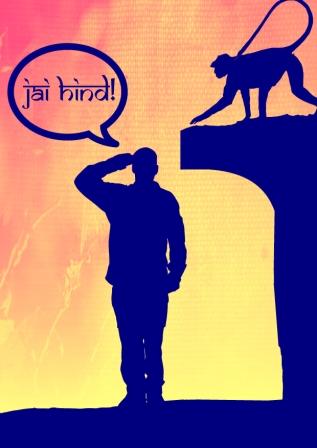 There were 3 ferocious looking men guarding Gate 11. I got out of the car and announced my name. The 3 tigers suddenly turned into meek lambs and clicked their heels into attention-much like the “Saavdhan” we learnt during NCC. They saluted and said “Jai Hind!” in unision. One of them added a “Sat Sri Akal!”. I looked at him. Yes, he was a Sikh. I was not sure about the protocol of reciprocating greetings. So I replied with a loud “Jai Hind!” sans the salute and the Saavdhan drill. The Sardar pointed in a northerly direction and mumbled just one word. “Reception.”
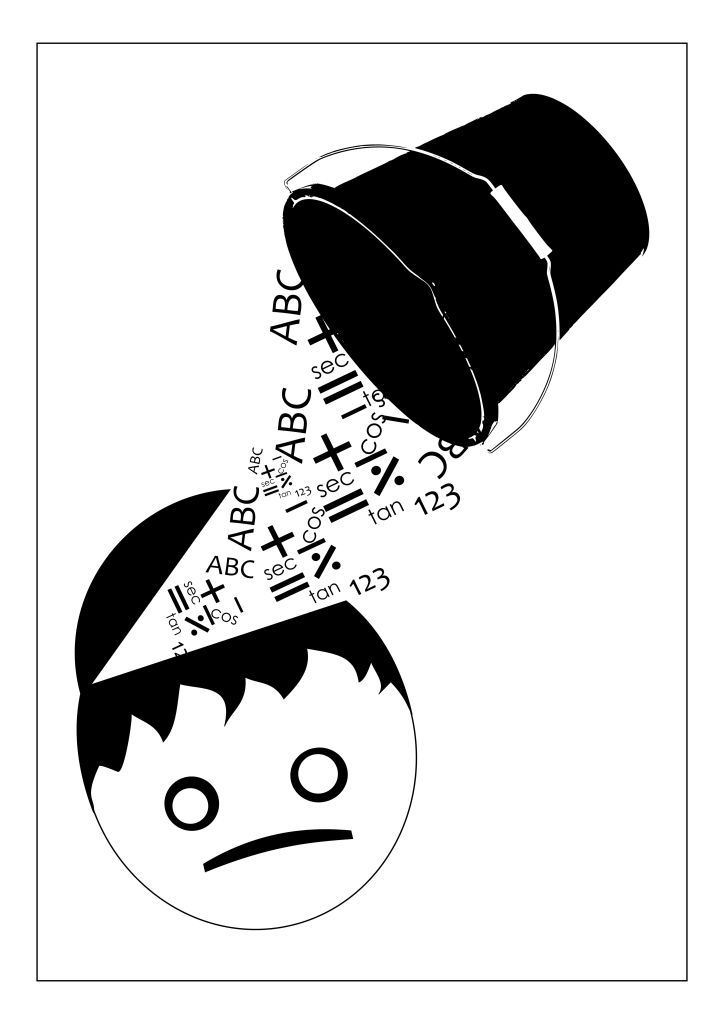 In my short (and still continuing) career span as a teacher to students in the Science stream in Grade Eleven and Grade Twelve, I’ve already had the opportunity of being privy to many intriguing discussions with a lot of parents. “My child is in Grade Eight. He is very bright. Please coach him for JEE Advanced from now so that he can be a topper” and “Sir, I want my son to be an IITian because it was my unfulfilled dream to be one” are some of the more common, yet interesting statements that I have heard.