Blog

  • When the Clock Strikes Twelve, Ce Qui Va Se Passer?

    When the Clock Strikes Twelve, Ce Qui Va Se Passer?

    [vc_row][vc_column][vc_column_text]

    Photo by Murray Campbell on Unsplash

    [/vc_column_text][vc_column_text]When I wondered what I could predict about the Indian economy in 2021 that IITians don’t know or have not at least, already read about, I thought it might be worthwhile to reconnect with Cyrus the Virus, named after the famous Persian Emperor, who had helped me call out the pandemic, in my last year’s annual note, Tipping Point. He had told me in advance about the dire straits that we would find ourselves in 2020. It is another matter that governments in most countries delayed their response, sometimes, to as late as in end March. We kept in touch regularly ever since. Here is what he told me, even as I was still nursing my first peg, on the new-year’s eve:[/vc_column_text][/vc_column][/vc_row][vc_row][vc_column][vc_column_text]“You humans have made commendable strides in trying to understand me since we first spoke last year, but there is very much more that you don’t know. It will take you more than a lifetime to understand most of the virus families, but in less than half a decade, you could understand enough to deal Coronaviruses, the family to which I belong. Our fight is not over. We are mutating so rapidly, thus what might have worked eight months ago, will not work as effective anymore.” (more…)

  • Porous Borders

    Porous Borders

    [vc_row][vc_column][vc_column_text]

    Artwork by Rajat Patle

    [/vc_column_text][/vc_column][/vc_row][vc_row][vc_column][vc_column_text]We draw borders
    And erect fences
    And say
    That is yours
    This is mine
    Don’t cross
    Or else

    (more…)

  • Rise Like the Phoenix

    Rise Like the Phoenix

    [vc_row][vc_column][vc_column_text]

    Photo by Evgeni Tcherkasski on Unsplash

    [/vc_column_text][vc_column_text]The end of March brought some smiles to our students when they were unexpectedly sent home for a few weeks till the threat of corona would pass away. Some hostel corridors rang with the cry “corona ki jai” as students were thrilled about the unexpected holidays: meeting parents and ghar ka khana for a few unexpected weeks. Students left hastily without vacating their rooms. The clothes were forlorn left hanging outside because it was only for a short while. Little did anybody guess the ongoing Coronavirus pandemic would last for nine months and maybe longer. The long-drawn lockdown has precipitated many stresses among all of us, the year 2020 has seen students and alumni grieve for family members, worry over loss of income and the fear of the unknown has created its own sense of anxieties and stresses. As a counsellor, I have read with dismay the student messages in my inbox about the sense of isolation from friends, the loss of opportunity as job offers and internships were rescinded or postponed indefinitely. Unfortunately, home for some students is not a safe haven that we imagine it to be. Thus long months of being at home exposed them anew to domestic violence, alcoholism etc. I invite you to imagine a bird trying to fly with a box full of junk tied to its feet. Heavier the box, shorter the flight. To me, the year 2020 has been like that with corona being tied to our feet and created a reality that nobody knew how to navigate efficiently.  The world over we got a challenge to engineer different versions of our own selves and the world we live in?

    (more…)

  • A Student’s Note to Self

    A Student’s Note to Self

    [vc_row][vc_column][vc_column_text]

    Cover Illustration by Amlan Barai

    [/vc_column_text][/vc_column][/vc_row][vc_row][vc_column][vc_column_text]Trigger Warning. And it’s a long one.

    I remember this particularly difficult problem in my first year. I just couldn’t solve it so I called up my friends. We spent hours in the H15 common room poring over it, all of us BTing out over the same problem. We never solved it, but I didn’t care. I was happy for a brief while, the rat race forgotten. The hustle bustle in the wing right before 11:59 PM, people running from room to room trying to finish their assignments. I didn’t really care for the deadline or the grades at that point. I was just happy seeing all of them cramped up in a room fitting into every nook and cranny. Or the scramble before a 2 PM labs, mailing your graphs to that one friend going to the stationery shop, wishing you could sleep after the Chole Bature and cursing autowalas under your breath because you got late. Or the immeasurable relief that inevitably follows a submission two seconds before the deadline. The whole wing just sighing in collective relief knowing that you probably don’t have to worry about deadlines for at least a few more days. Back then I wouldn’t have really thought that I would miss all of this. But boy, was I wrong. That was heaven.

    (more…)

  • From Face-to-Face to Online Teaching @IITB

    From Face-to-Face to Online Teaching @IITB

    [vc_row][vc_column][vc_column_text]

    Illustration by Derek Monteiro

    [/vc_column_text][vc_column_text]It will now be almost one academic year since the pandemic situation forced universities worldwide to move towards online teaching-learning. IIT Bombay started its online classes in the last week of March 2020. The initial encounter with online instruction at the Institute now has moved beyond the anxiety of using ‘tech for teaching’. The Institute faculty are no more anxious about the ‘presence of the tech‘ in teaching, but their main concern is how to compensate for the ‘absence of the human touch‘ in this new instruction medium. The biggest challenge that emerged from the panel discussion on ‘Digital Learning: Bridging the Divide’ by IIT faculty was ‘How to humanize online learning experience and how to get the warmth of a physical classroom in online classes without compromising the sanctity of the system?’

    (more…)

  • Privilege

    Privilege

    [vc_row][vc_column][vc_column_text]

    Illustration by Nilapratim Sengupta

    [/vc_column_text][/vc_column][/vc_row][vc_row][vc_column][vc_column_text]I wear my privilege
    On me
    Like an endi shawl
    Wrapped tightly
    About my shoulders
    To keep out the cold

    (more…)

  • Climate Change

    Climate Change

    [vc_row][vc_column][vc_column_text]

    Illustration by Nilapratim Sengupta

    [/vc_column_text][vc_column_text]”A healthy planet should not be a moonshot,” writes one of the authors of this Climate Change issue of Fundamatics. As a global pandemic continues to rock the world causing untold hardships to the human race, there is a greater challenge lurking behind the scenes. The Guest Editor of this issue Raghuram Murtugudde, succinctly points out in his Editorial piece, good health comes from consuming mindfully not just food, but also energy and water. Read a kaleidoscopic range of views on climate change – anecdotal, some scientific, and others discursive – that will drive home the realization that the threat of global warming no longer a far-off phenomenon. The set of articles in this issue not only discuss the various implications of climate change but focus on efforts to mitigate its impact on ecosystems and communities, and share guidelines to achieve a sustainable future.[/vc_column_text][vc_custom_heading text=”Table of Contents” font_container=”tag:h2|text_align:left|color:%23dd9933″][vc_basic_grid post_type=”post” max_items=”14″ gap=”0″ initial_loading_animation=”none” grid_id=”vc_gid:1612941877237-9fb77091-6600-1″ taxonomies=”495″ exclude=”10248″][/vc_column][/vc_row][vc_row][vc_column][/vc_column][/vc_row]

  • Editorial

    Editorial

    [vc_row][vc_column][vc_column_text]

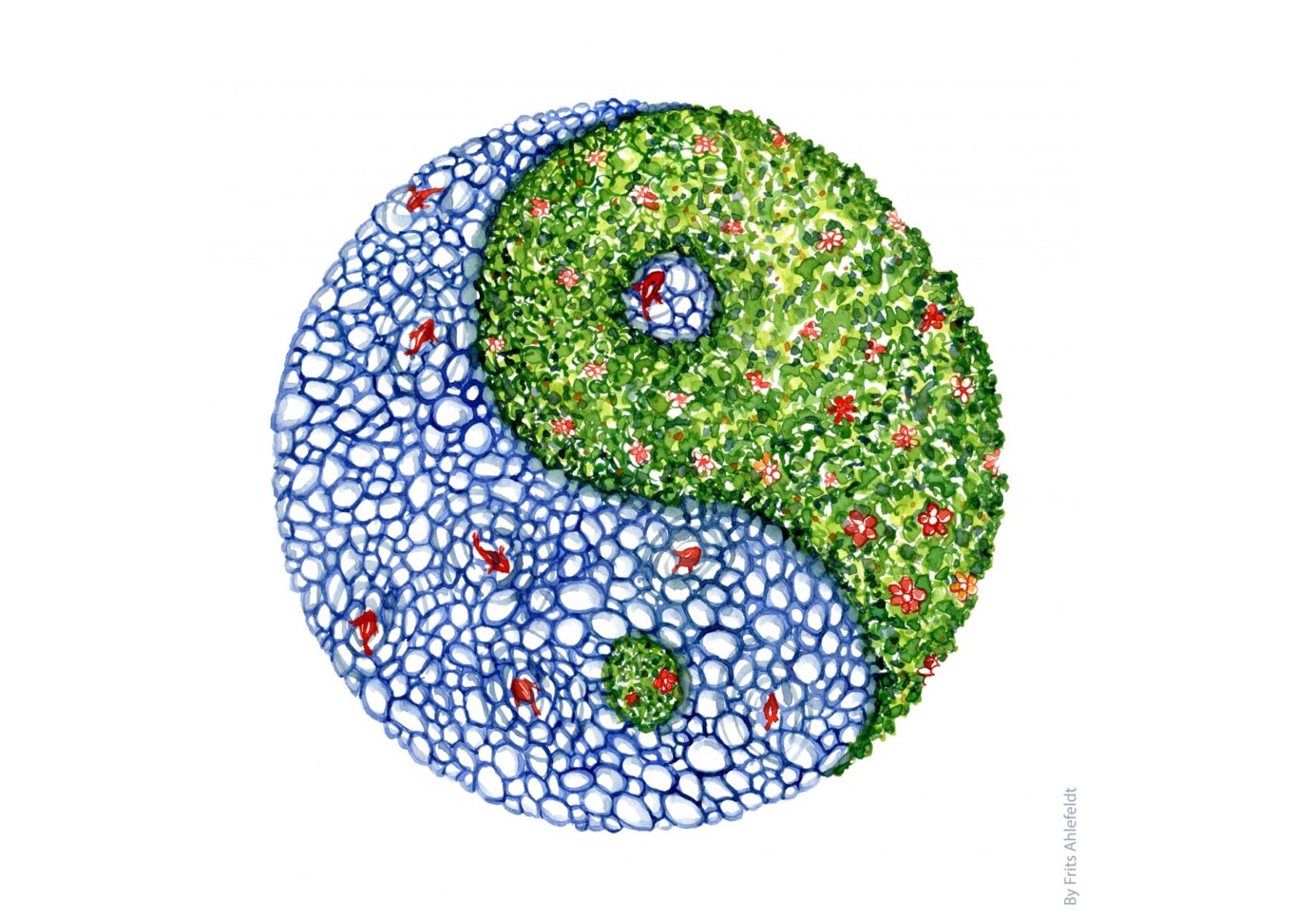
    Illustration by Frits Ahlefeldt

    [/vc_column_text][vc_column_text]When I was asked to edit a series of articles on climate change for Fundamatics, I couldn’t wait to say a ‘Yes’. I am an engineer who drifted from computational fluid dynamics into climate modeling and then into earth system and human impact. I am now quite familiar with the different views people bring to climate change and its impact, as well as solutions. The articles capture a kaleidoscopic range of views. As a climate scientist and a dabbling practitioner of sustainable water and agricultural methods, I can add a tiny bit of perspective to the set of articles.

    Climate change has taken hold more broadly now as a descriptor, mostly as a reaction to the rage that ‘Global Warming’ seems to produce in some sections of humanity. But ‘change’ here is the keyword. Typically, sufficient sampling is needed to ensure that there is in fact a ‘change’. The story of vanishing birds on campus is an example. Once our antennas are up for ‘detecting’ climate change, we begin to see change everywhere.[/vc_column_text][/vc_column][/vc_row][vc_row][vc_column][vc_column_text]And yet, we need to be careful because the old adage is that nature makes the rules and biology finds the loopholes. Detection of change can then lead to some formal approaches to ‘attributing’ the changes to human actions. So detection and attribution are the Yin and Yang of climate change even though one is keenly aware that we are accelerating climate change, and there may not always be the luxury of waiting for change to be confirmed.[/vc_column_text][vc_column_text]

    Detection and attribution are the Yin and Yang of climate change even though one is keenly aware that we are accelerating climate change, and there may not always be the luxury of waiting for change to be confirmed.

    [/vc_column_text][/vc_column][/vc_row][vc_row][vc_column][vc_column_text]The story of change in Coorg brings up extremes of rainfall and dryness. This is observed clearly now, and action is underway. The one I watch carefully is the prediction and projection of weather, climate variability, and change under MoES and its institutions. It is really beginning to yield results in terms of more skilful predictions and better channels of communications of warnings. Evidence is emerging that timely action is saving lives during floods and cyclones. But drought management requires broader scale strategies like drought-resilient agricultural practices – agroforestry, rainwater harvesting, afforestation, drip irrigation, and such. Applications of weather and climate predictions to various sectors are growing in India. This should lead to better adaptive management of food, water, energy and health.[/vc_column_text][/vc_column][/vc_row][vc_row][vc_column][vc_column_text]Coastal protection will need a recovery of mangrove forests and zoning laws for waterfront construction, protection of corals, wetlands, etc. India has over 7,000 kilometers of coastline when combined with the Andaman and Nicobar Islands. While India has committed itself to afforestation as an additional sink for carbon under the Paris agreement, we should remember that forests in coastal waters can sequester three to ten times the carbon as land forests. And they clean up the water, enhance biodiversity, protect against storms and erosion, and make for amazing ecotourism.[/vc_column_text][vc_masonry_media_grid item=”mediaGrid_SimpleOverlay” grid_id=”vc_gid:1605277708774-ca3d5fe9-6cde-7″ include=”10552,10553,10550″][vc_column_text]

    Murals at entrances to Juhu Beach, Mumbai. Photo Courtesy: Devesh Khatu.

    [/vc_column_text][/vc_column][/vc_row][vc_row][vc_column][vc_column_text]These also raise the issue of how we ‘battle’ climate change. But are words like ‘war’, ‘crisis’, and ‘battle’ even appropriate in the first place? If we are also the culprits then who are we battling? We can point fingers at politicians and energy companies and so on. Politicians tend to be held responsible for their decisions, while scientists and citizens may have the comfort of screaming for action without being responsible in any way. Frankly, we all must be part of the solution.[/vc_column_text][/vc_column][/vc_row][vc_row][vc_column][vc_column_text]Youth is energised, and yet they are not aware that their parents are living perfectly normal energy-intensive lifestyles. The youth themselves may not be capable of the kind of behavioural changes needed, to play their part – like not rushing to buy the latest iPhone. Most, importantly, the philosophy of “the end justifies the means” in messaging climate change and attacking individuals or countries, or companies may cost us our credibility. People naturally take the words of politicians with a grain of salt but scientists and social activists must maintain their credibility at the highest level. It is best to look into the mirror, and accept that none of us are living a lifestyle that is minimal in terms of our environmental footprint.[/vc_column_text][vc_single_image image=”10551″ img_size=”large” alignment=”center”][vc_column_text]

    Mural near Girgaum Chowpatty. Photo Courtesy: Devesh Khatu.

    [/vc_column_text][/vc_column][/vc_row][vc_row][vc_column][vc_column_text]That then should lead us to discuss potential solutions. India needs to focus on food, water, energy and health when it comes to solutions, and driving research and innovation. Reducing the energy- intensity of the GDP, and the carbon intensity of energy production are the high-level drivers of everything under this broad umbrella. Energy production has to focus on de-carbonization, and leapfrogging the follies of the west, which grew rich with carbon-intensive fuels.  Agricultural practices have to be friendly to the soil and water as well as reduce emissions while ensuring food security for all. Transportation needs to be efficient and emission-free, and also provide accessible public transportation that reduces the unsustainable growth of personal vehicle ownership. Managing water resources sustainably must come with quality, quantity and access. India’s air and water quality have a long way to go in terms of reducing disease, morbidity, mortality and labour lost. Scalable solutions must come out of self-reliant innovation. For example, the demand for air conditioning will continue to grow exponentially but the replacement for HFCs may cost India an arm and a leg.[/vc_column_text][/vc_column][/vc_row][vc_row][vc_column][vc_column_text]Green funds must then be incentivised to flow towards green technologies and solutions for food, water, energy and health. India exploited its investment in science and technology education when the outsourcing boom came along. Can it position itself for the green technology boom? It may have no choice but to strategise itself towards such a position, especially considering its current reliance on imported energy. Especially considering that the region is only going to get warmer, and the neighbourhood may not get any friendlier. The climate vulnerability of the countries around India, and the geopolitical machinations of countries near and far, pose severe national security threats to India. A micro scene is already playing out at the northern border and with the Rohingya issue.[/vc_column_text][/vc_column][/vc_row][vc_row][vc_column][vc_column_text]Anecdotal evidence of a series of actions narrated in the Thekambattu story brings us back to what individuals can do. We have to be realistic about how such activities can be sustained and scaled up to make a difference. The inevitability of human tendencies to drift towards comfort which so far has come from energy-hogging lifestyles cannot be wished away. Can energy become completely carbon-free and allow us to lead a luxurious life without worrying about the future of the environment?[/vc_column_text][/vc_column][/vc_row][vc_row][vc_column][vc_column_text]To avoid the Dangerous Anthropogenic Interference of earth’s functioning, we will need exactly that. People shouldn’t feel like they are sacrificing themselves or doing something special by reducing the impact of their actions on the environment. The solutions have to be as easy as smartphones—convenient and simple to use; everybody wants one. Saving the environment is right now a luxury that only a few can afford. An environmentally friendly lifestyle should be affordable to all.[/vc_column_text][/vc_column][/vc_row][vc_row][vc_column][vc_column_text]I am not convinced that putting up signs everywhere that say ‘NO’ to everything, will lead to a safer planet. Travelling has always been critical for cultural exchanges, food has always been good for cultural identity, and energy has always been good for exploring the universe while water makes everything beautiful. Good health comes from consuming mindfully. Not just food, but also energy and water.

    I am optimistic that a game-changer will come along. I also wonder whether nature meant us to evolve to become so dissipative merely because everything in the universe dissipates energy. But that’s a thought for another day. Besides, do we really want our children to grow up thinking the world is coming to an end? I would rather have them dream about building rockets to go out into the solar system and beyond.[/vc_column_text][/vc_column][/vc_row]

  • Government and Citizen responses to Climate Change

    Government and Citizen responses to Climate Change

    [vc_row][vc_column][vc_column_text]

    Illustrations by Frits Ahlefeldt

    [/vc_column_text][vc_custom_heading text=”An Indian Perspective” font_container=”tag:h2|text_align:left|color:%23dd9933″][vc_column_text]On 26 July 2005 Mumbai received well over 900 mm of rainfall, devastating the city and killing hundreds of people.  It brought into sharp focus the topic of climate change. We then had the “cloud burst” event in June 2013 in the mountains of Uttarakhand, and a lot of attention was on the devastation in the Kedarnath shrine area.  It is estimated that in addition to more than 5000 lives lost,  the damage to infrastructure was at least several thousand crore rupees, apart from ripping apart jobs and livelihoods linked to tourism and pilgrimage.  Subsequently we had the devastating floods in Chennai in November-December 2015, floods in Bihar and the Kerala floods in 2018.   And just a few days back we had the terrible flooding in Hyderabad city.[/vc_column_text][/vc_column][/vc_row][vc_row][vc_column][vc_column_text]India’s climate is warming and changing like elsewhere on the globe, but the complexity of the Indian Monsoon has been challenging for climate scientists to study. We have seen a decline in the overall Monsoon since the 1950s, and yet with an increase in the frequency and intensity of rains. But India is fortunate to have some of the best climate scientists in institutions such as our own IIT Bombay and IITM, Pune. We learn from them for example that the warming of the seas could be weakening the thermal contrast between the land-mass and the sea, a driver of the Monsoon. This could explain both the phenomena of a weakening Monsoon and rainfall falling in more intense spells with dry spells in between.  The observed decline was not predicted by many climate models and is now an active area of research as we need to get better forecasts of the future of our Monsoon system over the next few decades.[/vc_column_text][/vc_column][/vc_row][vc_row][vc_column][vc_column_text]India’s diverse ecosystems straddling the highest mountains in the world, the Himalayas, the forests of the Western Ghats and peninsular India to the coastal zones and estuaries and deltas are increasingly being stressed by climate change impacts. For example, emerging evidence from forests in the Himalayas suggests that they could be “greening”  in some places due to warming but “browning” elsewhere in response to warming and moisture stress in the post-Monsoon period due to decline in  winter and spring rains.[/vc_column_text][/vc_column][/vc_row][vc_row][vc_column][vc_column_text]Our cities as we have seen from recent events are increasingly vulnerable due to loss of natural drainages, wetlands and the replacement of green areas with impermeable surfaces, a recipe for a climate-change-land-use time-bomb whose fuse is lit waiting for opportunities to manifest itself.[/vc_column_text][/vc_column][/vc_row][vc_row][vc_column][vc_column_text]One of the dangers of the climate change discourse by government and in civil society is that almost all disasters are being attributed to climate change and much less due to other drivers such as land-use change and the development pathways we have embraced in the way we plan and manage our cities, our water resources and our rivers and wetlands.  We know that climate change is indeed a big stressor that needs our attention, but often it is just the proverbial “last straw on the camel’s back.”[/vc_column_text][/vc_column][/vc_row][vc_row][vc_column][vc_column_text]As an example, the fragility of the tectonically active and unstable Himalayan ecosystems was already known to environmentally literate folks and scientists, and yet post the Kedarnath disaster the Char Dham road-building controversy and business-as-usual ecologically damaging projects such as several large dams are being pushed through in the Himalayas. Why is our memory so short?[/vc_column_text][/vc_column][/vc_row][vc_row][vc_column][vc_column_text]We now know from the scrutiny of some of the devastating floods in Kerala, Bihar and elsewhere that some of these are not just due to “heavy rain” but are human-caused due to the sudden releases from dams and reservoirs, and brave and bold engineers and activists are questioning the management mantras governing these reservoirs. So dams can, depending on how we manage them, cause or prevent floods.[/vc_column_text][/vc_column][/vc_row][vc_row][vc_column][vc_column_text]And now we are beginning to learn that the disruption of sediment movement in our rivers due to trapping by dams and barrages is another cause of floods and poses severe threats to our river ecosystems, aquatic biodiversity and fisheries, besides depriving our sinking deltas of badly needed sediment deposition to protect against sea-level rise and to sustain the productivity of the estuarine and coastal ecosystems. One recent study has estimated that sediment reaching our deltas and estuaries may reduce by over 50% if we implement the interlinking of rivers.  The removal of sand from rivers for our urbanization is a clear and present danger to the ecology of our rivers and deltas.  Meaning full regulation and alternatives will emerge only if we recognize the magnitude of these drivers.[/vc_column_text][/vc_column][/vc_row][vc_row][vc_column][vc_custom_heading text=”How can the government, citizens, and civil society respond?” font_container=”tag:h2|text_align:left|color:%23dd9933″][/vc_column][/vc_row][vc_row][vc_column][vc_column_text]In this year’s budget, the Government of Karnataka introduced for the first time a Green Index by which projects and programmes would be rated in terms of their environmental impact.  Unfortunately, soon after it was announced the pandemic was upon us, and its fate in informing the choice and design of development projects is currently unknown.  Let us hope more state governments move towards such scrutiny of projects from the point of view of irreparable ecological damage.[/vc_column_text][/vc_column][/vc_row][vc_row][vc_column][vc_column_text]The Green Index was a welcome initiative, but will it be calculated based on a transparent mechanism that draws upon the best possible data and evidence and done by an independent body? The real test of this would be if large projects are dropped or redesigned if the multi-dimensional Green Index falls below a certain threshold in terms of irreparable ecological damage or poor climate change adaptation.[/vc_column_text][/vc_column][/vc_row][vc_row][vc_column][vc_column_text]One of the features of an informed and concerned civil society is drawing the right lessons from disasters. We must take an urgent transparent approach to generation, monitoring and sharing of hydrologic and rainfall data to forge meaningful partnerships between government, academic and civil society to understand our climate and weather systems and implications for ecology, urban planning, food security agriculture.[/vc_column_text][/vc_column][/vc_row][vc_row][vc_column][vc_single_image image=”10849″ img_size=”full” alignment=”center”][vc_column_text]Installing automated and telemetered rain gauges and stream gauges in head water catchments  can give us advance warning of moisture buildup in remote locations in the head-waters of our rivers and reservoirs. We must salute the efforts of the Indian Meteorological Department and our weather and climate scientists which has now resulted in improvements in our short-term weather forecasts.  Feeding these forecasts and data from telemetered rain gauge and stream gauge sensors into data-based hydrologic models within an AI early-warning system could help improve the response of our dam operators or warn farmers and citizens in advance of emerging extreme events, but technology can only play a useful part if all the pieces of our development and land-use approaches and our priorities are aligned towards recognition that non-climatic drivers and stressors need to be managed and not shoved under the carpet of the climate change bandwagon.[/vc_column_text][/vc_column][/vc_row][vc_row][vc_column][vc_column_text]Can we reduce the over-exploitation of our ground-water and question plans to divert our rivers?  This requires major efforts towards reducing water-use in agriculture by shifts to nutritious crops that consume less water. Fortunately, we have a rich agro-cultural and culinary tradition of millets in various parts of the country. These are now finding favor amongst many health-conscious folks in the cities.[/vc_column_text][vc_single_image image=”10857″ img_size=”full” alignment=”center”][/vc_column][/vc_row][vc_row][vc_column][vc_column_text]Promoting these in our railways, school meals and increasing awareness through social media could help, but policies that incentivize these crops are required. Cities and towns need citizens to push them towards the treatment and recycling of wastewater.[/vc_column_text][/vc_column][/vc_row][vc_row][vc_column][vc_column_text]However, reducing water use in agriculture, industry, or other sectors does not automatically imply recharge of our depleted groundwater and our rivers. Society often finds new uses for “saved water” and unless we decide that precious water-savings need to go to our depleted aquifers and our rivers through regulation and supportive policies it won’t happen.[/vc_column_text][/vc_column][/vc_row][vc_row][vc_column][vc_column_text]We need to mobilise all our knowledge, harness civil society and political will to rethink our definitions of prudent development pathways and land-use zoning in different parts of the country if we are truly committed to increasing the resilience of India’s ecological, water and climate change security.[/vc_column_text][/vc_column][/vc_row]

  • Our Small Corner of the Universe

    Our Small Corner of the Universe

    [vc_row][vc_column][vc_column_text]The universe is made up of not only atoms but also stories. So when I was asked to write for the Climate Change issue of Fundamatics, I knew I would have to write our story, about our small bit of the universe, which would then become a small cog in our small bit of the universe.[/vc_column_text][/vc_column][/vc_row][vc_row][vc_column][vc_column_text]Some years ago, we had a visitor, who asked us how we had managed to acquire Forest land. Had we just squatted on it? Or had we managed to acquire a patta of some sort?

    It took us a while to convince him that the forest came after we did. And we realised that we ourselves hadn’t seen the wood for the trees.[/vc_column_text][/vc_column][/vc_row][vc_row][vc_column][vc_column_text]

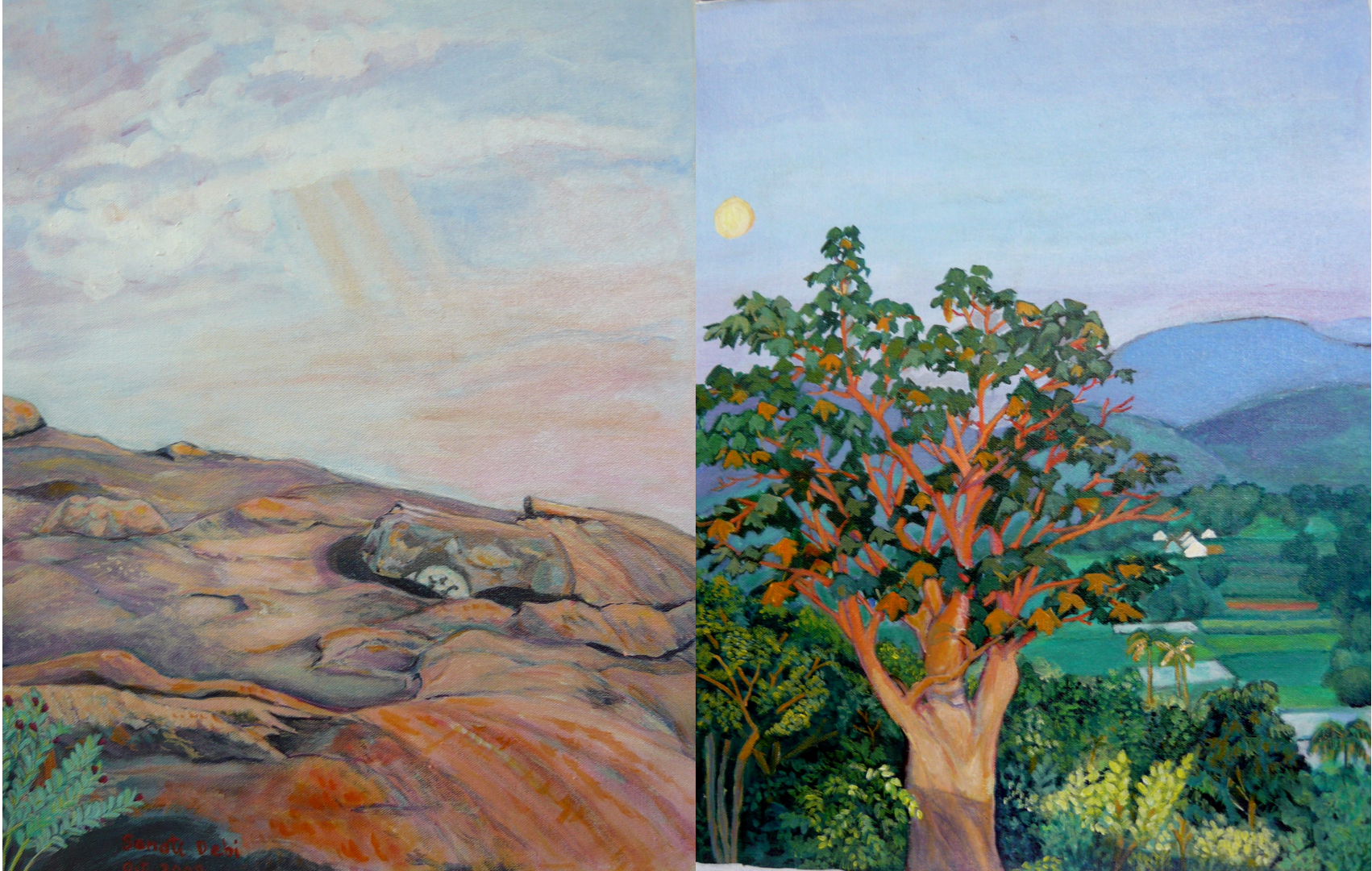
    When Sonati and I moved here 20 years ago with a two-and-a-half-year-old Badri Baba, it was to grow our children up away from the city.

    [/vc_column_text][/vc_column][/vc_row][vc_row][vc_column][vc_column_text]

    The land was chosen (by both of us independently) almost whimsically: “What a lovely view!”

    [/vc_column_text][vc_single_image image=”10463″ img_size=”full” alignment=”center”][/vc_column][/vc_row][vc_row][vc_column][vc_column_text]

    The land was on a hill, grazed to death; and all the trees hacked for firewood. Where would the water come from? Didn’t daunt us.

    Recklessnes? Youthful energy? Perhaps both; perhaps.

    [/vc_column_text][/vc_column][/vc_row][vc_row][vc_column][vc_column_text]There’s a divinity that shapes our ends,
    Rough-hew them how we will.[/vc_column_text][/vc_column][/vc_row][vc_row][vc_column][vc_column_text]

    Otherwise, given the difficulties with water, the barrenness, the rockiness, no-one may have bought this piece of land.
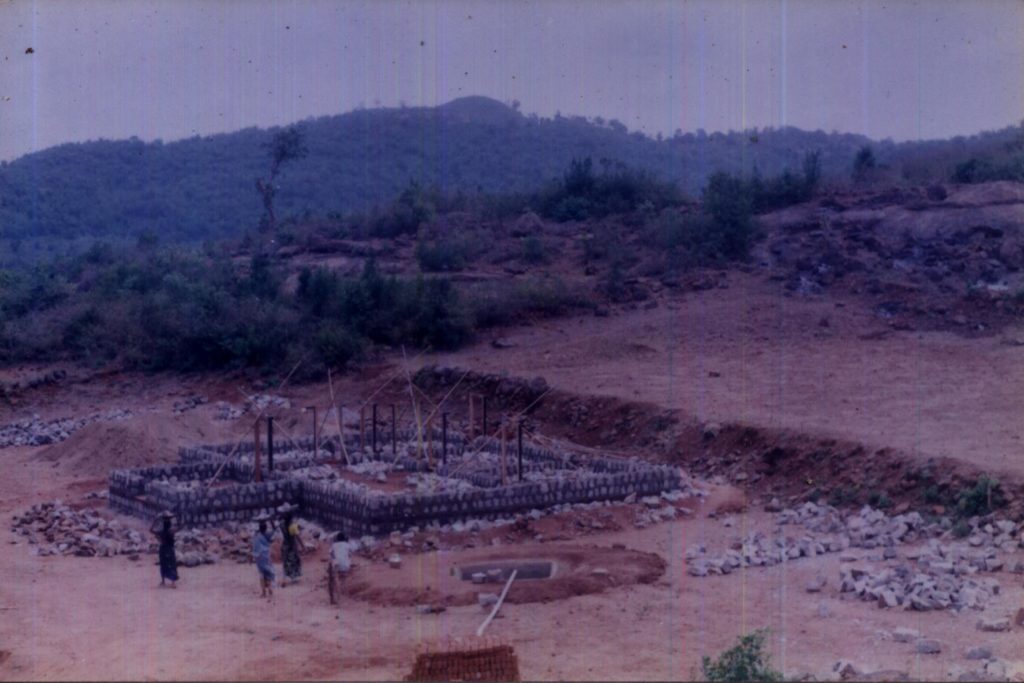
    The House in 2000

    And since we did, the land has now become green, and treed-up. Various birds have moved in which we never saw here earlier.
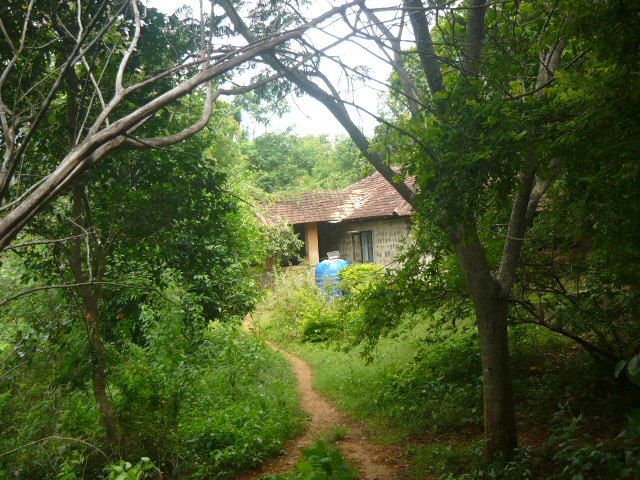
    The House in 2020

    We have seen slender lorises (we hear them oftener than we see them), and a family of mongooses. (And Varun Baba, too moved in!)

    [/vc_column_text][/vc_column][/vc_row][vc_row][vc_column][vc_column_text]Various neighbours steal various things: Jackfruit, Guavas (though of late we have had a relentless stream of kids who actually come and ask for Guavas. The squirrels don’t ask), Firewood, Timber wood, the land itself by pushing boundaries.
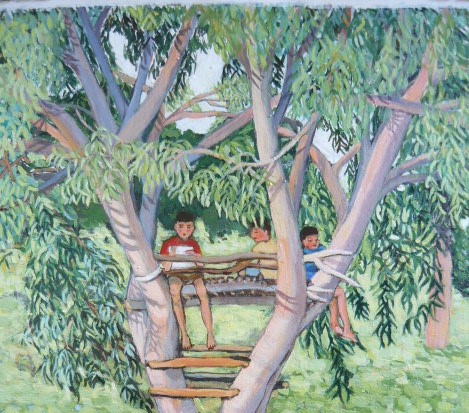
    [/vc_column_text][/vc_column][/vc_row][vc_row][vc_column][vc_column_text]

    I seem to have moved to the end of the story so far, skipping over various intermediate stories. But that is just like a story; it takes on a life of its own.

    Much like our land, which too seems to have a mind of its own.

    [/vc_column_text][/vc_column][/vc_row][vc_row][vc_column][vc_column_text]

    We tried so many things: We grew rice (rainfed), ragi (rainfed), dal (rainfed), til for oil (rainfed). The trouble was that our neighbours had started growing cash crops (tapioca: Salem is the tapioca capital of the world). The upshot: All the rats grazed on our tastier crops, and would leave the husk for us to estimate how much they had eaten. To add insult to injury, after we harvested our crops, the rats would start eating tapioca for want of anything else: And our neighbours would say, “Saar, your rats have come to our fields”

    [/vc_column_text][/vc_column][/vc_row][vc_row][vc_column][vc_column_text]

    So…

    When the rats were consuming 80% of our crop before we could harvest it.

    We had to give up growing rat food.

    [/vc_column_text][/vc_column][/vc_row][vc_row][vc_column][vc_column_text]

    Then we planted out trees: fruit trees, flowering trees, timber trees; and of course, the native trees which grew back from hacked stumps, since we stopped people grazing and collecting firewood on our land.

    [/vc_column_text][/vc_column][/vc_row][vc_row][vc_column][vc_column_text]Our trees were also all rainfed: we had to plant at the right time and pray. We used to get two monsoons   (July to September is the short-rainy season, October-November is the long-rainy season) and also some January rains and some April rains, so we didn’t have to pray too much.

    In the last four years, the rains have been pathetic. Not a drop of rain from end of November to the following July. And the monsoons too giving half our normal rainfall.

    So we can say categorically that no tree amongst the thousands of our standing trees has been planted between 2015 to 2019. Not one of those survived.[/vc_column_text][/vc_column][/vc_row][vc_row][vc_column][vc_column_text]

    To take that a bit further, we need to say that growing trees needs help from the universe. Had we arrived here 15 years later than we did, we may have thought that this hillside was a dead loss. And a small bit of the universe would have stayed barren.

    [/vc_column_text][/vc_column][/vc_row][vc_row][vc_column][vc_column_text]

    This may seem anecdotal evidence for climate change. But now there are plenty of such stories, kilo-anecdotes if you will. We need to make the connections and alter our behaviour. After all, if a Pangolin’s sneeze can grind the whole (human) world to a halt, the universe is capable of taking corrective action with or without our help. Perhaps one of our favourite poems from Wendell Berry will sum it up:

    [/vc_column_text][/vc_column][/vc_row][vc_row][vc_column][vc_column_text]

    Geese appear high over us,
    pass, and the sky closes. Abandon,
    as in love or sleep, holds
    them to their way, clear
    in the ancient faith: what we need
    is here. And we pray, not
    for new earth or heaven, but to be
    quiet in heart, and in eye,
    clear. What we need is here.

    [/vc_column_text][/vc_column][/vc_row]